
 By
By 
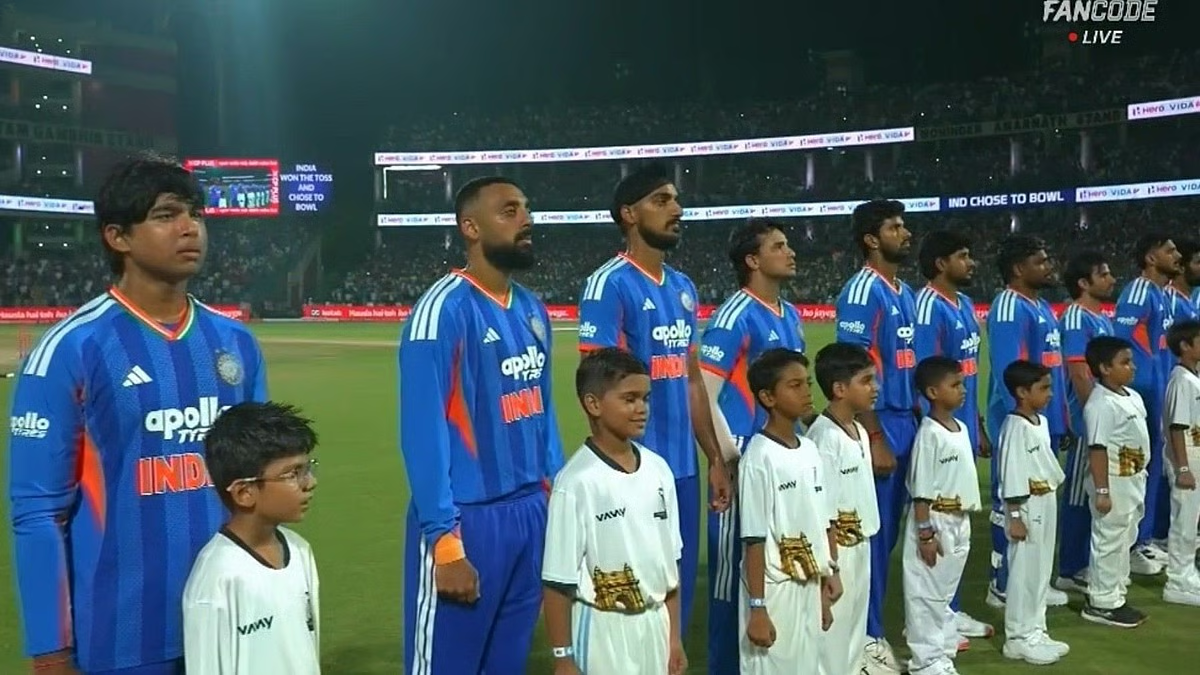
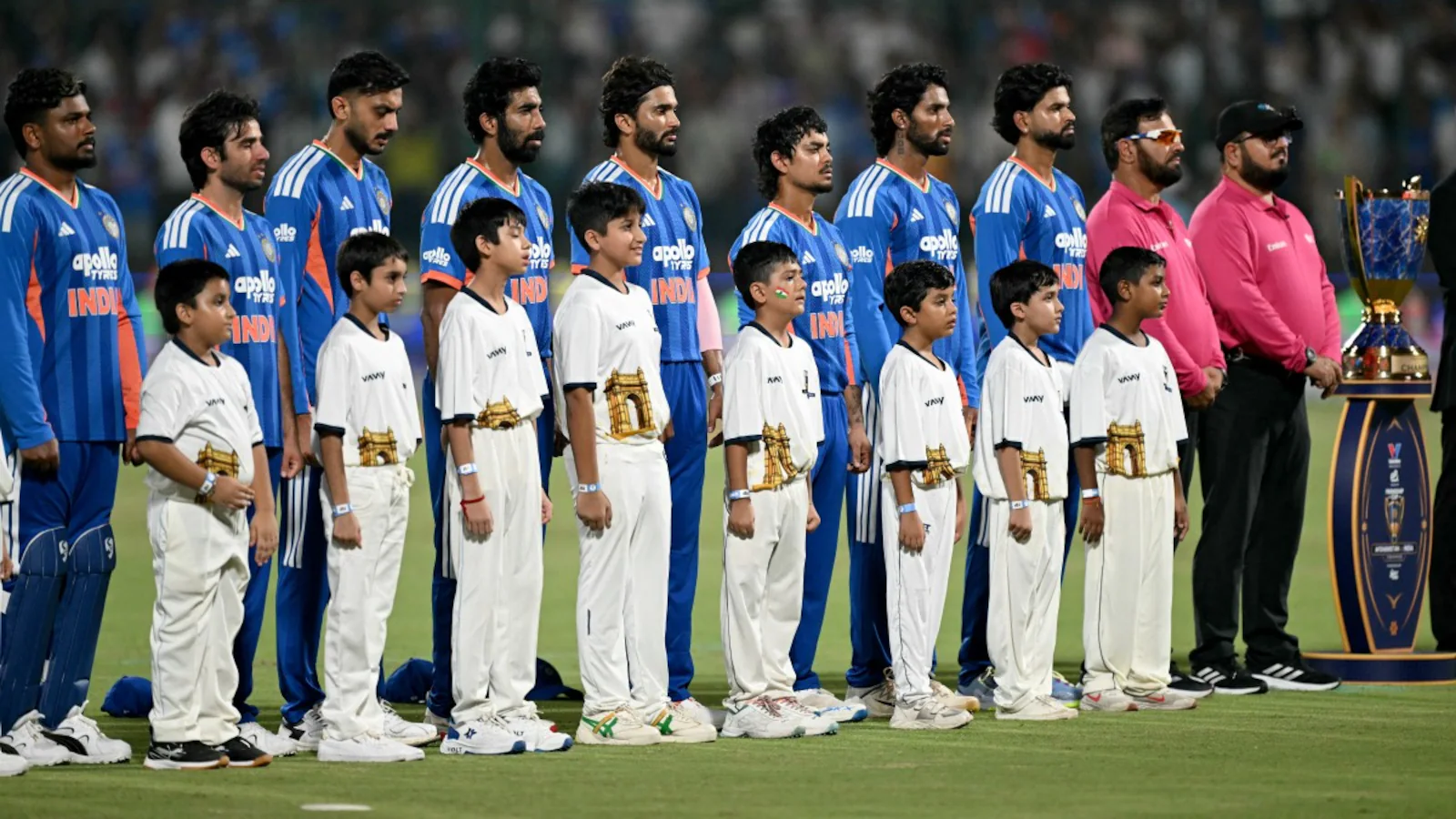
New Delhi: The India vs Afghanistan 1st T20I at the Arun Jaitley Stadium on Sunday, September 13, began with an unusual ceremonial moment that immediately caught the attention of cricket fans. Before the first ball was bowled, the Indian players stood together as Vande Mataram, India's National Song, was played before the National Anthem, Jana Gana Mana.
The sequence was significant for more than its patriotic symbolism. It marked the first time Vande Mataram was played at an international cricket match involving India, bringing a newly emphasised government protocol into the setting of a major sporting event.
The full six-stanza version of Vande Mataram was used, making the pre-match ceremony considerably longer than the traditional anthem-only routine. The National Anthem takes roughly 52 seconds, while the prescribed version of Vande Mataram runs for about 3 minutes and 10 seconds. Together, the two renditions lasted just over four minutes.
Why was Vande Mataram played before Jana Gana Mana?
The reason lies in a set of guidelines issued by the Union Ministry of Home Affairs earlier this year as India marked 150 years of Vande Mataram.
Under the protocol, when the National Song and National Anthem are performed together at an event, Vande Mataram is to come first, followed by Jana Gana Mana. The prescribed version consists of all six stanzas and has an official duration of approximately 3 minutes and 10 seconds.
The guidelines also state that people should stand at attention when the official version is sung or played.
There is, however, an important distinction. The occasions specifically listed in the protocol largely concern formal government and national ceremonies, and sporting events were not explicitly included among the mandatory occasions. That is what made the development in Delhi particularly noteworthy.
The Afghanistan series therefore became the setting for the first reported use of the full National Song in an international cricket match in India.
The decision also came during a year in which Vande Mataram has received renewed national attention because of the 150th anniversary commemorations surrounding the song.
A historic first at an international cricket match
Cricket has long been associated with national pride in India, but pre-match ceremonies have traditionally centred on the National Anthem. The Delhi T20I introduced a different format.
The Indian and Afghan teams were assembled at the Arun Jaitley Stadium before the game, with Vande Mataram forming the opening part of the national ceremonial proceedings. Jana Gana Mana followed.
For spectators accustomed to the usual short pre-match ceremony, the change was immediately noticeable. The complete version of Vande Mataram extended the proceedings and created a distinctly different atmosphere before the toss and the start of play.
The moment was also significant because Vande Mataram had not been routinely played before India's international matches earlier in the year. Its absence from India's T20 World Cup campaign and previous bilateral fixtures against Afghanistan made its appearance in Delhi even more conspicuous.
This was not simply another rendition of a familiar patriotic song. It represented the first time the song's newly prescribed full version appeared in an international cricket setting involving the Indian team.
What is the history of Vande Mataram?
The significance of Vande Mataram goes far beyond cricket.
Written by Bankim Chandra Chattopadhyay, the song emerged during the colonial era and became deeply associated with India's freedom movement. It was first published in the literary journal Bangadarshan in 1875 and was later incorporated into Chattopadhyay's novel Anandamath.
The words, which express reverence for the motherland, became a powerful rallying cry during the struggle against British rule. Over the decades, Vande Mataram evolved from a literary composition into one of the most recognisable symbols of India's national movement.
In 1950, Vande Mataram was accorded the status of India's National Song. The first two stanzas are the portions traditionally recognised for national use.
Jana Gana Mana, meanwhile, holds the position of India's National Anthem.
The two therefore occupy distinct but equally important places in India's national identity. The decision to perform them together — and to place Vande Mataram first — gives the Delhi ceremony a significance that extends beyond the cricket field.
Why the full six-stanza version matters
For decades, most Indians have encountered Vande Mataram primarily through its shorter, commonly performed version. The 2026 protocol placed renewed emphasis on the complete six-stanza rendition.
That version lasts approximately 3 minutes and 10 seconds, considerably longer than the familiar shortened performance.
The government has been using the 150-year milestone to bring greater attention to the song's historical and cultural importance. Official commemorations throughout the year have included musical performances, public events and cultural programmes centred on Vande Mataram.
The Delhi T20I consequently became another highly visible platform for that broader national commemoration.
The ceremony came amid a landmark India-Afghanistan series
The symbolism surrounding the opening ceremony was reinforced by the unusual circumstances of the series itself.
Although the matches are being played in India, Afghanistan are officially the hosts for the three-match T20I series. Delhi's Arun Jaitley Stadium was selected as the venue for all three games.
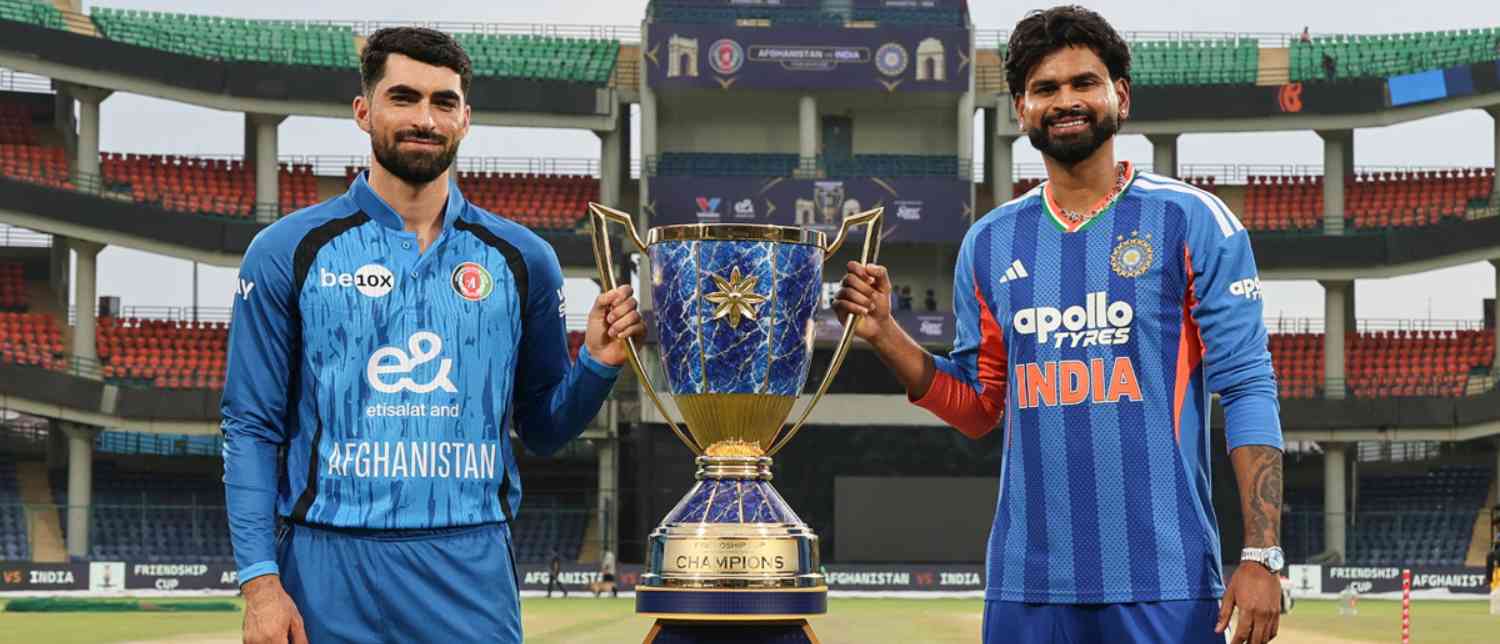
The opening match also featured a gesture celebrating the relationship between the two countries. Before the toss, the Indian team presented Afghanistan with a special jersey through captain Shreyas Iyer. A special coin was also used for the toss, reflecting the theme of friendship surrounding the series.
Iyer won the toss and elected to bowl first, citing the conditions in Delhi.
The match also marked the return of Jasprit Bumrah to India's T20I playing XI. The pace spearhead had been unavailable for recent assignments because of a knee injury, making his comeback another major talking point before the game.
India opted for experience in the batting department, with Sanju Samson returning to the side while teenage sensation Vaibhav Sooryavanshi missed out despite his impressive performances in the preceding Zimbabwe series.
Could this become a regular feature?
The biggest question arising from the Delhi ceremony is whether the combination of Vande Mataram and Jana Gana Mana will become more common at international sporting events.
The government protocol clearly establishes the order in which the two should be performed when they are included together: Vande Mataram first, followed by Jana Gana Mana.
But the guidelines did not specifically make international sporting fixtures a mandatory category. That leaves the Delhi T20I as an important precedent rather than definitive evidence that every future international cricket match in India will follow the same format.
Much could therefore depend on how organisers interpret and apply the protocol at future matches, including major ICC events.
For now, though, the significance of September 13 is difficult to overlook.
A cricket match that was expected to be remembered primarily for India's T20I battle against Afghanistan instead began with a moment of national history. The familiar roar of a Delhi cricket crowd gave way to the solemn strains of Vande Mataram, followed by Jana Gana Mana, before attention shifted back to the toss, the players and the contest.
It was a reminder that cricket in India has never existed entirely apart from the country's larger cultural identity.
At the Arun Jaitley Stadium, the boundary between sport and national ceremony became unusually visible — and Vande Mataram's first appearance before an international cricket match in India ensured that the opening minutes of the India vs Afghanistan T20I would be remembered long after the first over was completed.
With input from agencies
Image Source: Multiple agencies
© Copyright 2026. All Rights Reserved. Powered by Vygr Media.