

 By
By 
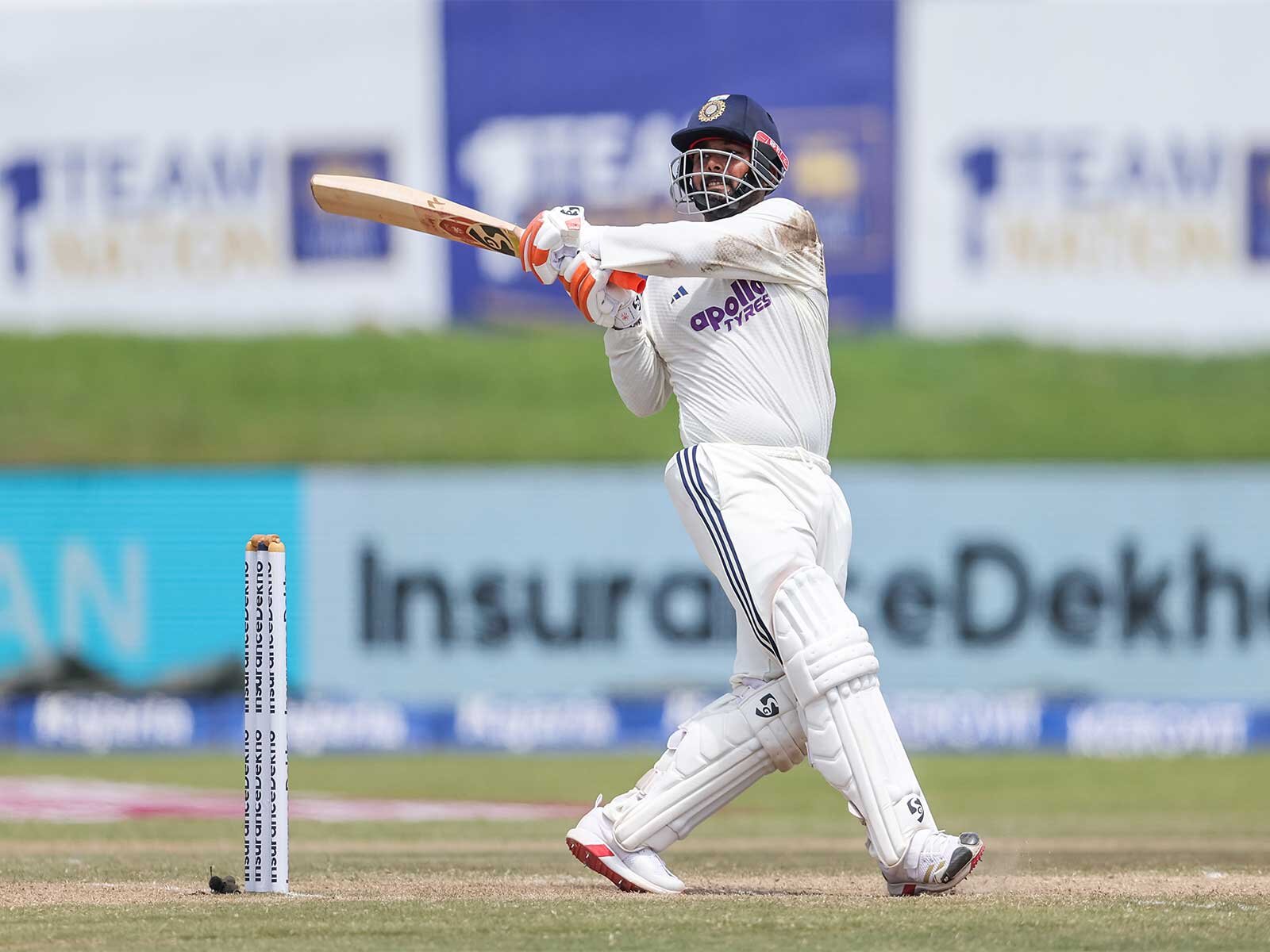
Rishabh Pant has once again rewritten the record books, and this time the India wicketkeeper-batter did it after being forced off the field with an injury. During the second Test against Sri Lanka in Colombo, Pant surpassed MS Dhoni to become India’s highest run-scorer as a designated wicketkeeper in away or neutral Tests. He then added another major milestone by moving past Australia great Adam Gilchrist on the list of Test six-hitters.
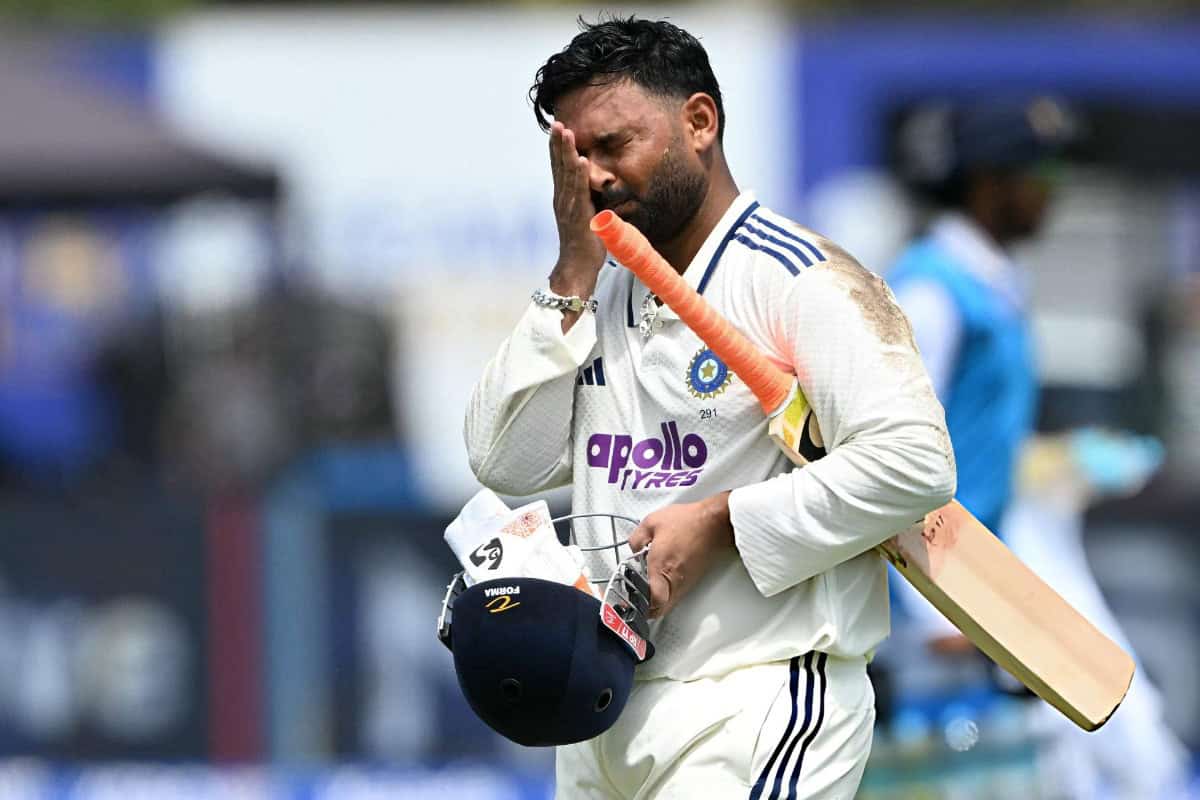
The sequence of events made Pant’s achievement even more remarkable. After managing only three runs on the opening day, Pant was struck on his left arm by a short delivery from Sri Lanka pacer Lahiru Kumara and retired hurt. He returned to the crease on Day 2, however, and produced an aggressive 63 off 89 balls, hitting six fours and two sixes.
That innings was enough to take Pant beyond one of the most enduring records associated with Indian wicketkeeping.
Rishabh Pant Goes Past MS Dhoni in Away Tests
Pant entered the Colombo Test just behind MS Dhoni in the race to become India’s leading wicketkeeper-batter in away or neutral Tests. Dhoni had accumulated 2,496 runs in 48 such Tests between 2006 and 2014.
Pant needed only a handful of runs to move ahead, and his second-innings-style comeback in Colombo eventually pushed him past that mark. He reached 2,534 runs in 36 away Tests and 64 innings, with an average of around 41.5. His record includes six centuries and 11 fifties.
The numbers underline just how quickly Pant has reached a mark that took Dhoni 48 Tests to establish. Pant has done it in 36, reflecting both his attacking approach and his growing consistency in overseas conditions.
The significance of the record is also tied to the player he has overtaken. Dhoni remains one of India’s most influential wicketkeeper-batters, having transformed expectations around the role during his international career. Pant, however, has gradually carved out his own identity rather than simply following the template set by his predecessor.
For India, the record is another indication that Pant has become a major batting force in Test cricket, particularly when the team needs a wicketkeeper capable of changing the momentum of a game.
A Comeback That Added More Weight to the Record
Pant’s record-breaking effort was not straightforward.
On Day 1 in Colombo, the left-hander attempted to pull a short delivery but was struck on his left arm. He received treatment from the Indian team physiotherapist before walking off after scoring just three runs from 15 deliveries. The initial concern was compounded by the fact that Sri Lankan bowlers continued to test India’s batters with short-pitched deliveries.
Yet Pant returned the following morning.
After India lost Saransh Jain, Pant walked back out alongside Dhruv Jurel. Sri Lanka’s pacers immediately targeted him with short balls, and Pant took a couple of blows around the shoulder area. Instead of allowing the pressure to dictate his approach, he gradually settled into his innings.
By the first session, Pant had produced an unbeaten 63 and reached his half-century from 81 balls. His knock helped India stabilize its innings while also taking him beyond Dhoni’s long-standing record.
The manner of the innings was particularly significant. Pant did not need a marathon knock to make history. His 63-run contribution combined controlled aggression with his trademark ability to put pressure back on the bowling attack.
Pant Surpasses Adam Gilchrist on Test Six-Hitting List
The Dhoni record was not Pant’s only major achievement in Colombo.
Two sixes during his 63-run innings took Pant’s Test tally to 102 maximums in just 52 matches. That moved him past Australia’s Adam Gilchrist, who hit 100 sixes in 96 Tests. Pant therefore became the third-highest six-hitter in Test cricket, behind England’s Ben Stokes and former New Zealand captain Brendon McCullum.
The comparison with Gilchrist is particularly striking because both players redefined the possibilities of wicketkeeper-batters in Test cricket.
Gilchrist was renowned for attacking bowling from the middle and lower-middle order and played 96 Tests during his career. Pant has reached 102 sixes in almost half as many matches. His rate of six-hitting highlights just how aggressively he approaches the longest format.
Ben Stokes currently leads the overall Test six-hitting chart with 138 sixes, while McCullum has 107. Pant, with 102, is now only six sixes behind McCullum.
Pant had already created history in the previous Test against Sri Lanka by becoming the first Indian batter to hit 100 sixes in Test cricket. His latest two maximums immediately extended that landmark.
Another Major Milestone: India’s Leading WTC Run-Scorer
Pant’s Colombo performance also carried significance beyond his wicketkeeping records.
He moved past India captain Shubman Gill to become India’s leading run-scorer in the World Test Championship. Pant reached 2,948 runs in 42 WTC matches and 74 innings, averaging 42.11 with a strike rate above 74. His WTC record includes six centuries, 18 fifties and a highest score of 146.
Gill, meanwhile, had 2,917 WTC runs from 42 matches. The gap between the two was relatively small before the Colombo Test, making Pant’s latest innings enough to take him to the top of the Indian list.
The next target is even bigger.
Pant is now within touching distance of 3,000 World Test Championship runs. Earlier figures placed him at 2,948, meaning he needed 52 more runs to reach the landmark. If he gets there, he would become the first Indian player to accumulate 3,000 runs in the WTC era. He would also become the first designated wicketkeeper-batter in the world to reach that mark in the competition.
Pant Closing in on the Global Away-Test Record
While Pant has already taken the Indian record from Dhoni, his next challenge is global.
Pakistan’s former captain and wicketkeeper Sarfaraz Ahmed currently stands above Pant with 2,696 runs in 52 away Tests as a wicketkeeper-batter. Gilchrist is next with 2,634 runs in 41 away Tests, leaving Pant at 2,534.
That means Pant is 162 runs behind Gilchrist and 162 runs behind? No—Gilchrist is 100 runs ahead of Pant, while Sarfaraz is 162 runs ahead. With Pant still only 28 and already producing records at this rate, those gaps appear increasingly reachable over the course of his Test career.
What makes the achievement more impressive is the speed with which Pant has accumulated these numbers. His 2,534 away or neutral Test runs have come in 36 matches, compared with Dhoni’s 2,496 in 48 and Gilchrist’s 2,634 in 41.
More Than a Record-Breaking Knock
Pant’s Colombo performance ultimately tells a larger story about his evolution as a Test cricketer.
His reputation was built on fearless strokeplay, but the latest achievement reflects something broader: durability, adaptability and the ability to respond under pressure. Walking back into the middle after an injury scare and facing a barrage of short deliveries required more than attacking instinct.
It required resilience.
Pant’s record-breaking run also places him in an increasingly exclusive group of wicketkeeper-batters whose batting numbers stand alongside those of specialist top-order players. His ability to score quickly, hit sixes consistently and produce decisive contributions has made him a unique asset for India in Test cricket.
The Colombo Test therefore became more than another chapter in India’s series against Sri Lanka. It became another landmark in Pant’s rapidly developing Test legacy.
He has now moved beyond MS Dhoni in India’s away-Test wicketkeeping record, surpassed Adam Gilchrist in Test sixes, climbed to the top of India’s World Test Championship run-scoring charts and moved within striking distance of 3,000 WTC runs.
And considering Pant’s age and the pace at which he is reaching these milestones, the most intriguing part may be what comes next.
With input from agencies
Image Source: Multiple agencies
© Copyright 2026. All Rights Reserved. Powered by Vygr Media.