 By
By 
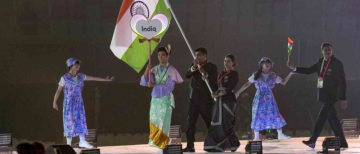
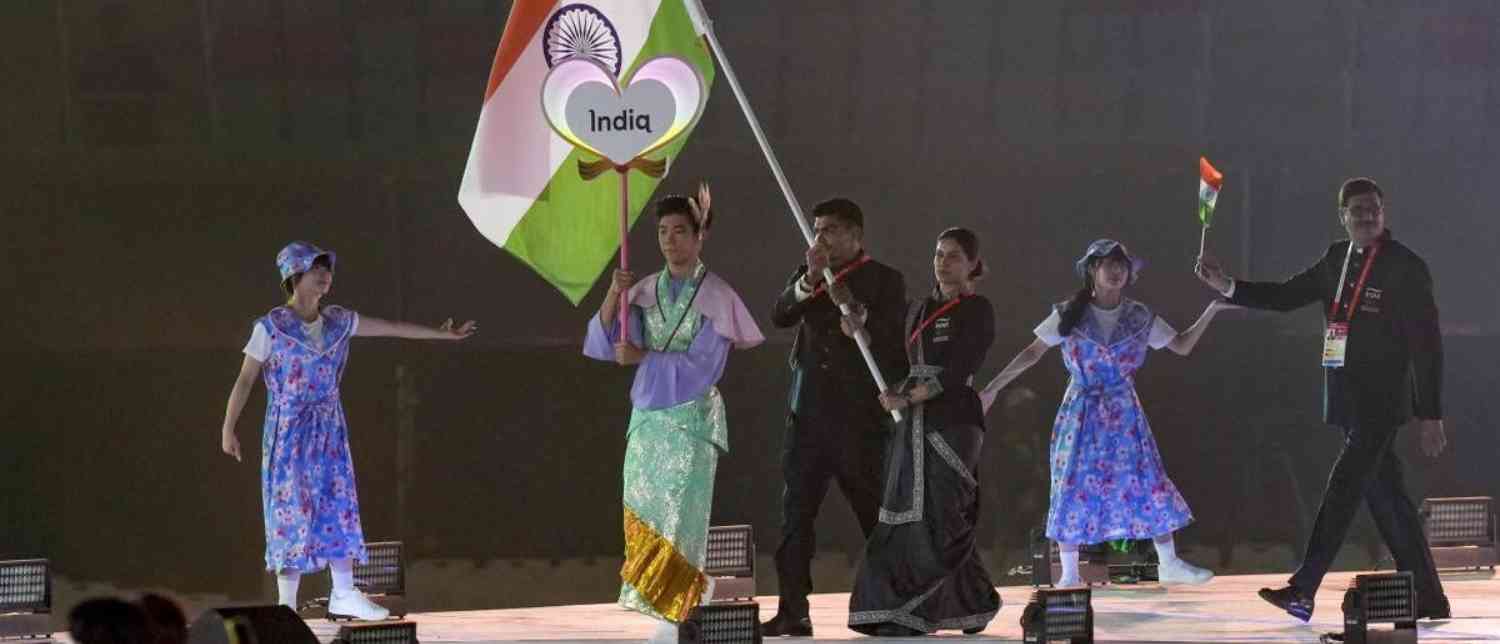
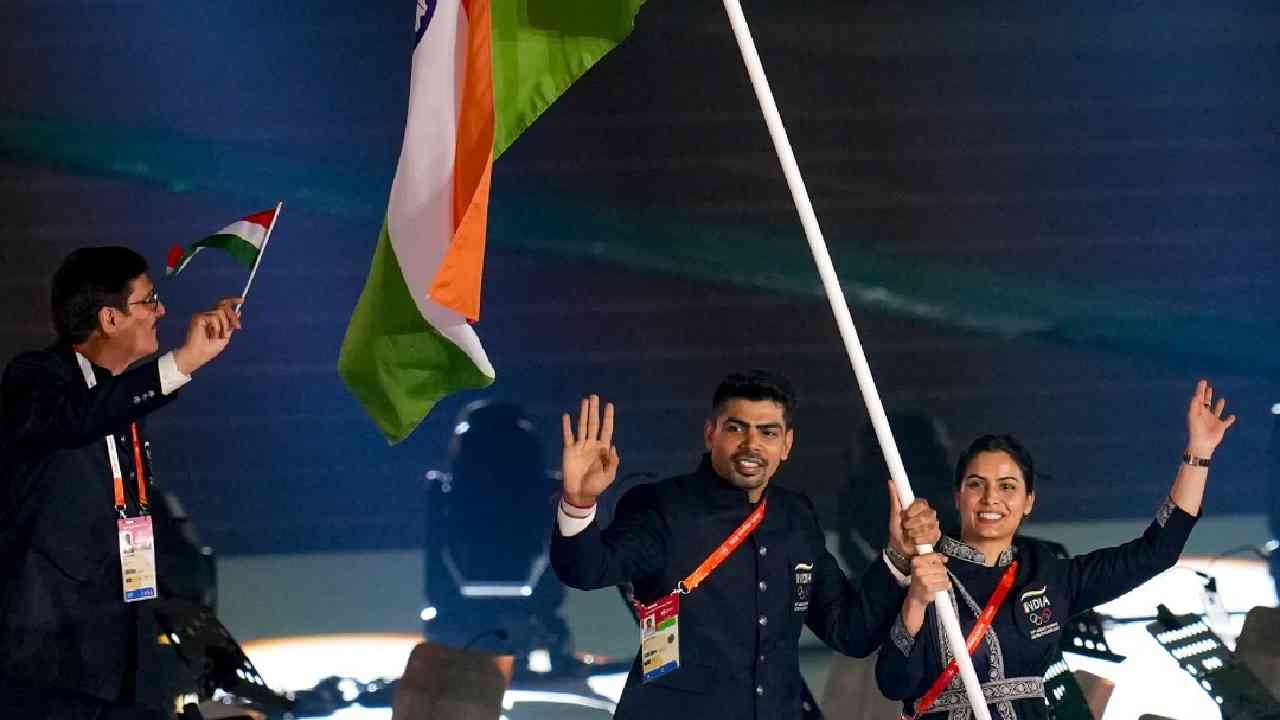
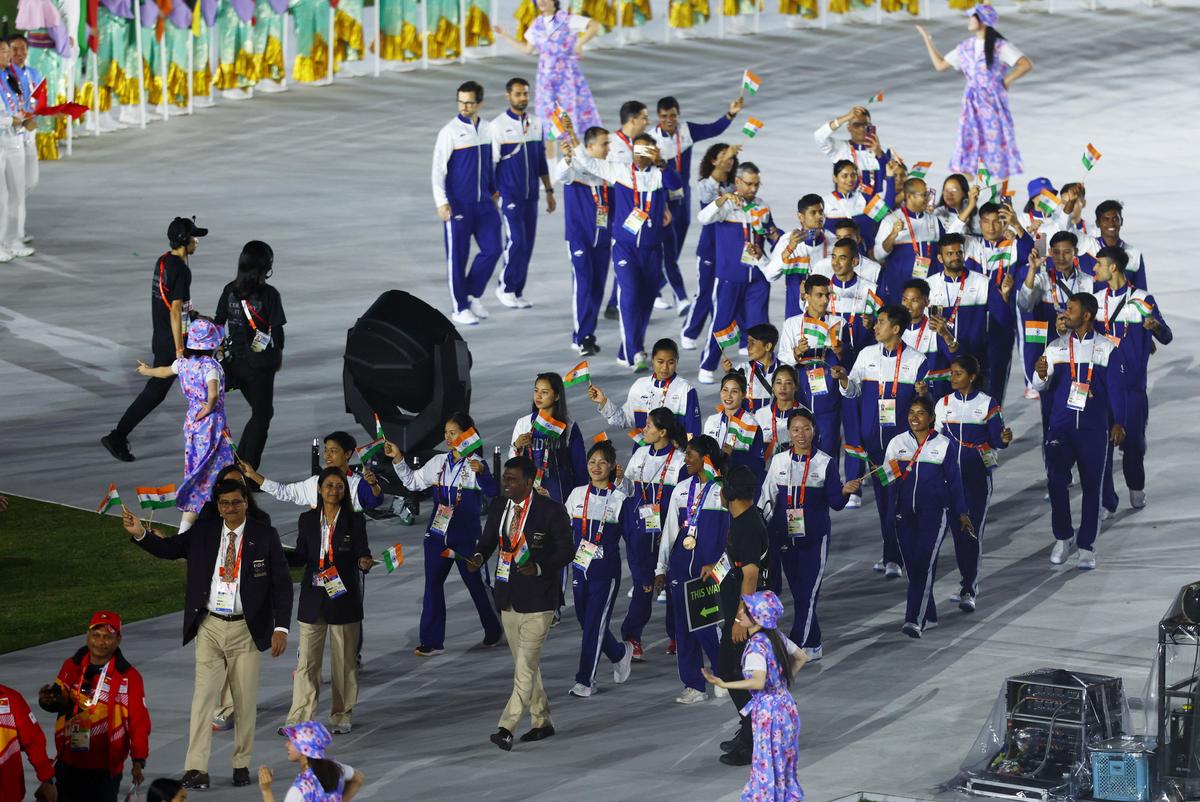
The Asian Games 2026 closing ceremony brought the curtain down on a dramatic 16-day sporting spectacle in Japan on Sunday, October 4, with Indian trap shooter Neeru Dhanda carrying the Tricolour and leading the country's contingent at the final celebration in Nagoya.
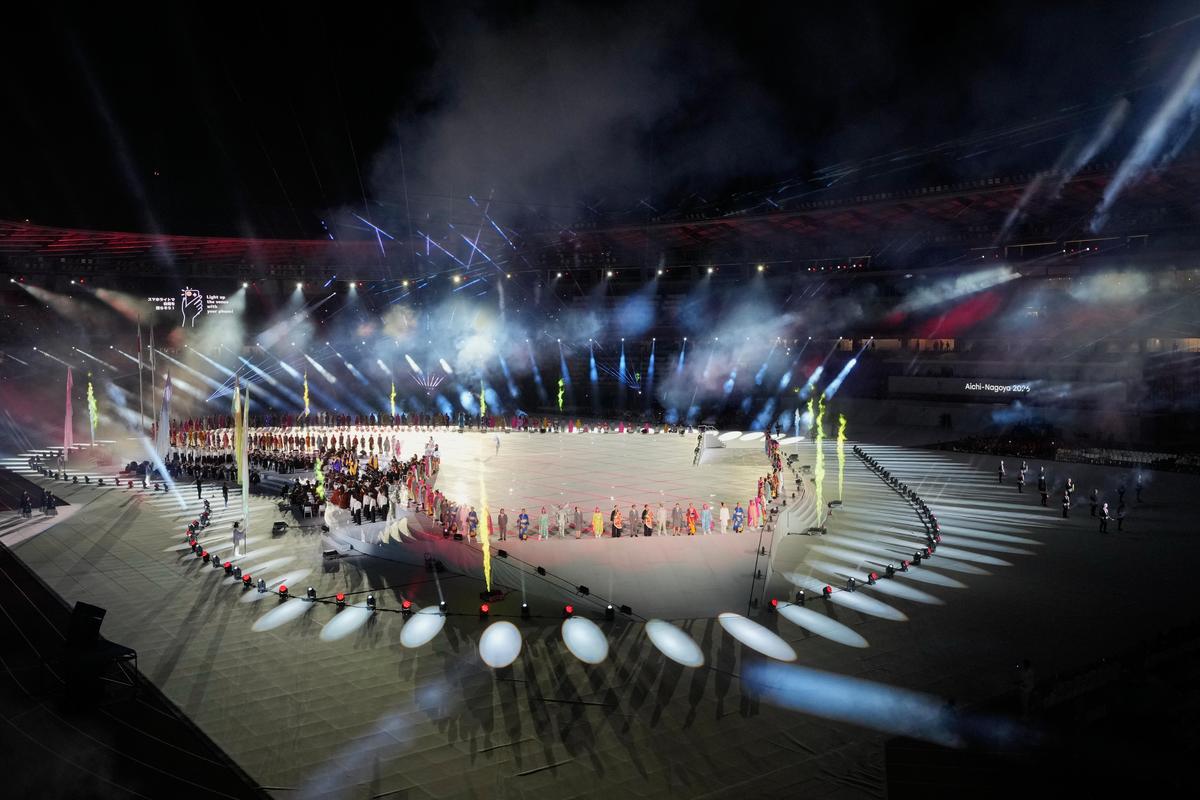
Held at the Nagoya City Mizuho Park Athletic Stadium, also known as Paloma Mizuho Stadium, the closing ceremony marked the end of the Aichi-Nagoya Asian Games 2026, the 20th edition of Asia's biggest multi-sport event. For India, the ceremony offered a fitting conclusion to a campaign that produced 85 medals, historic victories and several landmark performances.
India finished fourth in the Asian Games 2026 medal tally, collecting 21 gold, 27 silver and 37 bronze medals. China dominated the standings with 341 medals, including 169 gold, while hosts Japan finished second with 269 medals, including 83 gold. South Korea occupied third place with 150 medals, including 39 gold.
But beyond the numbers, the closing ceremony reflected the contrasting story of an edition that delivered extraordinary sporting moments while also facing significant organisational challenges.
Neeru Dhanda Carries India's Flag at Asian Games 2026 Closing Ceremony
The biggest Indian highlight of the closing ceremony was undoubtedly Neeru Dhanda's appearance as the country's flag-bearer.
The 27-year-old shooter had one of the most successful individual campaigns of any Indian athlete at the Aichi-Nagoya Asian Games. She won two gold medals and a silver in trap shooting, including a historic individual gold that made her the first Indian woman to win an individual Asian Games gold medal in the trap event.
Dhanda's performance had begun with a record-setting qualification round. She missed only two shots out of 30 to register a score of 28, establishing an Asian Games record.
She subsequently won the women's individual trap title with a score of 26. Her medal haul continued with a silver in the women's team trap event alongside Aashima Ahlawat and Manisha Keer.
Her biggest triumph came in the mixed team event, where she partnered Kynan Chenai to gold. The pair scored 34, breaking the previous Asian Games record of 30 and securing India's first gold medal in the mixed team trap event at these Games.
Dhanda had returned to India after completing her shooting events but came back to Japan for the closing ceremony, where she proudly carried the Indian flag during the Parade of Nations.
Her selection was more than ceremonial. It recognised a campaign that combined individual excellence, historic achievement and record-breaking performances.
India Finishes Fourth With 85 Medals
India's final Asian Games 2026 medal tally stood at 85 medals — 21 gold, 27 silver and 37 bronze — enough for fourth place overall.
Although the total fell short of India's record haul from the previous Asian Games, the Aichi-Nagoya campaign produced several results that could prove significant for Indian sport.
Team events were particularly successful.
India won gold in both men's and women's cricket. The women's team defeated Sri Lanka by 147 runs, while the men's side overcame Pakistan by 19 runs to complete a memorable double.
Kabaddi again proved to be one of India's strongest sports. Both the men's and women's teams won gold, with the women's team defeating Iran 37-34 and the men's side recovering from a deficit to beat Iran 40-34.
Hockey delivered another defining chapter.
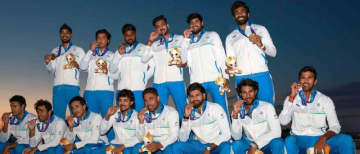
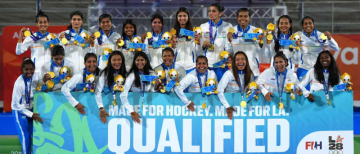
The Indian women's hockey team ended a 44-year wait for an Asian Games gold medal by defeating China 1-0, with Lalremsiami scoring the decisive goal. The men's hockey team successfully defended its title with a 5-1 victory over Malaysia.
The twin hockey triumphs were particularly important because both teams also secured qualification for the Los Angeles 2028 Olympics.
Together, cricket, kabaddi and hockey provided India with a remarkable run of team-sport success, while individual athletes added medals across shooting, archery, athletics, golf and other disciplines.
A Closing Ceremony Celebrating Japan and Asia
The Asian Games 2026 closing ceremony was designed as both a farewell to Aichi-Nagoya and a celebration of the cultural connections that bind Asia together.
Athletes from across the continent gathered for the final parade, waving national flags and celebrating alongside competitors who had spent the previous two weeks battling for medals.
The programme blended traditional Japanese cultural performances with contemporary entertainment. Music, dance and large-scale performances transformed the Mizuho Park stadium into a final showcase for Nagoya and the wider Aichi region.
The ceremony also featured speeches from Aichi Prefecture Governor Hideaki Omura and Olympic Council of Asia President Sheikh Joaan bin Hamad Al Thani. The Asian Games flame was eventually extinguished and the flags lowered, formally bringing the event to a close.
The closing proceedings also looked towards the future, with the Asian Games flag and torch handed over to Qatar, which will host the next edition in Doha in 2030.
A special segment also revisited the history of the continental sporting event, including the fact that the first Asian Games were held in New Delhi in 1951.
The transition from Aichi-Nagoya to Doha therefore carried a sense of sporting continuity: from the first Asian Games hosted in India to the next edition being staged in West Asia.
Aichi-Nagoya 2026: Sporting Brilliance Amid Organisational Problems
While the sporting action produced memorable moments, the Asian Games 2026 were also marked by controversy surrounding organisation and logistics.
Unlike many recent major multi-sport events, organisers did not build a dedicated athletes' village. Instead, athletes and officials were accommodated across hotels, wooden container units and even a cruise ship.
The scale of the Games created additional pressure. Around 17,000 athletes and officials participated across the event, while the organisers had reportedly planned accommodation for fewer people.
The result was a series of logistical problems.
Some delegations reportedly faced lengthy registration queues, with athletes waiting for hours after arriving. There were also complaints involving double-booked rooms and incorrect accommodation arrangements.
Transportation became another recurring problem. Shuttle buses failed to arrive in some cases, while others reportedly took athletes to the wrong venues. Some competitions were delayed as a result.
There were diplomatic and ceremonial errors as well. In one incident, the wrong national anthem was played for South Korea's men's hockey team. South Korea's men's football team also faced an embarrassing moment when its national flag could not be raised during the medal ceremony after its victory over Japan.
The problems were particularly striking because the Games had been presented as a simpler and more streamlined alternative to the enormous logistical demands associated with traditional mega sporting events.
Teenagers Become the Stars of Aichi-Nagoya
Despite the organisational difficulties, the Asian Games 2026 were lifted by a new generation of sporting stars.
Among the most remarkable was China's 13-year-old swimmer Yu Zidi, who won three individual gold medals and was named the women's Most Valuable Player of the Games.
Her performances immediately placed her among the most exciting young names in international swimming, with attention already turning towards the Los Angeles 2028 Olympics.
China's Zhang Zhanshuo, aged 19, also made history by becoming the first swimmer to win seven gold medals at a single Asian Games.
Japan's 17-year-old Shin Ohashi added another extraordinary achievement by breaking the world record in the men's 200m breaststroke.
Athletics also belonged to the younger generation. China's 18-year-old Yan Ziyi won women's javelin gold with a world-class performance, while Thailand's 20-year-old Puripol Boonson won both the men's 100m and 200m titles and earned the men's MVP award.
The emergence of these athletes gave the Games a powerful forward-looking narrative, suggesting that several of the stars who dominated Aichi-Nagoya could become major figures on the global sporting stage in the years ahead.
A Record-Breaking, Expansive Asian Games
The Aichi-Nagoya edition featured a record 43 sports, with disciplines such as padel, mixed martial arts, teqball and surfing making their Asian Games debuts.
The scale of the competition was enormous, with events taking place across multiple locations in Japan and involving athletes from 45 National Olympic Committees.
China once again demonstrated its depth, topping the medal table with 169 gold medals. Japan's 83 gold medals represented its best performance at an overseas Asian Games and helped the hosts finish second.
India's fourth-place finish, meanwhile, reinforced its position among Asia's leading sporting nations despite the overall medal count being lower than its previous record haul.
From Nagoya to Doha: What Comes Next?
As the flame went out at the Nagoya City Mizuho Park Athletic Stadium, attention immediately shifted towards the future.
The Asian Games will now move to Doha, Qatar, in 2030, marking the next chapter of Asia's continental sporting journey.
For India, the Aichi-Nagoya Games leave behind a mixed but significant legacy. The 85-medal haul was accompanied by historic achievements in women's hockey, trap shooting and several other disciplines, while cricket, kabaddi and hockey produced six gold medals across their respective men's and women's competitions.
And at the centre of India's final moment in Nagoya stood Neeru Dhanda, a shooter who arrived at the Games as a competitor and left as one of India's defining performers.
With the Tricolour in her hands, Dhanda symbolised the closing chapter of India's Asian Games 2026 campaign — one shaped by medals, records, breakthrough victories and the emergence of a new generation of sporting talent.
The Aichi-Nagoya Games may have ended, but for many of the athletes who made headlines in Japan, the journey towards Los Angeles 2028 and beyond has only just begun.
With input from agencies
Image Source: Multiple agencies
© Copyright 2026. All Rights Reserved. Powered by Vygr Media.