 By
By 
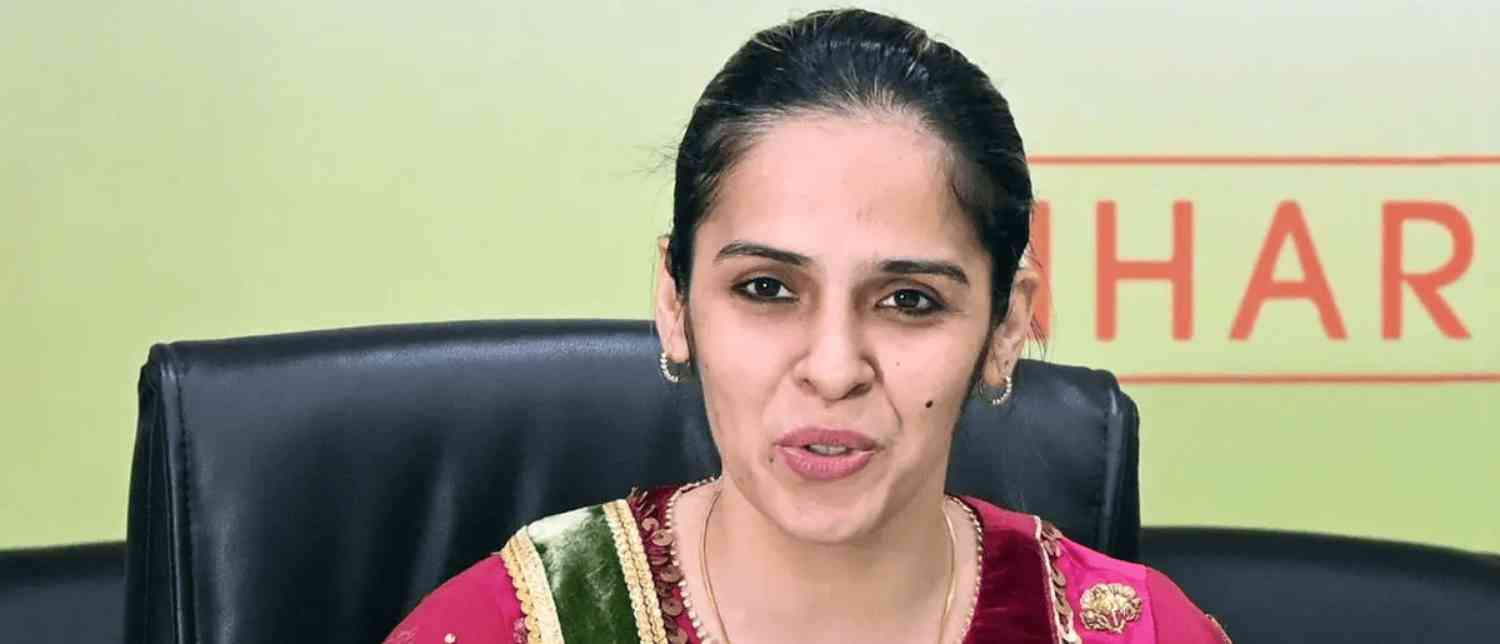
Indian badminton has witnessed many milestones over the decades, but few figures have shaped the sport as profoundly as Saina Nehwal. The former World No.1 and Olympic bronze medallist has officially confirmed her retirement from competitive badminton, ending months of speculation surrounding her prolonged absence from the international circuit.
Speaking candidly on a recent podcast—remarks that were reported by PTI and widely covered by national media—Nehwal revealed that her decision was driven by an irreversible physical reality. Chronic knee degeneration and arthritis had left her body incapable of enduring the relentless demands of elite badminton.
Although her last competitive appearance came at the Singapore Open in June 2023, Saina disclosed that she had effectively stopped playing nearly two years ago. At the time, she did not believe a formal announcement was necessary—a choice that reflects her understated approach to both success and closure.
While neither the Badminton Association of India (BAI) nor the Sports Authority of India has issued an immediate official statement, tributes from fellow athletes, coaches, and fans have poured in, marking the end of one of the most transformative chapters in Indian sporting history.
An Honest and Unfiltered Goodbye: “I Can’t Do It Anymore”
Saina Nehwal’s retirement was not marked by ceremony or spectacle. Instead, it arrived through a moment of raw honesty. “I entered the sport on my own terms and left on my own terms, so there was no need to announce it,” she said, encapsulating her belief that actions often speak louder than formal declarations.
The decision, she clarified, was neither sudden nor emotional. It was the inevitable result of years of physical wear and tear. Elite badminton, she explained, demands eight to nine hours of intense daily training to remain competitive at the highest level. For her, however, even one or two hours had become unbearable.
“My knee was giving up in one or two hours. It was swelling and became very tough to push after that,” she said. Medical assessments confirmed what she had already been feeling—severe cartilage degeneration and arthritis in her knees had made sustained, high-intensity training impossible.
Addressing her parents and coaches, Saina spoke with quiet finality. “Your cartilage has totally degenerated, you have arthritis… I just told them, ‘Now probably I can’t do it anymore, it is difficult.’” Her words resonated deeply across the sporting community, offering a rare and unfiltered insight into the physical cost of prolonged excellence.
From Haryana to the World Stage: A Trailblazer’s Rise
Saina Nehwal’s journey remains one of the most inspiring in Indian sport. Rising from modest beginnings in Haryana, she shattered long-standing barriers to become a global force in badminton—at a time when India had little presence in the women’s singles discipline.
Her breakthrough moment arrived at the 2012 London Olympics, where she won a historic bronze medal. The achievement made her the first Indian badminton player to win an Olympic medal, instantly altering the trajectory of the sport in the country.
But London was not an isolated triumph. Saina went on to become the first Indian woman to reach a World Championships final, securing silver in Jakarta in 2015. That same year, she achieved yet another historic feat—becoming the first Indian woman to attain the World No.1 ranking in women’s singles.
Each milestone expanded the boundaries of what Indian badminton could aspire to, inspiring a new generation of players and changing public perception of the sport.
Injuries, Comebacks, and Unyielding Resilience
While Saina’s career was defined by groundbreaking success, it was equally marked by resilience in the face of adversity. A serious knee injury sustained during the Rio 2016 Olympics proved to be a pivotal moment, threatening to cut short a career that had already reached legendary status.
True to her fighting spirit, she staged an impressive comeback. In 2017, she won a bronze medal at the World Championships in Glasgow, followed by a gold medal in women’s singles at the 2018 Commonwealth Games. These victories reaffirmed her status as a champion and demonstrated her ability to compete with the world’s best despite physical limitations.
However, the underlying knee issues never fully receded. Recurrent pain and swelling repeatedly disrupted her training cycles, preventing sustained consistency. In 2024, Saina revealed that she had developed arthritis in both knees, with significant cartilage erosion—a condition incompatible with the explosive movement and endurance required in modern badminton.
As the sport continued to evolve at a relentless pace and younger players rose through the ranks, Saina’s body could no longer keep up. Her decision to step away quietly was not a retreat, but a recognition of reality.
Career Achievements: A Record That Redefined Indian Badminton
Saina Nehwal retires with a legacy few can match. Over the course of her professional career, she accumulated an extraordinary list of achievements:
-
Olympic Bronze Medal – London 2012 (India’s first badminton Olympic medal)
-
World Championships Medals – Silver (2015, Jakarta) and Bronze (2017, Glasgow)
-
World Junior Championships Gold – 2008 (first and only Indian to achieve this)
-
Over 24 international titles, including 11 BWF Super Series titles
-
Commonwealth Games Medals:
-
Singles Gold – 2010, 2018
-
Mixed Team Gold – 2018
-
Mixed Team Silver – 2010
-
Mixed Team Bronze – 2006
-
-
Asian Games Medals:
-
Women’s Singles Bronze – 2016, 2018
-
Team Bronze – 2014
-
-
Represented India at three Olympic Games – Beijing 2008, London 2012, Rio 2016
-
Achieved World No.1 ranking in 2015 (first Indian woman to do so)
Across formats, Saina recorded 457 professional match wins—446 in women’s singles, nine in women’s doubles, and two in mixed doubles. Her total career prize money stood at $862,136, a testament to both longevity and consistency at the elite level.
National Honours and Global Recognition
Saina’s contributions were acknowledged with several of India’s highest sporting honours:
-
BWF Most Promising Player of the Year – 2008
-
Arjuna Award – 2009
-
Padma Shri – 2010
-
Rajiv Gandhi Khel Ratna Award – 2010
These awards reflected not only her on-court success but also her role in elevating Indian badminton on the global stage.
Beyond Medals: A Legacy of Honesty and Self-Awareness
Saina Nehwal’s retirement is more than the conclusion of a decorated career—it is a moment of reflection for Indian sport. Her choice to walk away without spectacle challenges the culture of dramatic farewells and relentless expectations placed on elite athletes.
At a time when players are often pressured to compete through pain in pursuit of national glory, her openness about arthritis, cartilage degeneration, and physical decline is both brave and necessary. It forces a broader conversation around athlete health, longevity, and the responsibilities of sporting institutions toward those who give their prime years to excellence.
Celebrating champions should not end with their final match. It must include sustained support for rehabilitation, mental well-being, and life beyond competition.
Closing the Chapter
Saina Nehwal leaves the court as she lived on it—with dignity, resilience, and honesty. Her journey reshaped Indian badminton, inspired countless young athletes, and proved that global excellence was possible from Indian soil.
As she steps into the next phase of her life, her legacy remains firmly intact—not just in medals and rankings, but in the quiet courage of knowing when to stop.
Indian badminton will move forward, but it will forever carry the imprint of Saina Nehwal.
With inputs from agencies
Image Source: Multiple agencies
© Copyright 2025. All Rights Reserved. Powered by Vygr Media.