 By
By 
India began their three-match T20I series against Afghanistan in emphatic fashion, cruising to a seven-wicket victory at the Arun Jaitley Stadium in New Delhi on Sunday. A superb all-round bowling effort first restricted Afghanistan to 156 for 8 before Abhishek Sharma produced a breathtaking 82 off 32 balls to make the chase almost effortless.
India reached the 157-run target in just 13.4 overs, finishing on 160 for 3 with 38 balls to spare. The victory gave India a 1-0 lead in the series and, more importantly, offered a convincing response from a side that had plenty to prove with both bat and ball.
Arshdeep Singh sets the tone with a three-wicket haul
After winning the toss, India opted to field, and the decision immediately paid dividends. Afghanistan struggled to establish any rhythm during the opening stages of their innings as India's bowlers repeatedly attacked the stumps and maintained pressure.
Rahmanullah Gurbaz was dismissed for a duck after edging a delivery from Jasprit Bumrah, with Abhishek Sharma completing a sharp catch. The early breakthrough was followed by a cluster of wickets, leaving Afghanistan in serious trouble at 43 for 5 after seven overs.
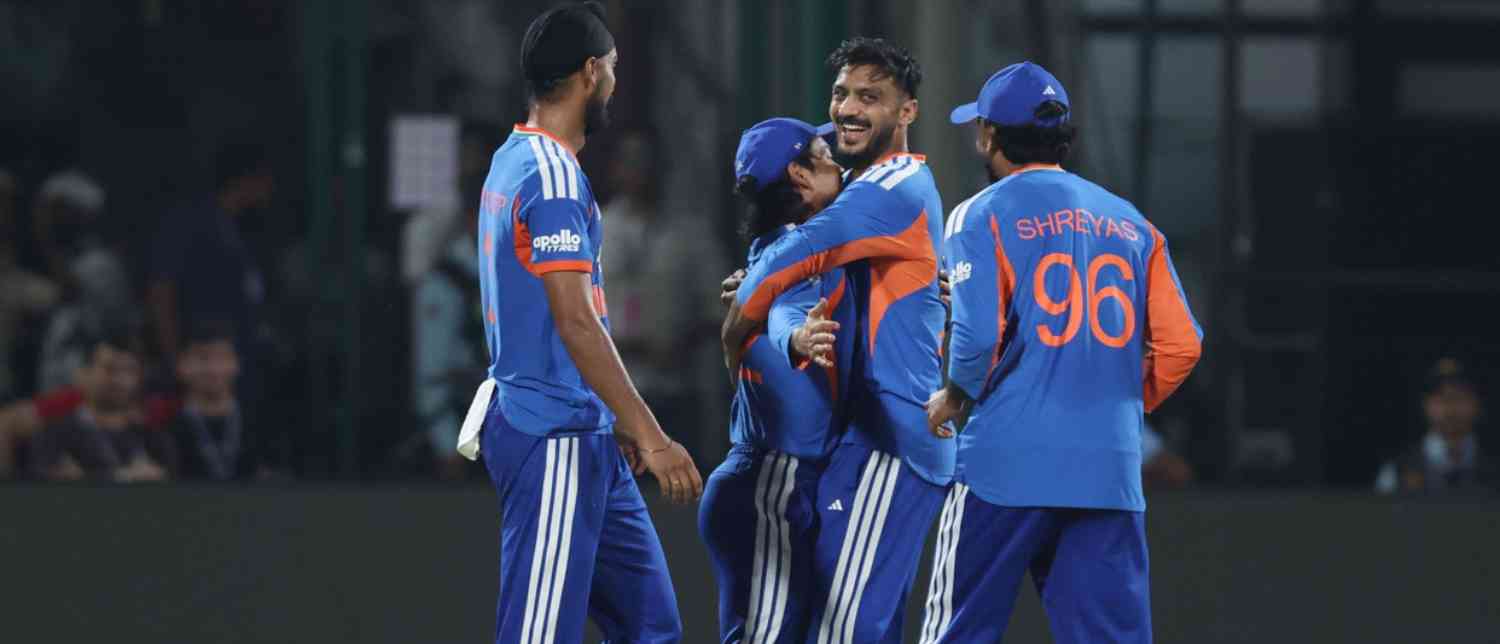
Arshdeep Singh emerged as India's most effective bowler. The left-arm pacer finished with impressive figures of 3 for 19 from four overs and was particularly effective when Afghanistan were attempting to rebuild.
His spell was not merely about wickets. Arshdeep delivered 16 dot balls from his 24 legal deliveries, using changes of pace, angles and variations to prevent Afghanistan's batters from finding sustained momentum. He dismissed Sediqullah Atal, Mohammed Nabi and Rashid Khan at crucial stages of the innings.
His performance, however, came with an unusual statistical footnote. Arshdeep was also credited with 51 wides in the broader statistical period cited in the match coverage, the highest such figure for a bowler representing a team since January 2025. That makes his excellent wicket-taking display even more intriguing: while his accuracy under pressure was decisive on the night, the wider numbers point to an area that will require attention.
Afghanistan recover after early collapse
For much of the first half of the innings, Afghanistan looked incapable of reaching a competitive total. Their top order failed to convert starts, and India's combination of pace and spin repeatedly exposed gaps in the Afghan batting lineup.
Varun Chakravarthy and Axar Patel played an important supporting role. Varun finished with 1 for 16 from his four overs, while Axar returned 1 for 27. Bumrah, meanwhile, completed his four-over spell with 1 for 26 and 16 dot balls, ensuring Afghanistan could never completely break free during the middle overs.
Yet Afghanistan found a way to salvage the innings.
Azmatullah Omarzai played the defining innings for the visitors, remaining unbeaten on 64 from 44 deliveries. His counter-attacking approach was particularly important after Afghanistan had slipped to 43 for 5.
Omarzai found an able partner in Mohammad Nabi, and the pair added 83 runs for the sixth wicket. Their partnership transformed what threatened to be a below-par total into a score that at least gave Afghanistan something to defend.
Omarzai continued attacking in the final over, taking on Shivam Dube and collecting two sixes as Afghanistan added 21 runs from the last six deliveries. The late surge lifted Afghanistan to 156 for 8, setting India a target of 157.
Abhishek Sharma turns the chase into a one-sided contest
If Afghanistan's late recovery provided a glimmer of hope, Abhishek Sharma extinguished it almost immediately.
India's chase began with Sanju Samson and Abhishek at the crease. Samson made 10 before departing early, but his dismissal barely slowed India's progress. Abhishek immediately shifted the momentum back in India's favour, attacking the Afghan bowling with remarkable freedom.
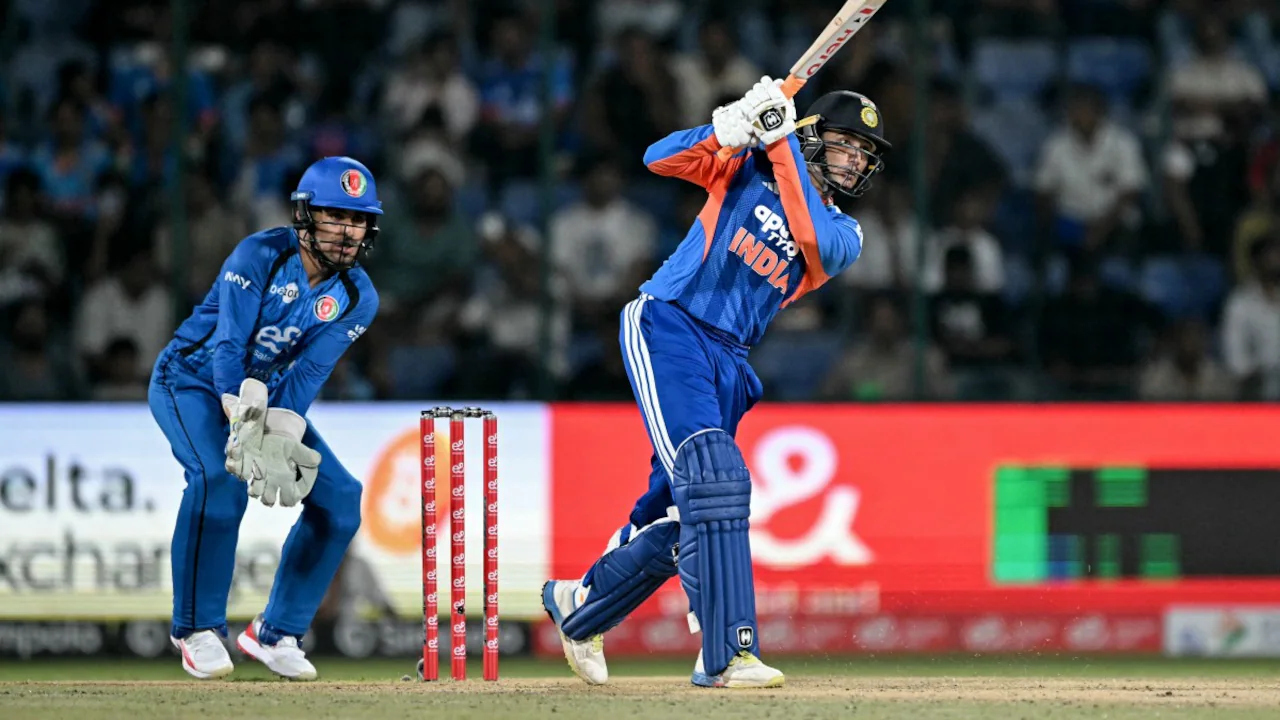
The left-hander's innings was a spectacular display of modern T20 batting. He smashed seven fours and seven sixes during his 32-ball stay, scoring at a strike rate of 256. His half-century arrived in just 22 balls, underlining the extraordinary pace at which he dismantled the attack.
For Abhishek, the innings carried significance beyond the numbers. He had gone through a difficult run in which he had failed to cross 20 in six successive games. Rather than allowing that sequence to affect his approach, he returned to his aggressive style and produced the sort of innings that has become synonymous with his T20 game.
His first six, lofted over cover, immediately signalled his intentions. More followed as he repeatedly targeted the gaps and boundaries, forcing Afghanistan's bowlers into defensive positions.
Ishan Kishan provides the perfect support
While Abhishek supplied the fireworks, Ishan Kishan offered the stability India needed.
The pair put together a remarkable 121-run partnership for the second wicket from only 53 balls. Kishan scored 42 from 33 deliveries, including five fours and a six, and played an important role in ensuring that India's chase did not depend entirely on Abhishek's brilliance.
The partnership effectively ended Afghanistan's hopes of mounting a comeback. By the time Abhishek was dismissed, India required only 17 more runs for victory.
Afghanistan did manage to remove both established batters in relatively quick succession, but the damage had already been done. Captain Shreyas Iyer and Tilak Varma completed the formalities, taking India across the line with 38 deliveries still remaining.
India dominate the key phases of the match
The scorecard tells the story of India's victory, but the phase-by-phase contest explains why the result was so decisive.
Afghanistan lost wickets rapidly during the first seven overs, falling to 43 for 5. India then allowed the visitors to rebuild through Omarzai and Nabi, but Arshdeep's second spell prevented that partnership from completely changing the complexion of the innings.
Afghanistan's final total of 156 for 8 was respectable, but it never looked imposing on a good batting surface. India's opening partnership in the chase demonstrated why. The Indian batters attacked early, kept the required rate comfortably under control and ensured the asking rate never became a factor.
The contrast between the two innings was stark. Afghanistan needed 20 overs to reach 156, while India required only 13.4 overs to surpass the same mark. That difference reflected India's superior control during the decisive phases of the match.
What the result means for the series
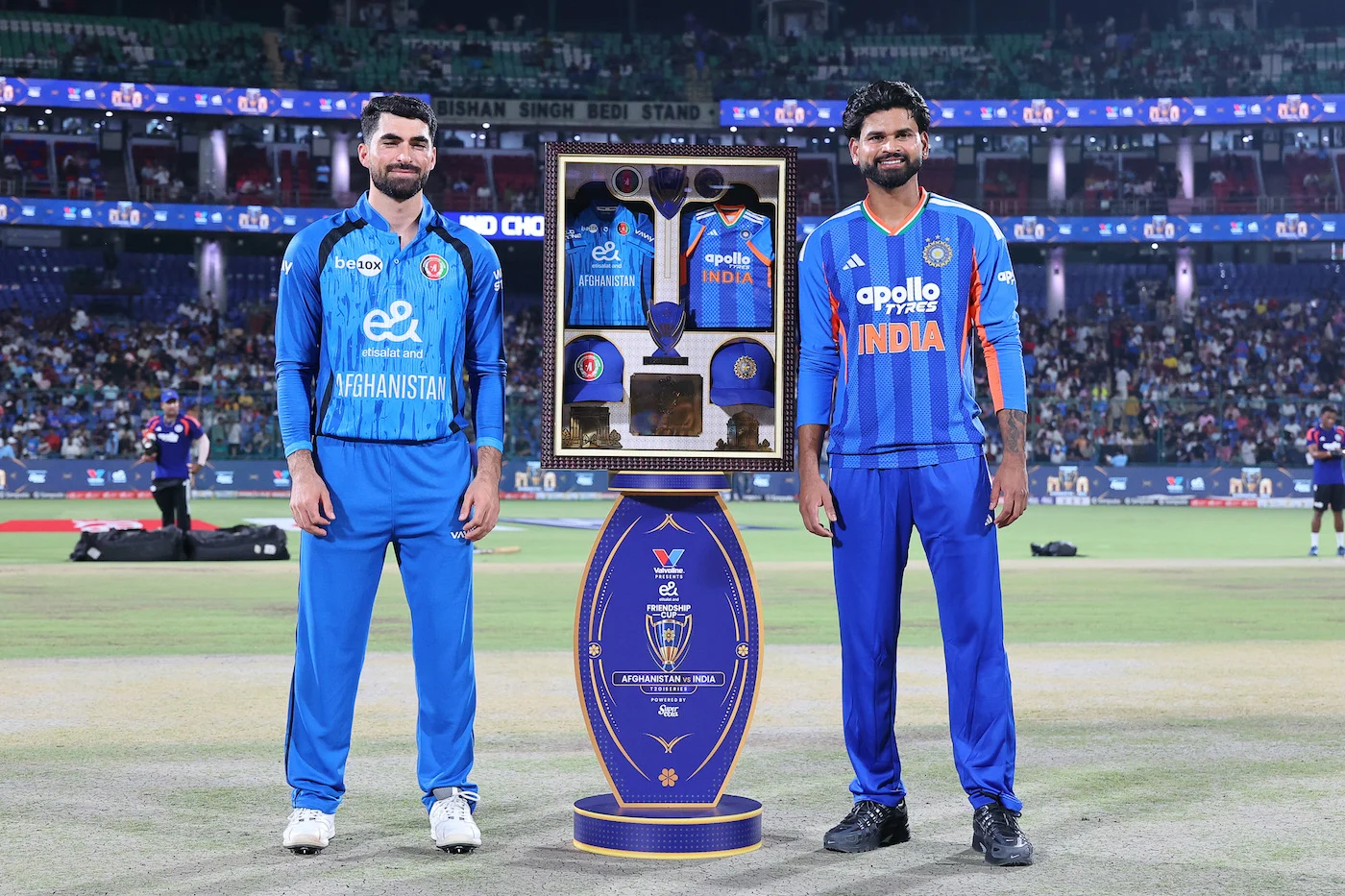
The seven-wicket victory gives India an early 1-0 advantage in the three-match series, while Afghanistan now face a must-win situation in the next encounter if they are to keep the series alive.
For India, the biggest positive will be the balance between the bowling and batting performances. Arshdeep's three wickets, Bumrah's disciplined spell and the control provided by the spinners restricted Afghanistan's scoring opportunities. Then Abhishek's explosive innings ensured the bowlers' efforts were rewarded quickly.
For Afghanistan, Omarzai's unbeaten 64 will be a major source of encouragement. His ability to counterattack after the team had collapsed to 43 for 5 demonstrated that Afghanistan still possessed the resilience to recover from difficult situations.
However, the top-order collapse and the lack of control with the ball will concern the visitors. Against an Indian batting lineup capable of scoring at such a rate, giving away early momentum can quickly turn a competitive contest into a one-sided affair.
The second T20I will therefore be about much more than simply levelling the series. Afghanistan will need a far stronger start with both bat and ball, while India will look to maintain the aggressive template that delivered such a comprehensive opening victory.
For now, though, the opening night belonged to two contrasting Indian performances: Arshdeep Singh's disciplined three-wicket burst that dismantled Afghanistan's middle order and Abhishek Sharma's breathtaking assault that turned a 157-run chase into a procession.
India could hardly have asked for a better start to the series.
With input from agencies
Image Source: Multiple agencies
© Copyright 2026. All Rights Reserved. Powered by Vygr Media.