 By
By 
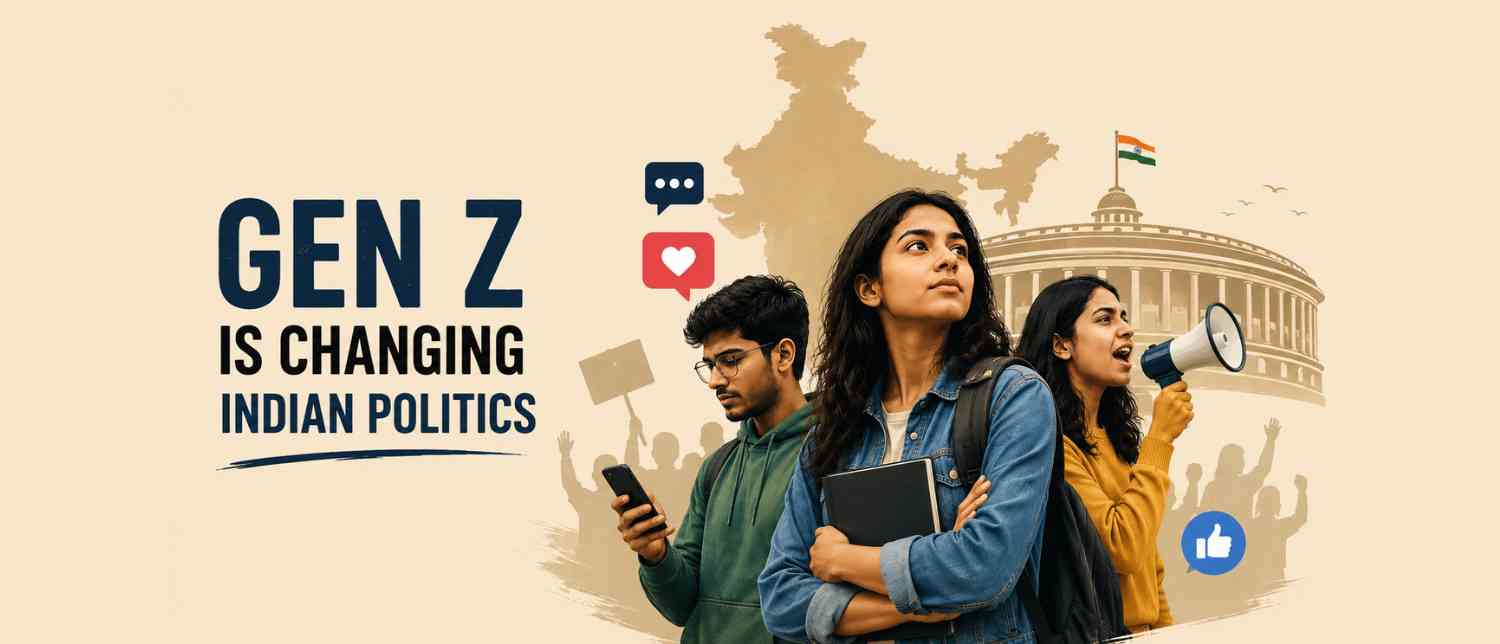
For decades, Indian politics has operated on a familiar formula. Political parties built strong organisational networks, cultivated local leaders, relied on rallies and traditional media, and appealed to voters through established identities of caste, religion, region and ideology. Elections were often fought around carefully calculated vote banks, while political communication largely followed a top-down model in which leaders spoke and citizens listened. That model has not disappeared, but India's rapidly expanding Gen Z population is beginning to challenge many of its assumptions. A generation raised on smartphones, social media and instant access to information is entering India's political conversation with expectations that are markedly different from those of previous generations.
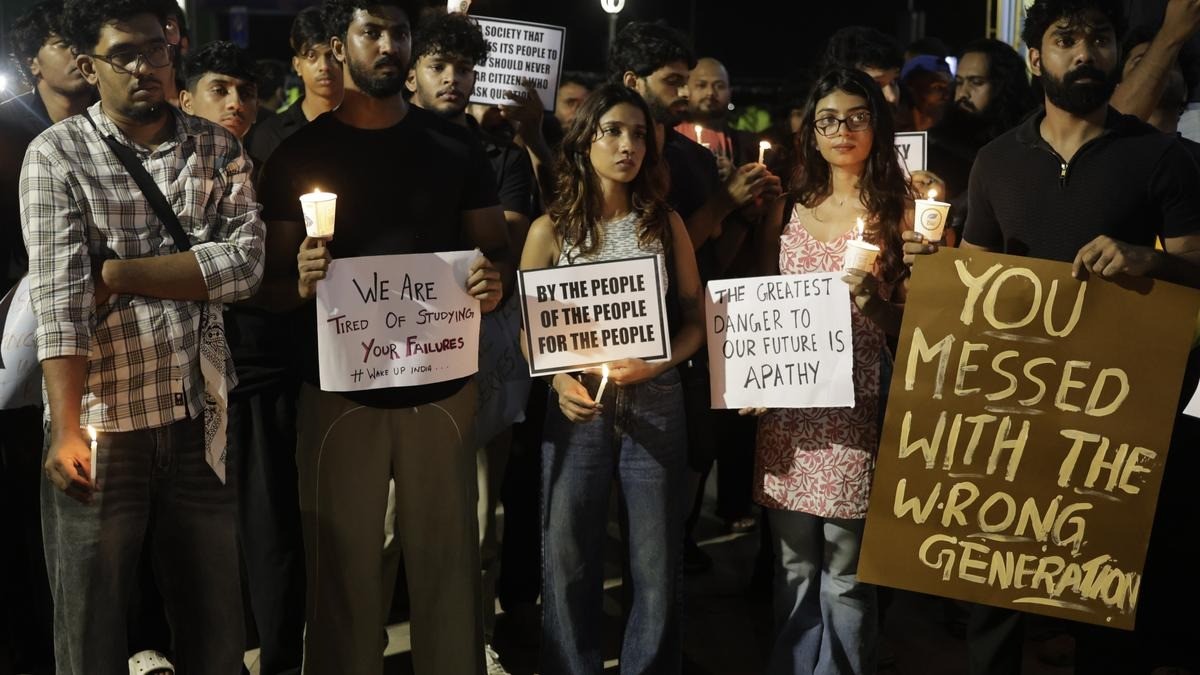
It would, however, be a mistake to describe Gen Z as politically apathetic simply because many young Indians do not participate in politics through conventional channels. Their political engagement often takes different forms. A young person may question an election promise on social media, fact-check a political speech, participate in an online campaign, discuss an examination controversy or join a street protest without ever becoming a member of a political party. Politics for this generation is increasingly issue-driven rather than permanently tied to an organisation or inherited political loyalty. This means that political parties may find it increasingly difficult to treat young voters as predictable vote banks that can be relied upon election after election.
India's Young Voters Are Asking Different Questions
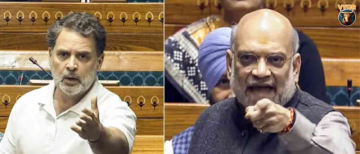
The transformation is particularly visible in the way young Indians consume political information. A political speech delivered in Parliament can be clipped, shared and debated within minutes, while a statement made during an election rally can be fact-checked or challenged by thousands of users almost immediately. Social media has effectively removed much of the distance that once existed between political leaders and ordinary citizens. The relationship is no longer simply one of politicians communicating their message and voters receiving it; citizens can respond, question, ridicule, reinterpret and amplify political messages in real time.
This has also changed the role of humour and political satire. Memes may appear trivial to traditional political observers, but they have become an accessible form of political communication for younger audiences. Complex political contradictions can be reduced to a single image or video, while dissatisfaction that might once have remained a private conversation can become a collective digital discussion within hours. The political importance of such platforms therefore lies not merely in their ability to spread information but in their ability to give ordinary citizens a greater role in shaping political narratives.
Yet political parties should be careful about drawing the wrong conclusion from this shift. Creating Instagram reels, hiring influencers or adopting youth-oriented language does not automatically make a political organisation relevant to Gen Z. Young voters are capable of distinguishing between genuine engagement and carefully manufactured digital campaigns. A politician cannot become relatable simply by speaking in internet slang or appearing in a series of professionally produced short videos. What this generation appears to demand is not necessarily younger politicians, but newer political behaviour—greater transparency, responsiveness, accountability and a willingness to answer difficult questions.
The Economic Anxiety Behind Political Discontent
Beneath Gen Z's digital political behaviour lies a much deeper concern: economic uncertainty. For millions of young Indians, politics is not an abstract discussion about ideology or electoral strategy. It is closely connected to whether their education will translate into employment, whether competitive examinations will be conducted fairly, whether recruitment processes will be completed on time and whether their economic aspirations will be achievable.
This is why issues such as unemployment, examination irregularities and the quality of education can rapidly become political flashpoints. For a student who has spent years preparing for a competitive examination, a leaked paper or a cancelled examination is not simply an administrative failure. It can represent lost years, financial pressure and a growing sense that merit and hard work are not enough to guarantee a fair opportunity. When young people begin to doubt the institutions that are supposed to determine their future, dissatisfaction naturally extends beyond a particular examination or department and begins to influence their perception of government itself.
India's employment challenge makes this concern even more significant. The country has a young population with increasingly ambitious aspirations, but the economy must generate enough productive and meaningful opportunities to match those aspirations. A degree alone cannot guarantee economic security, and the gap between educational expectations and employment opportunities can create considerable frustration among young people. If India's demographic advantage is to become an economic advantage, employment, skill development and the transition from education to work will have to receive far greater political attention.
This is also where the traditional language of political campaigning can begin to lose its effectiveness. Young voters may appreciate national pride, cultural identity and political symbolism, but these cannot permanently substitute for economic opportunity. A patriotic slogan cannot solve unemployment, and a viral political campaign cannot repair a dysfunctional recruitment process. For a generation that has grown up comparing India's progress with developments around the world in real time, the question increasingly becomes whether political promises are translating into tangible improvements in everyday life.
From Traditional Vote Banks to Performance-Based Expectations
It would be premature to suggest that caste, religion, region or community identity no longer matter in Indian elections. They continue to influence political behaviour in substantial ways, and India's social realities cannot be reduced to a single generational trend. What is changing, however, is the addition of another important layer to the electoral equation: performance.
Young voters are increasingly exposed to information about how governments function in other parts of India and across the world. Through digital platforms, they can compare public transport, universities, healthcare systems, infrastructure, employment opportunities and government services almost instantly. This exposure can raise expectations considerably. Instead of asking only which political identity a party represents, a section of young voters is also asking whether the government is delivering efficiently and whether public institutions are capable of meeting modern expectations.
This does not mean Gen Z is abandoning ideology. Rather, ideology increasingly has to coexist with delivery. A political party can still mobilise support around identity and values, but its ability to retain that support may increasingly depend on whether citizens see tangible results. The younger electorate is unlikely to accept the idea that a government should be judged only by its speeches, slogans or intentions. For many young Indians, governance itself is becoming a political product that can be evaluated, compared and criticised.
Digital Democracy Comes With Its Own Risks
The growing political influence of Gen Z presents a major opportunity for Indian democracy, but it also comes with serious risks. Social media has lowered the barriers to political participation, allowing individuals without political connections or organisational backing to influence public conversations. A young citizen can now build an audience, raise an issue and potentially force political institutions to respond without belonging to a traditional political organisation. That is a significant democratisation of political communication.
At the same time, the same platforms that empower citizens can also amplify misinformation, outrage and polarisation. Algorithms often reward content that generates strong emotional reactions, which means provocative or misleading claims can travel much faster than nuanced explanations. The emergence of artificial intelligence-generated content and deepfakes makes the problem even more complicated. A politically charged video can reach millions before there is enough time to establish whether it is authentic.
There is also a difference between digital visibility and meaningful democratic participation. Sharing a political post is not the same as voting, and participating in a viral campaign does not necessarily translate into sustained civic engagement. Gen Z's political influence will ultimately be determined by whether its enormous capacity to generate attention can be converted into informed voting, community participation, institutional engagement and long-term demands for accountability.
Political Parties Cannot Treat Youth as an Election-Day Demographic
This is where India's political parties face perhaps their biggest challenge. They can continue treating Gen Z as another demographic category to be targeted during election campaigns, or they can recognise that this generation is changing the way political communication and accountability work. The latter approach would require more than digital outreach. It would mean creating meaningful opportunities for young people to participate in policymaking, organisational decision-making and political leadership rather than limiting them to campaign activities and youth wings.
The generational gap within India's political institutions is also worth examining. India is among the world's youngest major countries, yet political institutions remain dominated by considerably older generations. Experience is undoubtedly valuable in public life, but experience should not become an excuse for resisting changing expectations. A young population needs political institutions capable of understanding the economic, technological and social environment in which young Indians are actually living.
The future of Indian politics will therefore depend not simply on which party succeeds in attracting Gen Z voters, but on which parties understand why these voters are increasingly sceptical of conventional political behaviour. They are not necessarily demanding perfect politicians. They are demanding politicians who can explain decisions, accept scrutiny, acknowledge mistakes and demonstrate results. They are also increasingly accustomed to questioning information rather than accepting political narratives at face value.
Gen Z Could Change Indian Politics Without Replacing It
The most important point is that Gen Z does not necessarily have to reject India's existing political system to transform it. Generational change can occur through pressure rather than replacement. If young voters consistently demand better governance, question unfulfilled promises, challenge misinformation and evaluate governments on performance, political parties will eventually have to respond.
India's political class should therefore resist the temptation to view Gen Z merely as a generation that needs to be marketed to. It is a generation that is learning to scrutinise the political system itself. Its expectations have been shaped by instant communication, global comparisons, economic uncertainty and unprecedented access to information. That combination is likely to make political accountability increasingly continuous rather than confined to election seasons.
The real significance of Gen Z in Indian politics, then, may not be that it will suddenly support one particular party or overturn the existing political order. Its deeper influence could lie in forcing every political organisation to compete on new terms. Leaders may increasingly have to earn credibility rather than assume loyalty, demonstrate performance rather than simply make promises, and communicate with citizens rather than merely speak at them.
India's young population has often been described as the country's demographic dividend. But a demographic dividend is not created by age alone. It depends on education, employment, opportunity, institutional trust and the ability of young citizens to participate meaningfully in the country's future. If those expectations are ignored, demographic strength can instead become a source of frustration.
Gen Z is therefore not simply another generation of voters waiting to be persuaded by familiar political formulas. It is a generation that has grown up questioning information, comparing alternatives and demanding immediate answers. Indian politics may continue to be shaped by caste, religion, ideology and traditional party structures, but the younger electorate is adding a new demand to that equation: performance.
Political parties can continue using the old playbook, updating it with new technology and youthful branding. But technology can change how a message is delivered; it cannot change whether people believe it. The political organisations that understand this distinction will be better positioned for India's future. Those that do not may discover that the most significant challenge posed by Gen Z is not that young Indians are abandoning politics, but that they are becoming increasingly unwilling to accept politics on the old terms.
With input from agencies
Image Source: Multiple agencies
© Copyright 2026. All Rights Reserved. Powered by Vygr Media.