 By

After nearly six years of political separation, the Bharatiya Janata Party (BJP) and the Shiromani Akali Dal (SAD) have reunited ahead of the 2027 Punjab Assembly elections. The announcement marks the revival of a decades-old political partnership that once dominated Punjab politics but fell apart in 2020 over the controversial farm laws.
The reunion is more than just an electoral understanding between two former allies. It reflects changing political calculations, concerns over electoral performance, the need to consolidate traditional vote banks and growing recognition within both parties that contesting independently may not be enough to challenge the ruling Aam Aadmi Party (AAP).
However, the renewed BJP-Akali Dal alliance also raises several important questions. Why did the two parties decide to reconcile after years of disagreements? What role did Prime Minister Narendra Modi and Union Home Minister Amit Shah play in bringing them together? Why is the BJP seeking a significantly larger share of Assembly seats? And can the reunited alliance emerge as a strong challenger in Punjab?
BJP and Akali Dal Alliance: How the Six-Year Separation Ended
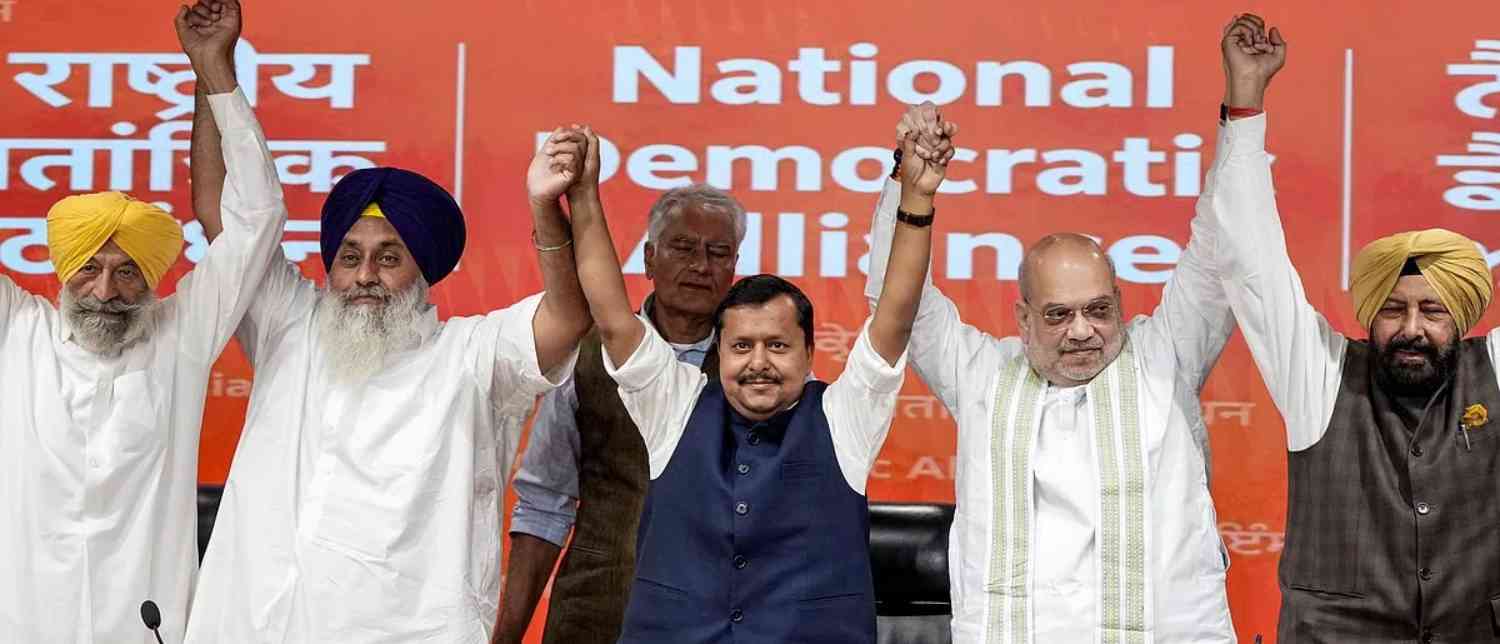
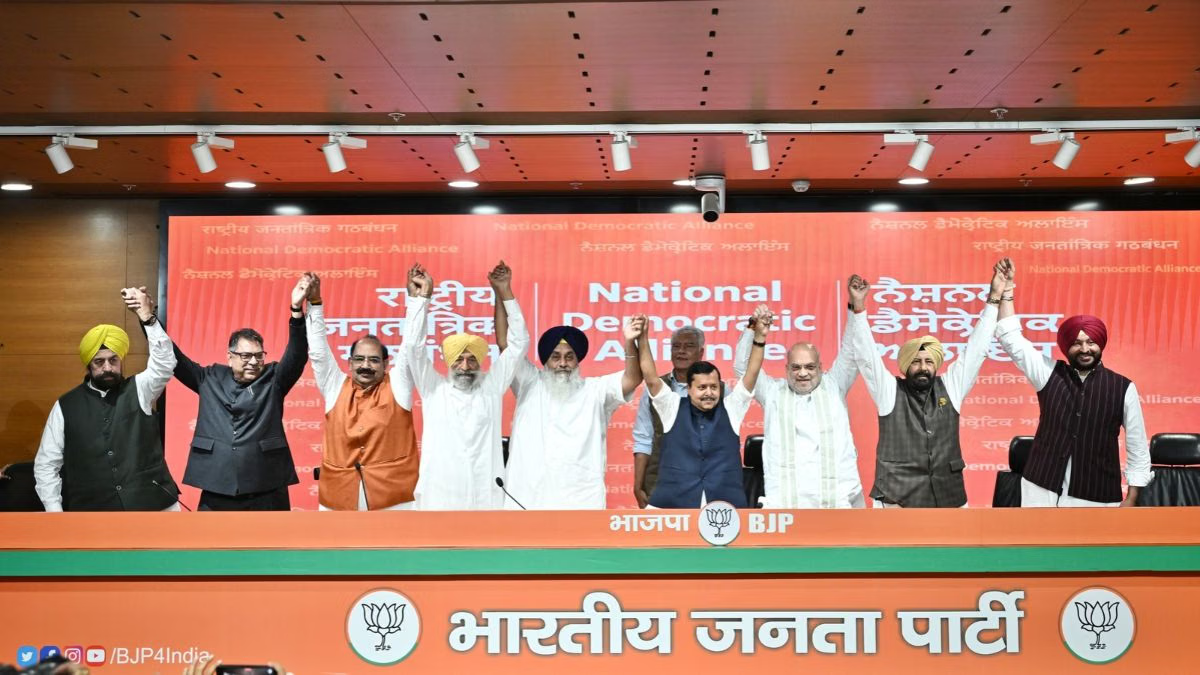
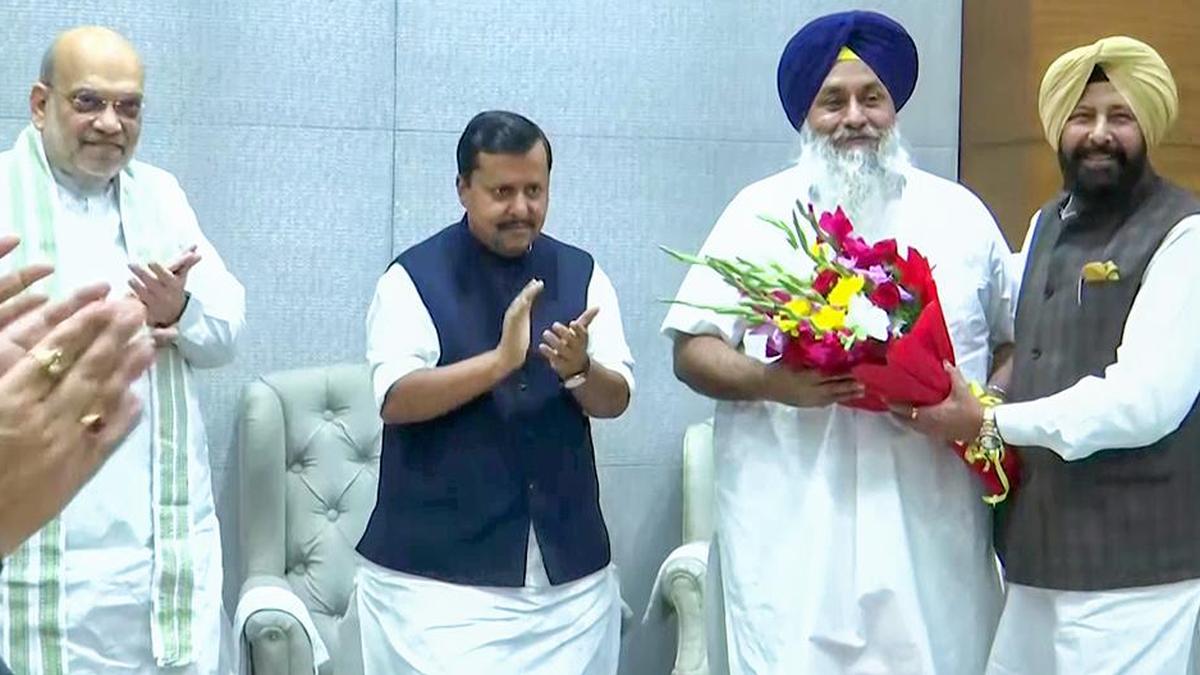
The BJP and Shiromani Akali Dal officially announced their alliance for the 2027 Punjab Assembly elections on November 24, bringing an end to their six-year political separation.
The announcement also marked the Akali Dal's return to the National Democratic Alliance (NDA), of which it had been one of the founding members.
The partnership dates back to 1996, when the Akali Dal, under Parkash Singh Badal, joined hands with the BJP. The alliance subsequently emerged as an influential political force in Punjab, winning Assembly elections together in 1997, 2007 and 2012.
Under their traditional seat-sharing arrangement, the Akali Dal contested 94 of Punjab's 117 Assembly constituencies, while the BJP fought on the remaining 23 seats.
The arrangement was based on the parties' complementary political strengths. The Akali Dal had a stronger presence among rural Sikh voters, while the BJP had a relatively established support base among urban Hindu voters.
However, the relationship deteriorated in 2020 following disagreements over the Centre's three controversial farm laws. With widespread farmers' protests gaining momentum, the Akali Dal decided to withdraw from the NDA.
Harsimrat Kaur Badal resigned from the Union Cabinet, and the party subsequently ended its alliance with the BJP in September 2020.
Since then, both parties have contested elections independently, with neither managing to recreate its earlier electoral influence.
Their decision to reunite ahead of the 2027 Punjab Assembly elections suggests that political circumstances have changed considerably since their separation.
Why Did BJP and Akali Dal Decide to Reunite?
The renewed BJP-Akali Dal alliance is largely driven by electoral considerations and the recognition that both parties have limitations when fighting elections independently.
Behind the announcement were months of political discussions, internal assessments, surveys and back-channel negotiations.
According to accounts from people familiar with the developments, the BJP leadership began exploring the possibility of rebuilding its relationship with the Akalis around April-May 2026.
The party reportedly conducted three types of assessments, including an internal party survey, an independent survey and a separate research exercise, to understand its electoral prospects in Punjab.
One of the biggest challenges identified was the BJP's limited organisational reach in rural Punjab.
Although the party has strengthened its presence in urban and semi-urban constituencies, it has struggled to establish a comparable network across rural areas, where the Akali Dal retains a stronger organisational presence and traditional connections.
For the Akali Dal, the situation was almost the opposite.
Despite suffering significant electoral setbacks, the party continues to have an established rural network and a traditional Panthic support base. Its organisational influence and connections with Sikh institutions, including the Shiromani Gurdwara Parbandhak Committee (SGPC), remain important elements of its political identity.
The BJP believes an alliance could help it expand its influence beyond urban constituencies, while the Akalis could benefit from the BJP's national leadership, urban support base and organisational resources.
Essentially, both parties see an opportunity to compensate for their individual weaknesses by combining their respective strengths.
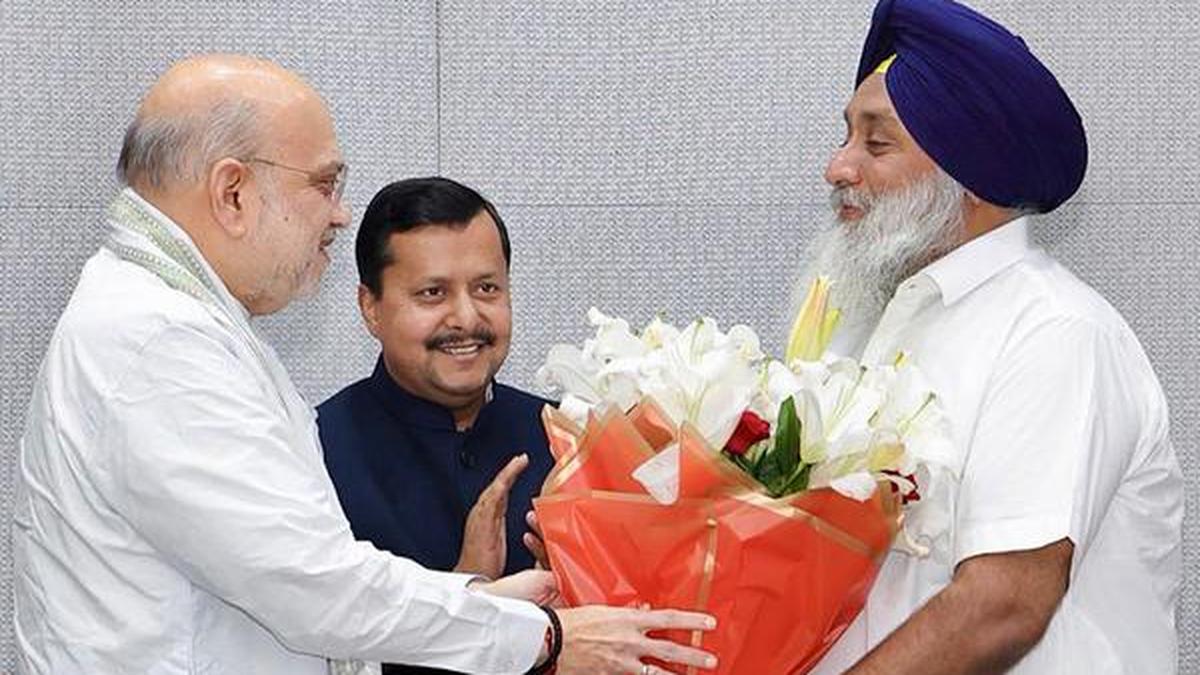
Modi and Amit Shah's Role in Bringing the Former Allies Together
The reunion was not achieved overnight. Senior leaders from both parties reportedly held multiple discussions before reaching a common understanding.
Prime Minister Narendra Modi and Union Home Minister Amit Shah played important roles in facilitating the political reconciliation.
According to accounts of the negotiations, Modi encouraged BJP leaders to reconsider their approach towards Punjab and explore the possibility of contesting the upcoming Assembly elections alongside the Akali Dal.
This was significant because several leaders within the Punjab BJP unit were initially reluctant to revive the alliance.
Some state BJP leaders believed the party had expanded its electoral presence since 2020 and should seek a much larger political role in Punjab rather than return to its previous position as the junior partner.
There were even discussions within sections of the state unit about the BJP claiming the Chief Minister's position if the alliance returned to power.
However, the central leadership reportedly considered a broader electoral understanding more practical.
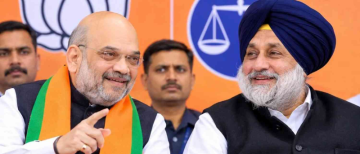
A meeting between Modi and SAD president Sukhbir Singh Badal on August 7 further strengthened the possibility of reconciliation.
Amit Shah subsequently played a crucial role in resolving differences between the two sides, including disagreements over leadership and the terms of the alliance.
At the joint announcement, Shah made it clear that the Akali Dal would continue as the senior partner, or bada bhai, in the arrangement.
He also indicated that the Chief Minister would come from the senior partner if the alliance formed the government.
This understanding helped remove one of the significant obstacles that had complicated negotiations.
Why Is BJP Demanding More Seats in the Punjab Assembly Elections?
One of the biggest questions surrounding the BJP-Akali Dal alliance is the BJP's demand for a substantially larger share of Assembly constituencies.
Under their previous arrangement, the BJP contested only 23 of Punjab's 117 Assembly seats, while the Akali Dal contested 94.
However, the BJP now believes its electoral performance justifies a bigger share.
The 2024 Lok Sabha elections provide an important explanation for this demand.
The BJP secured approximately 18% of the vote in Punjab, compared with around 13% for the Akali Dal. It also led in 23 Assembly segments, whereas the Akalis led in nine.
The BJP's electoral presence was spread across all three major regions of Punjab, while the Akali Dal's leads were concentrated largely in the Malwa region.
These figures have strengthened the BJP's argument that it should no longer accept the traditional 23-seat arrangement.
The party is reportedly seeking between 40 and 47 Assembly seats, with some discussions even considering an equal seat-sharing arrangement.
The Akali Dal, meanwhile, has reportedly been more comfortable with offering approximately 35 seats to its former ally.
A possible arrangement involving more than 70 seats for the Akalis and around 45 for the BJP has also emerged in discussions.
However, a final constituency-wise seat-sharing formula remains to be worked out.
Urban Voters and Demographic Factors Behind BJP's Demand
Another important reason behind the BJP's demand is Punjab's demographic and geographical voting pattern.
The BJP has traditionally performed better in urban and semi-urban constituencies, particularly in areas with a significant Hindu population and trading communities.
Five Punjab districts have Hindu majorities: Pathankot, Jalandhar, Hoshiarpur, Fazilka and Shahid Bhagat Singh Nagar.
Together, these districts account for 26 Assembly constituencies.
Additionally, seven other districts have Hindu populations exceeding 40%, giving the BJP a potential electoral advantage across a wider geographical area.
The party believes it has sufficient support in these constituencies to justify contesting more seats.
However, demographic strength does not automatically translate into electoral victories. Local candidates, regional issues, voter preferences and the ability to transfer votes between alliance partners will also determine the outcome.
Can the BJP-Akali Dal Alliance Challenge AAP in 2027?
The biggest political objective behind the reunion is to create a credible alternative to the Aam Aadmi Party government led by Chief Minister Bhagwant Mann.
Both the BJP and Akali Dal have struggled to make significant electoral gains independently.
In the 2022 Punjab Assembly elections, the Akali Dal won only three seats, while the BJP secured two.
Their performance in the 2024 Lok Sabha elections was also disappointing. The BJP failed to win any parliamentary constituency in Punjab, while the Akali Dal managed to secure just one.
The combined electoral strength of the two parties could potentially improve their prospects.
An assessment based on the 2024 election results suggests that the BJP and Akali Dal together led in 32 Assembly segments when contesting separately.
If their votes were transferred perfectly to a common candidate, the combined alliance could have led in approximately 58 constituencies.
That would put them just one seat short of the 59 required for a majority in the 117-member Punjab Assembly.
However, this calculation comes with an important qualification.
Voters do not always transfer their support to an alliance partner simply because party leadership announces a political understanding.
If even a portion of BJP and Akali Dal supporters refuse to vote for each other's candidates, the alliance's combined electoral advantage could shrink considerably.
Therefore, the success of the BJP-Akali Dal alliance will depend not only on seat-sharing arrangements but also on whether their respective voter bases accept the reunion.
Bhagwant Mann Questions the BJP-Akali Dal Reunion
The renewed alliance has already drawn criticism from Punjab Chief Minister Bhagwant Mann, who has questioned the intentions behind the political reconciliation.
Mann alleged that the BJP and Akali Dal had reunited primarily to protect their political interests and regain power rather than address Punjab's challenges.
He also questioned the apparent contradiction between their earlier disagreements and their decision to work together again.
Referring to the 2020 farmers' agitation, Mann raised questions about the Akali Dal's earlier position on the farm laws and its subsequent decision to leave the NDA.
He also highlighted disagreements concerning Chandigarh, Punjab's water rights, Panjab University's governance and Sikh institutions.
The Chief Minister further criticised the previous 2007-2017 Akali-BJP government, alleging that issues such as drug abuse and incidents of sacrilege remained unresolved during its tenure.
Mann contrasted the opposition alliance with the AAP government's claims regarding free electricity, agricultural canal water, Mohalla Clinics, health coverage, government employment and educational reforms.
His criticism indicates that the BJP-Akali Dal alliance will face scrutiny not only over its electoral calculations but also over its previous governance record.
For the opposition parties, countering these allegations and presenting a convincing development agenda will be essential to winning public support.
What Lies Ahead for the BJP-Akali Dal Alliance?
Although the political reunion has been formally announced, several important details remain to be finalised.
Seat-sharing negotiations will be particularly significant, given the BJP's desire to expand beyond its traditional quota and the Akali Dal's intention to retain its senior-partner position.
Both parties are also expected to work towards a common political strategy, including a joint manifesto, coordinated campaigning and constituency-level cooperation.
Issues such as drug abuse, corruption, farmers' concerns, unemployment, law and order and Punjab's financial condition are likely to feature prominently in their campaign.
Plans for a joint political outreach campaign and an effort to highlight alleged shortcomings of the AAP government are also expected to form part of their strategy.
However, the alliance must overcome a bigger challenge: convincing voters that the reunion represents a genuine political revival rather than an arrangement driven primarily by electoral necessity.
The Akali Dal needs to rebuild confidence among voters who have questioned its political decisions in recent years. The BJP, meanwhile, must demonstrate that its growing vote share can translate into actual Assembly victories.
The BJP-Akali Dal reunion could reshape the political contest in Punjab ahead of the 2027 Assembly elections, but a return to their earlier electoral dominance is far from guaranteed. Their combined organisational strengths offer an opportunity, yet questions over seat-sharing, leadership, voter loyalty and past political disagreements remain significant hurdles.
Ultimately, the 2027 Punjab elections will determine whether this six-year-old political separation has ended in a winning partnership or whether the reunion is simply another attempt by two struggling parties to regain lost ground.
© Copyright 2026. All Rights Reserved. Powered by Vygr Media.