 By
By 
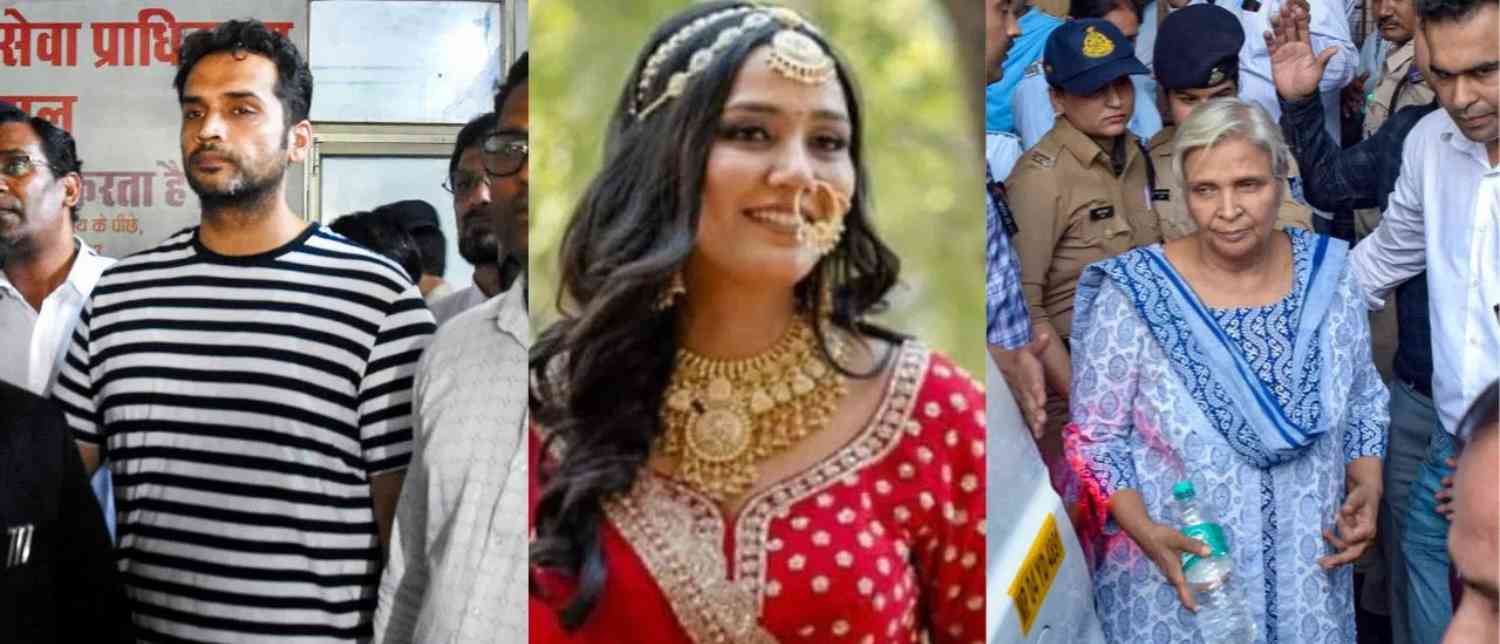
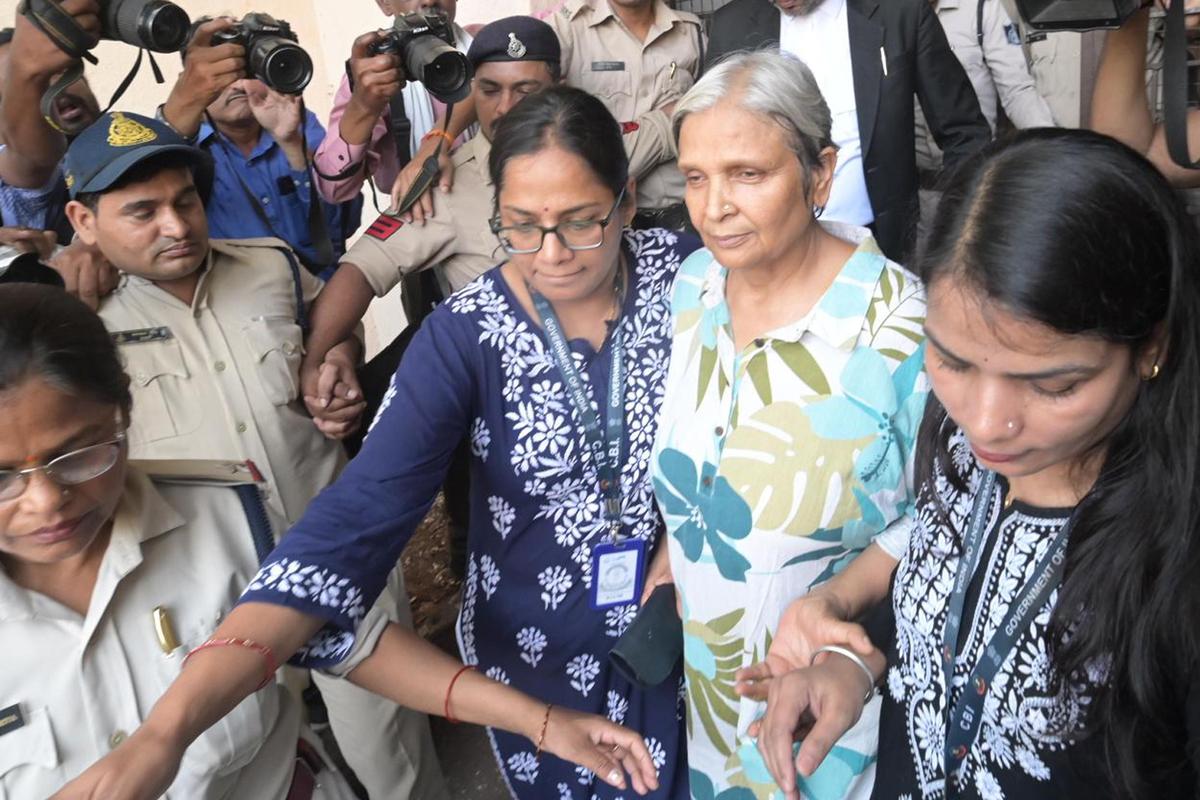
Bhopal: The death of model-turned-actor Twisha Sharma has entered a crucial stage with the Central Bureau of Investigation (CBI) filing a detailed chargesheet against her husband, Samarth Singh, and mother-in-law, Giribala Singh, in a Bhopal court. The agency has accused the two of subjecting Twisha to sustained mental and psychological cruelty and of abetting her suicide.
The CBI chargesheet, filed on August 14 and running to hundreds of pages with annexures, reconstructs the events leading up to Twisha’s death on May 12, 2026. It draws on WhatsApp conversations, phone records, CCTV footage, statements from family members and other witnesses, medical records, counselling sessions and financial allegations. The investigation also examines allegations of dowry harassment.
The case has attracted widespread attention because of the account of Twisha’s final hours, including a distress message she sent to her sister-in-law shortly before she was seen heading towards the terrace of her Bhopal home. The CBI has alleged that the events of that night were the culmination of months of escalating conflict and psychological distress within a marriage that had lasted only a few months.
CBI chargesheets husband and mother-in-law
The CBI has named Samarth Singh and Giribala Singh as accused under provisions of the Bharatiya Nyaya Sanhita relating to cruelty by a husband or his relatives, abetment of suicide and common intention. The chargesheet also invokes provisions of the Dowry Prohibition Act in connection with the allegations surrounding Twisha’s death.
The filing follows weeks of investigation and a transfer of the case from the state police to the CBI after Twisha’s family questioned the initial investigation and sought an independent probe.
Twisha, who had worked as a model and actor and had also been associated with the corporate sector, married Samarth Singh in December 2025. After the marriage, she moved to Bhopal and lived with her husband and his mother, Giribala Singh, a retired district judge. She was found dead at the family residence on May 12, 2026. Her family subsequently alleged that she had faced harassment and pressure in her matrimonial home.
The CBI's case, however, is not that Twisha was physically murdered. Medical examinations cited in the chargesheet concluded that she died by suicide. The agency's allegation is that sustained mental cruelty and psychological pressure contributed to her decision to take her own life.
What happened in Twisha Sharma’s final hours?
One of the most detailed sections of the chargesheet concerns the evening of May 12.
According to the CBI's reconstruction, Twisha had already decided to leave Bhopal. Earlier that day, she had obtained money from her father and booked a train ticket to Rajasthan's Nasirabad. She reportedly told her family that she had tried to save the marriage but wanted to return home because she believed the relationship could not be repaired.
She also attended a counselling session with Samarth that morning. According to the chargesheet, the counsellor advised the couple to communicate patiently and address the problems in their relationship. Samarth, for his part, reportedly raised complaints about Twisha's behaviour and told the counsellor that the couple consumed marijuana. The counsellor advised them to stop using it.
Later that evening, the situation deteriorated.
At around 7:51 pm, Twisha reportedly called her sister-in-law, Rashi Abrol, and said she intended to return to her family. She also allegedly complained that Samarth was pressuring her to transfer an investment of around Rs 20 lakh so that it could be invested in the Chinese stock market. Twisha reportedly refused, saying the money belonged to her father. The CBI has said the financial allegations form part of its investigation, while the dowry angle is being examined separately.
Around 9:20 pm, Twisha was again on a call with Rashi. The chargesheet says she was crying and told her sister-in-law that she had asked Samarth to sleep separately because she was experiencing back pain. The call allegedly ended following an angry outburst.
A second call at around 9:29 pm reportedly ended without a meaningful conversation because Twisha was sobbing.
Seven minutes later, she sent the message that has become one of the most significant pieces of evidence in the case.
At 9:36 pm, she allegedly wrote to Rashi: “Ask him to collect left over of his wife. But tomorrow. Let me die in peace right now.”
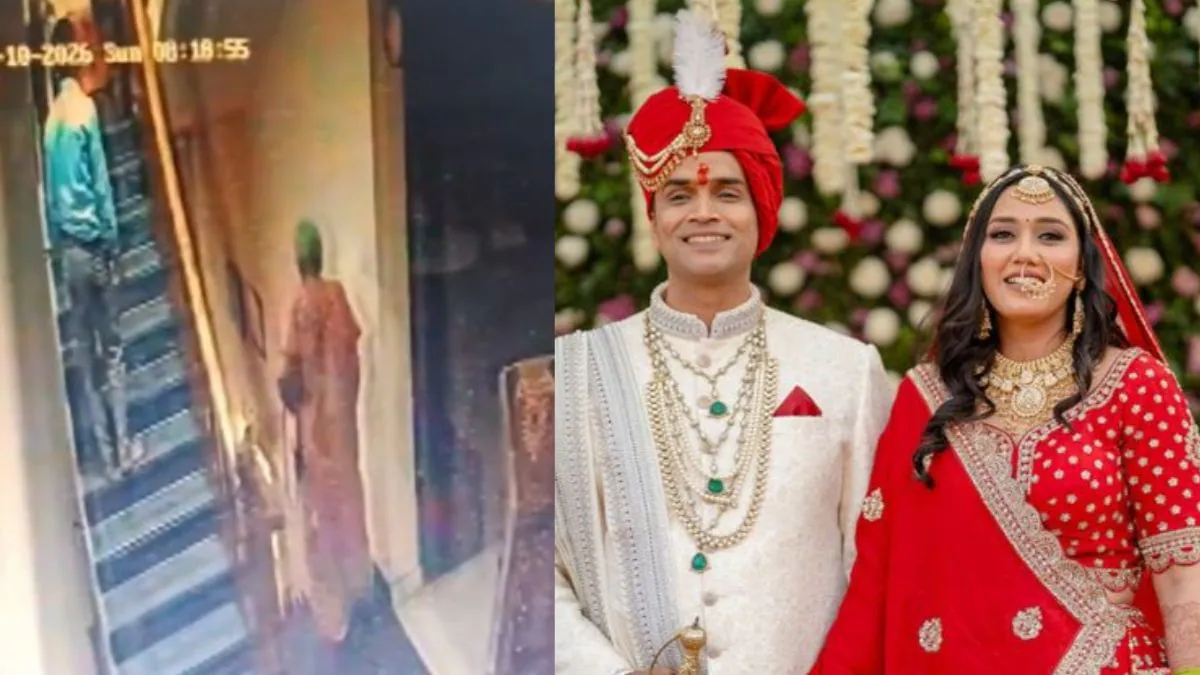
Four minutes later, CCTV footage cited by the CBI allegedly showed Twisha walking alone towards the terrace.
At approximately 9:41 pm, she called her father. According to the chargesheet, she was crying and said Samarth had become aggressive and violent. She reportedly asked her parents to come to Bhopal immediately.
At around 10:05 pm, she called her mother and allegedly repeated that Samarth had become aggressive and violent. The call then disconnected.
The CBI says Twisha's mother repeatedly attempted to contact her afterwards and also tried reaching Samarth and Giribala. At around 10:10 pm, she reportedly spoke to Giribala and asked her to check on Twisha because her daughter was crying heavily.
CCTV footage allegedly showed Giribala leaving her room around 10:16 pm and looking for Twisha. She reportedly called Twisha's phone at 10:18 pm but received no response.
Around 10:23 pm, CCTV footage allegedly showed Giribala and Samarth moving towards the terrace. Twisha was subsequently brought downstairs and taken to AIIMS Bhopal, where she was declared brought dead at around 10:55 pm.
Allegations of months of mental cruelty
The CBI's investigation extends well beyond the final night.
According to the chargesheet, Twisha's relationship with Samarth deteriorated rapidly after the marriage. The agency alleges that she was subjected to derogatory language, character-related accusations and other forms of psychological pressure. It has also alleged that Giribala repeatedly sided with or supported her son during disputes.
Twisha reportedly spent some time with her father while he was undergoing treatment after a heart attack. The CBI alleges that she was pressured to return to Bhopal and eventually did so on March 24.
A major point in the investigation was Twisha's pregnancy.
She discovered that she was pregnant on April 16. According to the chargesheet, the pregnancy was unplanned and she was uncertain about continuing it amid the problems in her marriage. The CBI says an argument took place the following day, after which Twisha left the matrimonial home.
Her messages to her mother subsequently became an important part of the investigation.
On April 30, after returning to Bhopal, Twisha allegedly told her mother that the problems had started again and that she had suffered an anxiety attack while travelling. The chargesheet cites her as saying, “Mera jeevan narak ho gaya hai mummy” — describing her life as having become hell. She was taken to a psychiatrist, who reportedly found her anxious and distressed and prescribed medication for anxiety.
The CBI says Twisha accepted an offer to rejoin her former workplace on May 6. That same day, she took the first dose of medication to terminate the pregnancy.
The events that followed form another significant part of the chargesheet.
Pregnancy dispute and allegations over abortion
According to the CBI, Twisha contacted her mother during the early hours of May 7 and asked her to come and take her away from the house. She reportedly said she did not believe Samarth wanted her anymore.
The agency alleges that Giribala subsequently wanted Twisha to explore whether the pregnancy could be restored after she had taken the first medication dose. Twisha reportedly accompanied her mother-in-law to a hospital, where doctors told them that the process could not be reversed. She was then referred to another doctor.
The CBI says the doctor found Twisha emotionally distressed and anxious. According to the chargesheet, Twisha allegedly told the doctor that Samarth and his family were unhappy with her decision to terminate the pregnancy and wanted her to continue it.
The chargesheet also records an allegation that Giribala called Twisha a “murderer” repeatedly over the abortion. Twisha allegedly told her sister-in-law that Samarth had again become abusive and that she felt she could no longer see a future in the marriage.
On May 8, she took the second medication dose. The CBI says she experienced pain and bleeding and alleged that Samarth dismissed her condition as “natak” or drama, while Giribala allegedly did not intervene.
The following day, Twisha reportedly told her mother that Samarth had questioned whether the pregnancy had been his. She also allegedly complained that her mother-in-law did not believe her account of the marital disputes.
The CBI has cited messages in which Twisha expressed that she was suffocating in the house and, on another occasion, spoke about dying or disappearing.
Financial pressure and surveillance allegations
Money is another thread running through the CBI's reconstruction.
The chargesheet says Twisha had approximately Rs 20 lakh invested through a demat account. According to investigators, Samarth and Giribala allegedly pressured her to move the investment into a joint bank account opened by Twisha and Samarth in April.
Twisha reportedly refused, saying the money belonged to her father.
The allegation resurfaced on May 12, when she reportedly told her sister-in-law that Samarth wanted her to transfer the investment for investment in the Chinese stock market.
The CBI has also cited a statement from Twisha's former employer, who allegedly told investigators that she complained of being under continuous surveillance at home. According to the statement, she believed her calls were being monitored and sometimes spoke to him while walking in a nearby park.
Taken together, the agency says these allegations form part of a wider pattern of psychological pressure rather than isolated marital disagreements.
Medical examination rules out physical assault as cause of death
The circumstances surrounding Twisha's death had also generated controversy over the post-mortem examination.
Her first post-mortem at AIIMS Bhopal concluded that she had died from ante-mortem hanging. Her family questioned the findings and sought another examination.
Following an order of the Madhya Pradesh High Court, an AIIMS Delhi medical board conducted a second post-mortem examination on May 24.
The medical board's findings, reproduced in the CBI chargesheet, concluded that the cause of death was asphyxia resulting from ante-mortem hanging and classified the manner of death as suicidal. It also found no other injury of medico-legal significance suggesting an assault or physical struggle before death.
The finding is significant because it clarifies the central distinction in the CBI's case: investigators are alleging abetment of suicide through sustained cruelty, rather than claiming that Twisha was physically killed.
A forensic psychological assessment based on her diaries, CCTV footage and other material reportedly found signs of hopelessness, sustained psychological harm and a lack of support. The CBI has consequently alleged that the conduct of the two accused pushed Twisha to a point where she felt she had no alternative but to end her life.
Investigation continues despite chargesheet
The filing of the chargesheet does not necessarily mark the end of the investigation.
The CBI has said it is still awaiting complete forensic extraction from Twisha's primary iPhone and Samarth's phone. Investigators believe the data could reveal additional evidence, witnesses or information concerning other individuals.
The CCTV DVR recovered from the residence has also been sent to the Central Forensic Science Laboratory in New Delhi. Investigators are examining the continuity of the footage and whether there was any possibility of tampering. Those findings are awaited.
The chargesheet therefore represents an important milestone, but not the final judicial determination of guilt. The allegations made by the CBI will have to be tested through the legal process, and the accused remain entitled to defend themselves in court.
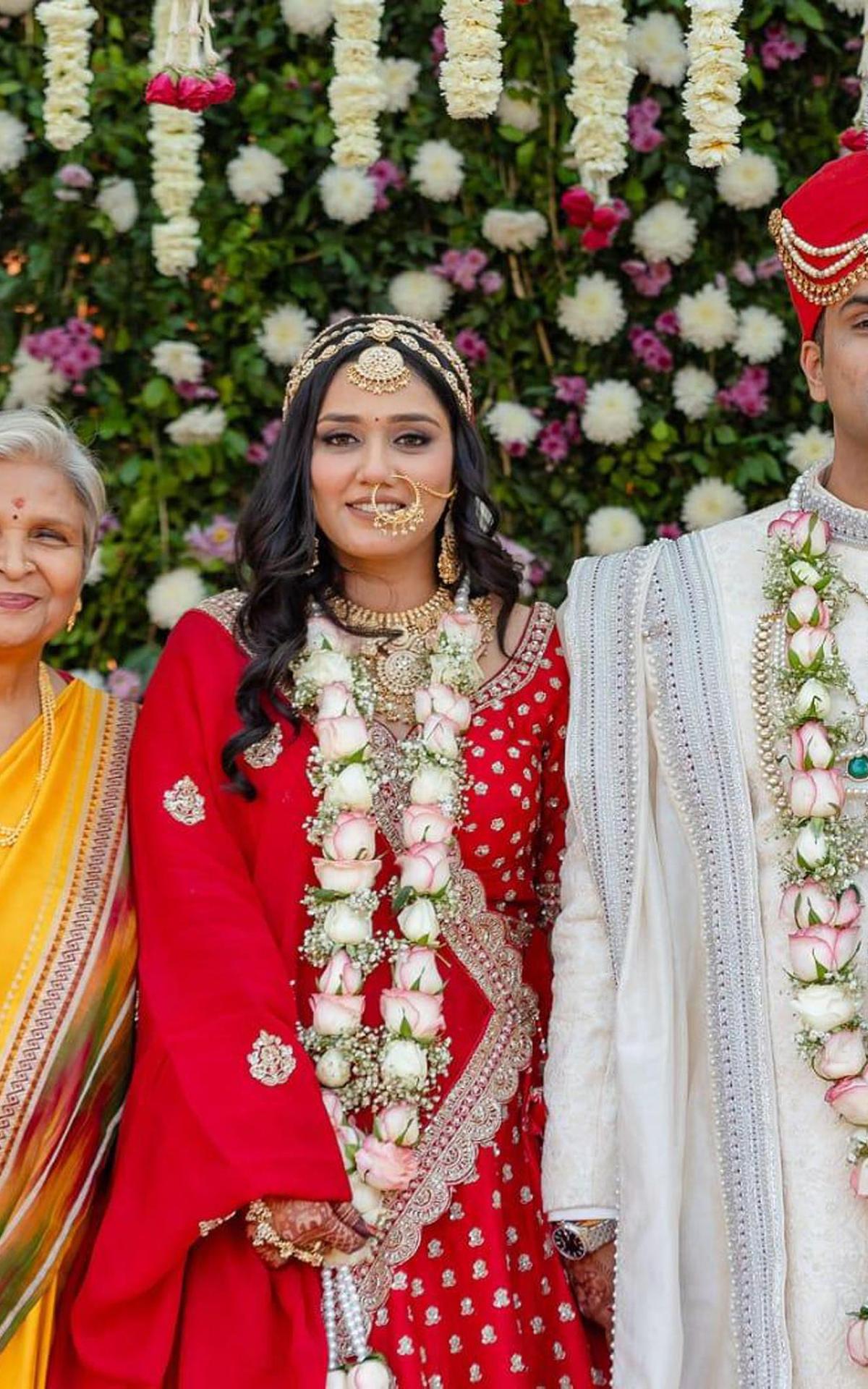
A case now centred on what happened before the final night
The most striking aspect of the CBI's case is that the investigation does not treat May 12 as an isolated incident. Instead, it presents the final hours as the endpoint of a sequence involving marital conflict, alleged psychological cruelty, disputes over pregnancy, financial pressure and repeated attempts by Twisha to seek help from her family.
On the morning of her death, she had booked a ticket to leave Bhopal. By evening, she was reportedly telling relatives that she had tried everything to save the marriage. Within hours, she was crying during calls with family members, asking them to come to Bhopal and warning that she was afraid.
At 9:36 pm came her final message to her sister-in-law.
Minutes later, CCTV footage allegedly showed her heading towards the terrace.
For investigators, those digital records, witness accounts, medical findings and forensic evidence now form the foundation of the case against Samarth Singh and Giribala Singh. For the court, the next question will be whether that evidence establishes the offences alleged by the CBI beyond the standard required under criminal law.
The chargesheet has brought a detailed account of Twisha Sharma's final months into the public domain. But the legal process is only beginning to determine what responsibility, if any, the accused bear for her death.
With input from agencies
Image Source: Multiple agencies
© Copyright 2026. All Rights Reserved. Powered by Vygr Media.