
 By
By 
Tensions between India and Pakistan have escalated once again after Pakistan's Climate Change Minister Musadik Malik issued a sharp warning over the future of the Indus Waters Treaty (IWT), declaring that anyone attempting to deprive Pakistan of its share of water would face severe consequences.
The remarks come amid an increasingly bitter diplomatic standoff over the 1960 water-sharing agreement, which India placed in abeyance following the April 2025 Pahalgam terror attack. While Islamabad insists the treaty remains legally binding and cannot be suspended unilaterally, New Delhi has maintained that the agreement cannot continue in its current form until Pakistan takes credible action against cross-border terrorism.
Pakistan's 'cut off those hands' warning
Speaking at a joint press conference in Islamabad, Pakistan's Climate Change Minister Musadik Malik accused India of attempting to control Pakistan's water supply.
Referring to India's stance on restricting water flow under the Indus Waters Treaty, Malik alleged that the leadership of the neighbouring country wanted to stop Pakistan's water.
"There is a tap being controlled by the prime minister of a neighbouring country. He says he will not let even a drop of water flow into Pakistan," Malik was quoted as saying.
He then delivered the strongest message of the press conference, stating that "whoever touches our water, their hands would be cut off," underscoring Islamabad's position that it would strongly resist any move affecting Pakistan's allocated share of river waters. The comments were widely reported by Pakistani media and circulated on social media.
Pakistan says treaty cannot be suspended
Joining Malik at the press conference, Pakistan's Information Minister Attaullah Tarar asserted that the Indus Waters Treaty remains a legally binding international agreement.
Tarar argued that the treaty cannot be suspended, revoked or amended unilaterally by either country. According to Pakistan, any modification requires mutual consent under the framework of the agreement.
Islamabad has repeatedly maintained that India's decision to place the treaty in abeyance violates international obligations and has vowed to pursue diplomatic and legal avenues to safeguard its water rights.
Background: Why the Indus Waters Treaty is under strain
The latest exchange is rooted in India's decision to suspend the implementation of the Indus Waters Treaty after the April 2025 terror attack in Pahalgam, Jammu and Kashmir, in which 26 people were killed.
India blamed Pakistan-backed terrorism for the attack and subsequently announced that the treaty would remain in abeyance until Pakistan credibly and irrevocably ends support for cross-border terrorism.
Since then, New Delhi has repeatedly stated that Pakistan will not continue to receive the benefits of the agreement under the existing circumstances.
The suspension marked one of India's strongest diplomatic responses in decades, bringing one of the world's longest-standing transboundary water-sharing agreements into the centre of India-Pakistan tensions.
What is the Indus Waters Treaty?
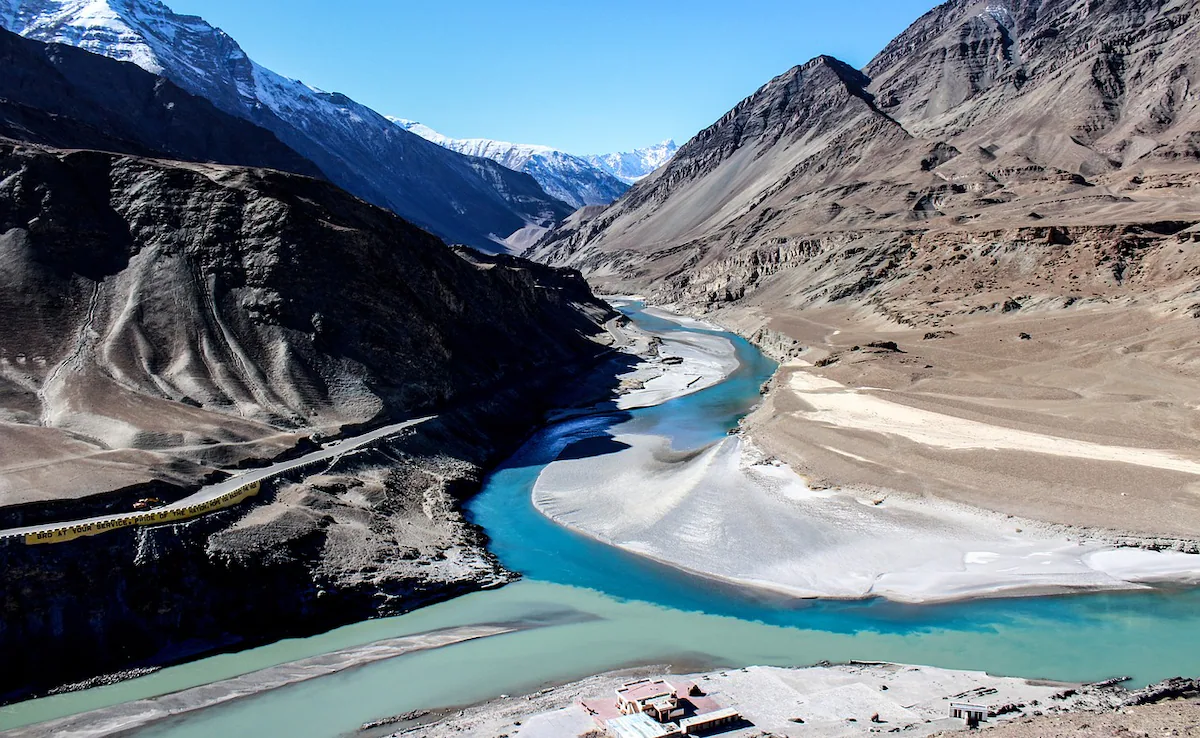
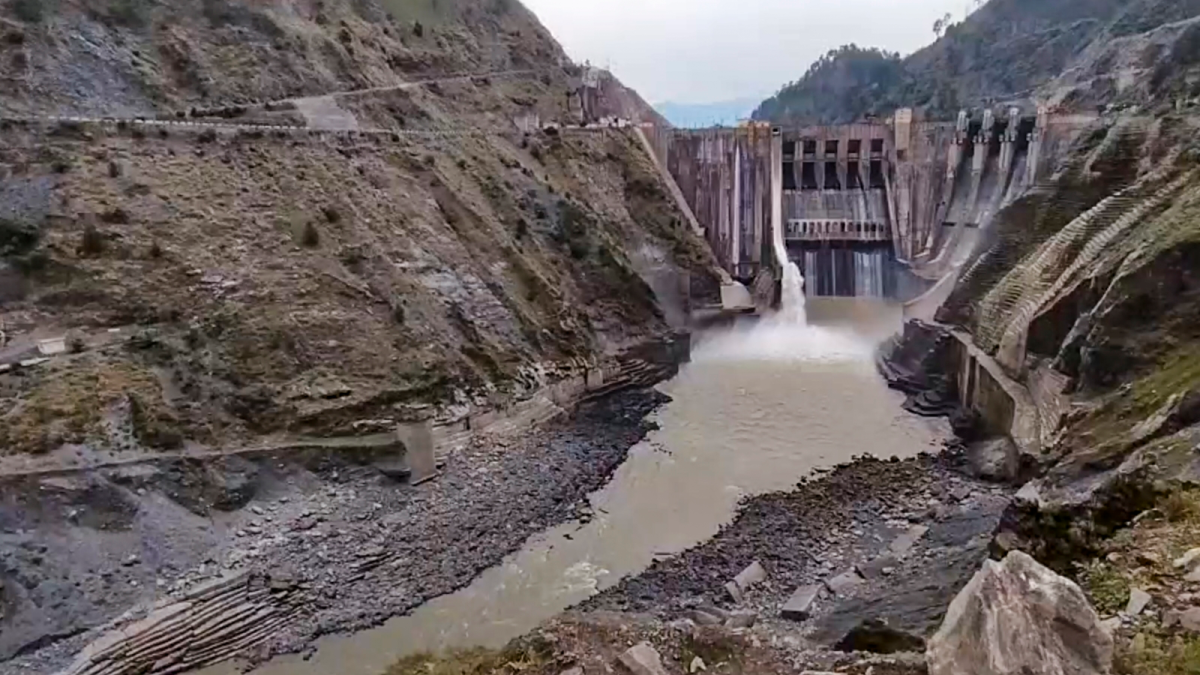
Signed in 1960 with the World Bank acting as a facilitator, the Indus Waters Treaty governs the sharing of waters from the six rivers of the Indus basin between India and Pakistan.
Under the arrangement:
-
India received rights over the eastern rivers — Ravi, Beas and Sutlej.
-
Pakistan received rights over the western rivers — Indus, Jhelum and Chenab.
-
India retained limited rights to use the western rivers for non-consumptive purposes such as hydropower generation, irrigation and domestic use under specified conditions.
For more than six decades, the treaty survived multiple wars, military confrontations and diplomatic crises, making it one of the most durable international water-sharing agreements.
However, India now argues that changing geopolitical realities, repeated acts of cross-border terrorism and evolving developmental needs warrant a reassessment of the arrangement.
Water security is a lifeline for Pakistan
The issue carries enormous significance for Pakistan, whose agriculture and economy are heavily dependent on the Indus river system.
The western rivers covered under the treaty provide the bulk of Pakistan's irrigation water, supporting millions of farmers and contributing substantially to food production.
Any prolonged disruption or uncertainty over water availability is viewed by Islamabad as a serious national security concern.
This explains why Pakistan's political leadership has increasingly adopted strong rhetoric whenever the treaty's future is questioned.
Escalating rhetoric from Pakistan
Musadik Malik's warning is not the first sharp statement from Pakistani leaders in recent weeks.
Earlier this month, Pakistan Defence Minister Khawaja Asif warned that Islamabad could even consider military action if it believed India's actions threatened Pakistan's water security.
He stated that water forms part of Pakistan's national security and suggested that war could become an option if India moved aggressively to disrupt water flows.
India rejected those remarks, describing them as an attempt by Pakistan to divert international attention from issues including terrorism and governance concerns.

India's position remains unchanged
India has consistently maintained that the Indus Waters Treaty cannot operate in isolation from broader bilateral relations.
Following the suspension of the treaty, Indian leaders have reiterated that Pakistan will not receive "even a single drop" of water beyond what India is legally and technically entitled to manage under its revised approach.
Indian officials have also indicated that the country is working to maximise utilisation of waters available within its rights through infrastructure development and better water management.
New Delhi's position is that normal implementation of the treaty can resume only when Pakistan takes verifiable and irreversible steps to end support for cross-border terrorism.
Pakistan seeks international backing
Alongside its public statements, Pakistan has intensified diplomatic efforts to internationalise the dispute.
Islamabad is hosting an international conference on the Indus Waters Treaty, seeking to reinforce its argument that the agreement remains valid under international law and cannot be suspended unilaterally.
Pakistan hopes to build diplomatic support by portraying the issue as one concerning international treaty obligations and regional water security rather than purely bilateral relations.
India, however, has traditionally maintained that disputes with Pakistan should be addressed bilaterally and has shown little inclination to alter its current stance.
What lies ahead?
The latest war of words highlights how the Indus Waters Treaty has evolved from a technical water-sharing agreement into one of the central flashpoints in India-Pakistan relations.
While Pakistan continues to insist the treaty remains fully enforceable under international law, India argues that persistent cross-border terrorism has fundamentally altered the circumstances under which the agreement functioned for decades.
With both sides hardening their positions and political rhetoric becoming increasingly confrontational, the future of one of South Asia's most significant international treaties remains uncertain.
For now, the dispute has expanded beyond water management into a broader geopolitical contest, with both nations using strong diplomatic messaging to defend what they describe as their core national interests.
With inputs from agencies
Image Source: Multiple agencies
© Copyright 2026. All Rights Reserved. Powered by Vygr Media.