 By
By 
The tragic deaths of three young people in Kerala expose a disturbing culture of reckless driving, parental indulgence and the belief that money and influence can soften the consequences of breaking the law.
Some road accidents are caused by a moment of misjudgment. Others force society to confront a much more uncomfortable question: what happens when reckless behaviour becomes a habit, warning signs are ignored, and someone begins to believe that consequences are meant for other people?
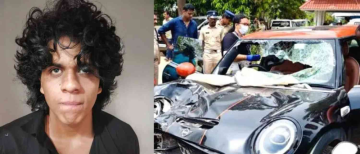
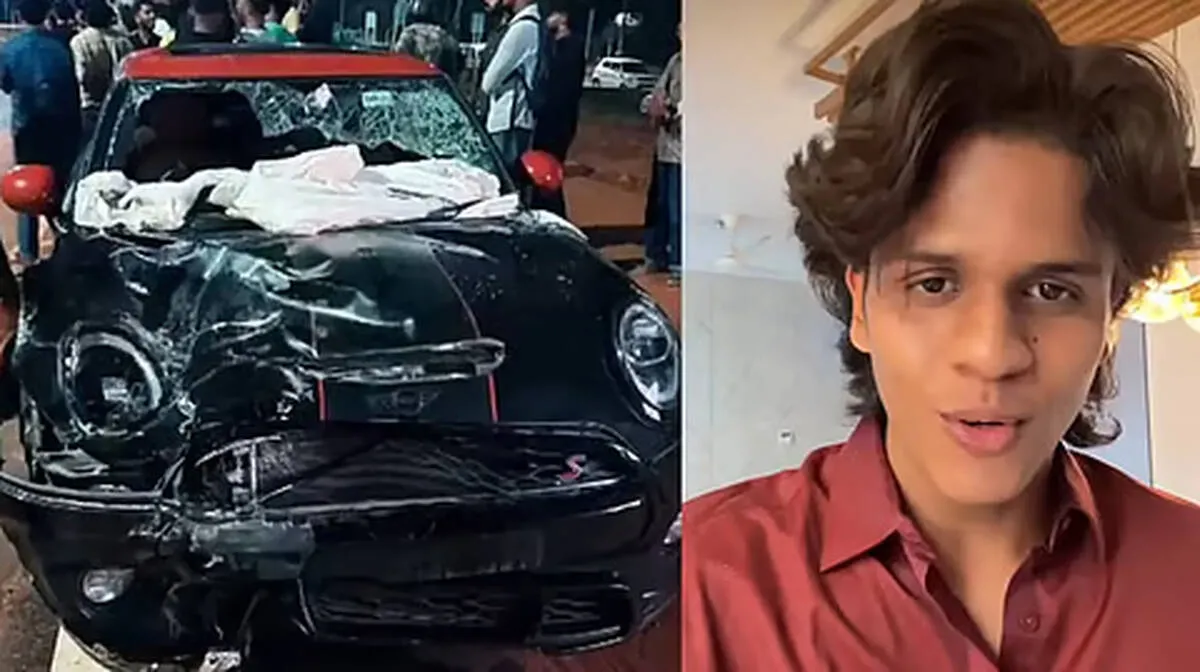
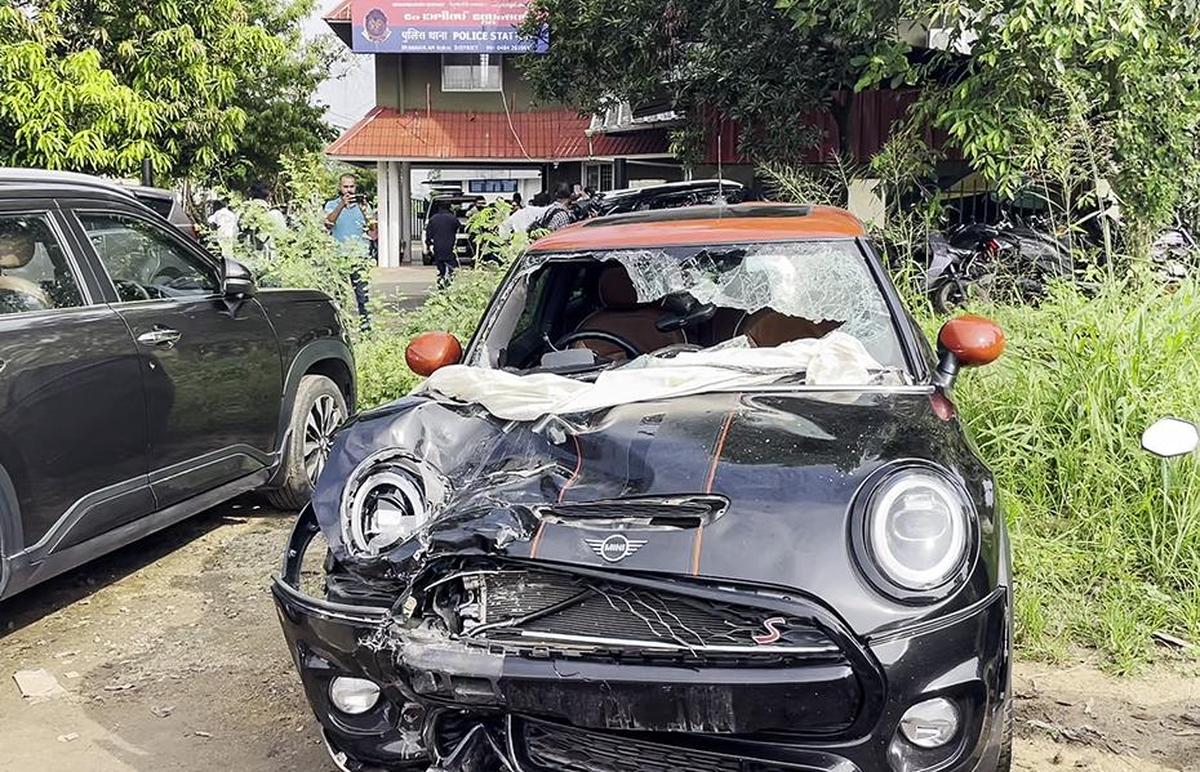
The fatal Mini Cooper crash near Kochi airport in Kerala has brought that question into sharp focus. Three young people lost their lives when a speeding car allegedly driven by an intoxicated 19-year-old rammed into their scooter in the early hours of October 11, 2026. What followed was not just grief and a police investigation, but a national conversation about road safety, underage drinking, parental responsibility, wealth and the credibility of India's criminal justice system.
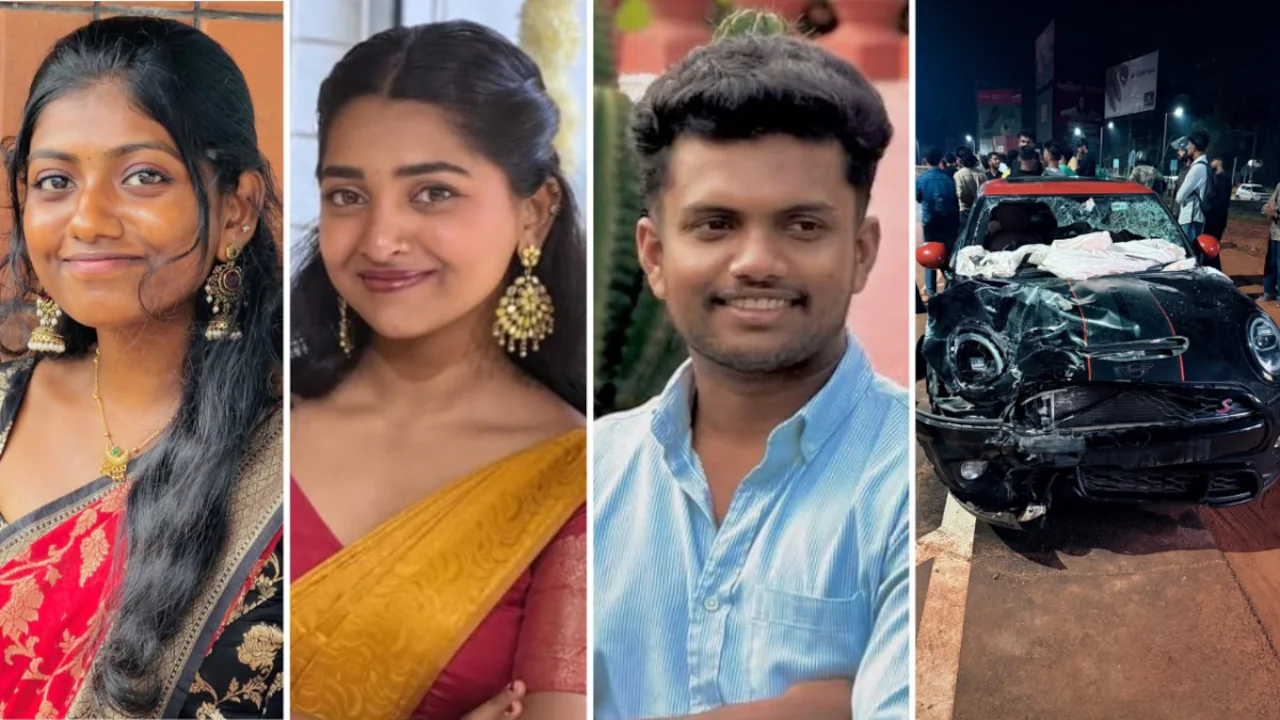
The victims, identified as Devika, 21, Gopika, 22, and Ijaz, 21, were young people working in Kochi and building their lives. Their journey ended in a violent collision that has left their families demanding answers. Meanwhile, the circumstances surrounding the accused driver, Suhail Sajeev, have intensified public anger, particularly after old videos reportedly showing extreme speeding resurfaced online.
The tragedy is therefore bigger than one luxury car, one driver or one night. It is a warning about what happens when road safety becomes secondary to personal thrill, when alcohol and speed mix with poor judgment, and when privilege creates the impression that accountability can always be negotiated.
The Kochi Mini Cooper Accident Is More Than a Road Safety Story
According to the preliminary reports, the crash occurred around 1.45 am near Nedumbassery, on the road leading towards Kochi airport. A speeding Mini Cooper struck a scooter carrying the three victims. The impact threw the occupants onto the road, and the scooter was reportedly dragged for nearly 100 metres before the car stopped. Devika and Gopika died at the scene, while Ijaz later succumbed to his injuries.
These details are horrifying, but the human cost cannot be reduced to the speed of the vehicle or the length of the skid. Behind the headlines are families who expected their children to return home, not to receive news of their deaths.
The three young people were reportedly out to get food after work. Their ordinary plans were interrupted by an incident that has exposed the extraordinary risks created by irresponsible driving.
This is the fundamental injustice of reckless driving: the person taking the risk may believe they are testing a machine or enjoying a thrill, but the people who pay the price may have had no part in that decision.
A public road is shared space. It belongs to the student travelling home, the worker finishing a late shift, the family heading to the airport and the driver behind the wheel. No one has the right to turn it into a personal racetrack.
When Extreme Speed Becomes a Badge of Honour
One of the most disturbing aspects of the Kerala Mini Cooper crash is the emergence of old social media videos reportedly associated with the accused. In one clip, the car's speedometer appears to climb to 220 kmph. Investigators have also reportedly found videos showing the vehicle being driven at speeds exceeding 200 kmph on other occasions. Police suspect the car was travelling above 120 kmph when the fatal collision occurred.
These figures matter because they raise questions about whether the crash should be viewed entirely as an isolated incident or whether earlier behaviour deserves closer scrutiny.
A video showing a speedometer crossing 200 kmph may attract attention, admiration or amusement in certain online circles. But what looks exciting on a screen can become lethal on an actual road. At such speeds, the time available to recognise a hazard and respond shrinks dramatically. Braking distance also increases, while the consequences of a collision can be devastating.
The deeper problem is the growing tendency to treat reckless driving as entertainment. Fast-car videos, aggressive acceleration, loud music and dangerous road manoeuvres can be presented as evidence of confidence or status. Social media rewards spectacle, not necessarily judgment. A driver may receive attention for a dangerous act long before anyone asks whether that act endangered other people.
That culture needs to change. Driving skill is not measured by how far a speedometer can climb. It is measured by the ability to control a vehicle, anticipate danger and respect everyone sharing the road.
If previous videos genuinely showed repeated dangerous driving, investigators should examine them carefully to establish their authenticity, context and relevance. Any evidence of earlier reckless behaviour should be assessed through lawful procedures. The objective must be to determine whether warning signs existed and whether any preventable failures contributed to the tragedy.
Drunk Driving and Underage Alcohol Sales Demand Accountability
The alleged role of alcohol makes the crash even more troubling. Police reported indications that the driver was intoxicated, while a breath test was reported to have shown intoxication. Investigators were awaiting laboratory findings to establish the precise blood alcohol level and were also examining whether other substances had been consumed.
Reports also indicated that the group had visited multiple drinking establishments before the crash. The Excise Department registered cases involving the licensees and managers of three establishments in connection with alleged service of alcohol to underage customers. Kerala's legal drinking age is 23, making the allegations particularly serious.
These allegations must be established through evidence, not public assumption. Yet they raise an important question: how can road safety rules protect the public if the safeguards surrounding alcohol sales are not enforced?
If an establishment unlawfully serves alcohol to someone below the legal drinking age, it cannot simply dismiss the matter as a private choice made by a customer. Licensing requirements exist for a reason. Businesses that sell alcohol have legal obligations, and those obligations must be taken seriously.
At the same time, responsibility for a fatal crash cannot be transferred automatically from a driver to the establishments allegedly visited beforehand. Investigators must determine what happened, what each party knew and whether any offence was committed.
The principle is straightforward. Alcohol and driving are a dangerous combination, and the law must be enforced consistently. Bars, hotels, drivers and anyone else found to have violated applicable rules should face the consequences established by the evidence.
A crackdown that lasts only as long as public outrage will achieve little. Kerala needs consistent age-verification practices, credible inspections, meaningful penalties and public awareness campaigns that make clear that intoxicated driving is not a minor lapse in judgment.
The 'Daddy Will Take Care of It' Mindset Is the Real Warning Sign
Perhaps the most controversial element of the incident is the allegation that Suhail made remarks suggesting his father would handle the consequences after the crash. The reported statement has become a focal point of public anger because it appears to reflect a familiar fear in India: that connections, money or family influence can help powerful individuals escape accountability.
It is important not to treat a reported remark as proof that anyone interfered with the investigation. Nor does a family's wealth establish guilt. But the public reaction reveals how deeply concerns about unequal treatment have taken root.
The phrase often associated with this mindset is simple: someone else will fix it. A parent will make a call. A lawyer will find a way. An influential contact will intervene. The incident will disappear from the headlines, and life will return to normal.
This is the dangerous side of privilege—not wealth itself, but the belief that wealth can provide insulation from responsibility.
Money can provide access to legal representation, expert advice and resources that ordinary families may struggle to afford. Those advantages are lawful in themselves. The problem arises if influence is used to obstruct an investigation, pressure witnesses, distort evidence or obtain treatment unavailable to others in comparable circumstances.
The public is entitled to demand that the investigation into the Kochi Mini Cooper crash be transparent and impartial. The victims' families should not have to wonder whether their ability to secure justice depends on how loudly they speak or how widely their story circulates online.
But outrage must not become a substitute for proof. Allegations of a cover-up or interference require evidence and independent scrutiny. Every accused person has the right to due process, and the justice system must protect that principle even in a case that provokes widespread anger.
The ultimate test is not whether an accused person comes from a wealthy family. It is whether the law follows the evidence without fear or favour.
When Parents Protect Their Children From Consequences, Society Pays the Price.
Parenting Is About Responsibility, Not Just Expensive Gifts
The revelation that the Mini Cooper was reportedly gifted to Suhail by his mother for his birthday has added another dimension to the debate. A luxury car is not, by itself, evidence of irresponsible parenting. Nor should parents be blamed automatically for every decision made by their adult children.
However, gifting a powerful vehicle to a young driver raises a legitimate question about the responsibilities that accompany privilege.
A car is not simply a symbol of financial success. It is a machine capable of causing catastrophic harm when driven irresponsibly. Giving someone access to it should come with an equally serious conversation about discipline, road safety, alcohol, speed limits and the lives of strangers.
Parents cannot control every action of their children. But they can set expectations, insist on safe behaviour and refuse to treat dangerous conduct as harmless youthful excitement.
The same principle applies to schools, colleges and peer groups. Young people need to understand that confidence without judgment can become recklessness, while social approval for dangerous stunts can encourage behaviour that puts others at risk.
Good parenting is not measured by the price of a birthday gift or the number of comforts a child receives. It is reflected in whether young adults understand boundaries, accept criticism and recognise that their choices have consequences.
Children must learn that being loved does not mean being shielded from every consequence. Sometimes the most responsible thing a parent can do is say no, insist on accountability and refuse to intervene when a child has done something wrong.
That lesson is relevant to families across economic backgrounds. Privilege may make the consequences of bad behaviour easier to avoid, but entitlement can grow wherever responsibility is consistently replaced by excuses.
Why the Investigation Must Remain Above Suspicion
The families of the victims have raised concerns about the handling of the case, including the initial recording of allegations, the collection of evidence and the decision to place the accused in a borstal facility rather than an ordinary prison. They have also questioned aspects of the medical evidence collection process. These concerns deserve clear, factual answers from the authorities.
The driver has been booked under Section 105 of the Bharatiya Nyaya Sanhita for culpable homicide not amounting to murder. The distinction between culpable homicide and murder depends on the circumstances, including the relevant intention and knowledge established by the evidence. The final legal assessment belongs to the courts, not social media.
An allegation of culpable homicide should not be dismissed as a routine traffic offence simply because there may have been no premeditated intention to kill. Equally, the demand for severe punishment cannot justify ignoring the legal standards that distinguish different offences.
Investigators must establish the sequence of events through CCTV footage, vehicle examination, witness statements, toxicology reports and other relevant evidence. They must examine the alleged drinking before the crash, the vehicle's speed, the driver's conduct and any actions by the passengers that may be legally relevant.
The authorities should also explain procedural decisions in a manner that families can understand. If evidence was collected through standard and lawful procedures, that should be documented. If mistakes occurred, they should be acknowledged and corrected.
The accused has reportedly sought bail, while investigators have pursued further custody to continue questioning. Such developments are part of the legal process; neither a bail application nor continued custody determines guilt by itself.
A credible investigation must be strong enough to withstand scrutiny, not dependent on public relations or political pressure. The families deserve justice, the accused deserves due process, and the public deserves confidence that neither influence nor anger will determine the outcome.
India's Road Safety Problem Cannot Be Solved by Outrage Alone
The Kochi crash has revived memories of other high-profile fatal road incidents involving allegations of reckless driving and influential families. Such comparisons are understandable because they reveal recurring concerns about accountability. But the lesson should not be that every case involving a wealthy driver is identical. It should be that road safety enforcement must be strong enough to prevent repeat patterns of dangerous behaviour.
India needs a more consistent approach to identifying and responding to serious traffic violations. Dangerous driving videos posted publicly should not automatically be treated as proof of a crime, but credible evidence of serious violations should be assessed by the appropriate authorities.
Repeat speeding, driving under the influence, racing on public roads and deliberate disregard for traffic rules require meaningful consequences under the law. Licensing authorities must also use their existing powers appropriately when the evidence warrants suspension or cancellation.
Road safety education needs to move beyond slogans and occasional campaigns. Young drivers should understand stopping distances, the risks of alcohol, the consequences of distracted driving and the responsibility that comes with operating a vehicle.
Parents must recognise that a car is not a toy. Hospitality businesses must comply with alcohol laws. Police must investigate impartially. Courts must apply the law consistently. And society must stop rewarding dangerous behaviour simply because it looks impressive on a phone screen.
The answer is not to demonise every affluent family or assume that money always buys protection. It is to build institutions that make such protection impossible when someone attempts to misuse influence.
Three Young Lives Must Not Become Another Forgotten Headline
The greatest danger now is that the public conversation will move on before the questions raised by this tragedy receive satisfactory answers.
For a few days, the Mini Cooper crash may dominate news feeds, discussions and social media posts. People will debate privilege, parental responsibility, drunk driving and punishment. Then another controversy will arrive, and the attention will shift.
The victims' families will not have that luxury. Their grief will remain after the headlines disappear. Their children will not return because a hashtag trended, a television debate became heated or an official promised strict action.
Justice requires more than anger. It requires evidence preserved, allegations investigated, procedural questions answered and legal decisions made fairly. It also requires practical reforms that reduce the chance of another family receiving the same devastating news.
The deaths of Devika, Gopika and Ijaz should remind every driver that the road is not a stage for proving power, wealth or courage. It is a shared public space where one person's decision can determine whether another person reaches home safely.
The Kochi Mini Cooper accident has exposed the terrible consequences that can follow when speed, alleged intoxication and reckless judgment converge. It has also forced India to confront an uncomfortable question about privilege: do some people believe the rules are negotiable simply because they have someone powerful to call?
That question must be answered through an impartial investigation and a justice system that treats every life as equally valuable.
A luxury car may be a gift. Money may buy comfort. Connections may open doors. None of these should ever purchase immunity from accountability.
The real measure of privilege is not how many consequences a family can prevent, but whether it teaches the next generation to accept responsibility when things go wrong.
Three young people lost their lives on a road near Kochi. Their deaths must not be reduced to another viral video, another argument about wealthy families or another promise of stricter enforcement.
They deserve justice. The public deserves answers. And India needs a road safety culture in which no driver believes that a powerful surname can make reckless behaviour harmless.
Because no family connection is worth more than a human life, and no amount of privilege should ever place anyone above the law.
© Copyright 2026. All Rights Reserved. Powered by Vygr Media.