 By
By 
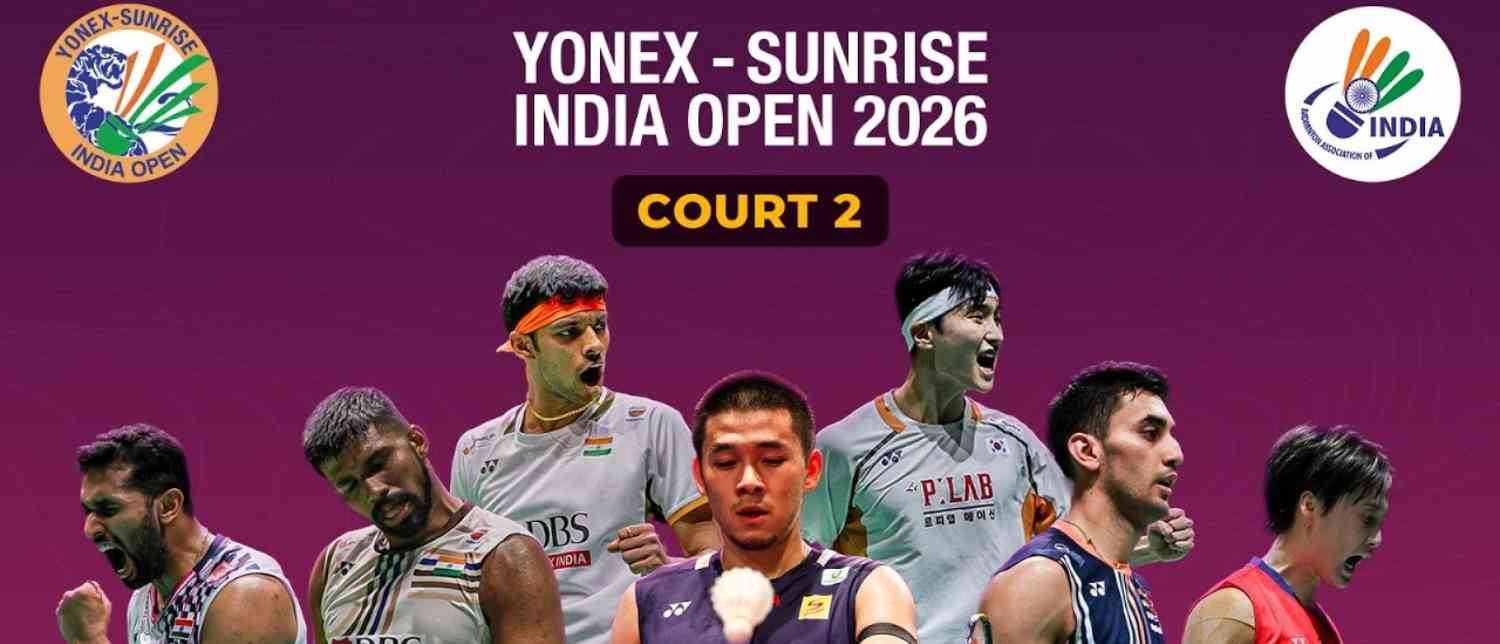
The Yonex-Sunrise India Open Super 750 badminton tournament was expected to showcase world-class badminton and reinforce India’s credentials as a reliable global sporting host. Instead, the 2026 edition in New Delhi has drawn international attention for all the wrong reasons. A series of startling incidents — ranging from bird droppings halting live matches and monkeys wandering spectator stands to players withdrawing over hazardous pollution — have pushed on-court action into the background.
The controversies have triggered uncomfortable questions about organisational preparedness, athlete safety, hygiene standards, and environmental suitability. What makes the situation more alarming is the timing: the same venue, the Indira Gandhi Indoor Stadium, is scheduled to host the BWF World Championships later this year — India’s first since 2009 — while the country simultaneously eyes an ambitious bid to host the 2036 Olympic Games.
Bird Droppings Halt High-Stakes Match
The most visually jarring moment of the tournament unfolded on Thursday, January 15, during the men’s singles second-round clash between India’s HS Prannoy and Singapore’s former world champion Loh Kean Yew. In an interruption rarely seen at a BWF World Tour Super 750 event, play on Court 1 was stopped twice due to bird droppings falling directly onto the playing surface from the stadium ceiling.
The first stoppage occurred in the opening game when Prannoy was leading 16–14. The second interruption followed early in the deciding third game, with the Indian ahead 1–0. Officials were forced to step onto the court, wiping the affected area with tissues and cleaning wipes before play could resume.
Initially, spectators and television commentators were left confused as the chair umpire raised his arm without explanation. Clarity followed only when cameras revealed the unsanitary cause. Loh Kean Yew visibly recoiled, repeatedly glancing at the ceiling before reacting with clear discomfort at the sight on the floor.
After losing the match 21–18, 19–21, 14–21, Prannoy confirmed the cause bluntly. “I think it was bird shit that kind of halted the game,” he told the media.
While courts are routinely wiped at the request of players — and referees intervene for blood spills — this marked an extraordinary first: bird droppings being cleared mid-match at one of India’s most prominent indoor sporting venues.
A Claim Contradicted by Reality
The incident also directly contradicted claims made just days earlier by Badminton Association of India (BAI) secretary general Sanjay Mishra, who had stated that the venue was pigeon-free while responding to earlier criticism from Danish shuttler Mia Blichfeldt.
That assurance quickly unraveled as footage of officials cleaning bird droppings went viral, intensifying scrutiny of venue management and hygiene protocols.
India Open badminton match between Loh Kean Yew and HS Prannoy halted at 16-14 in the first game after bird poop lands on court at Indira Gandhi stadium. Match was halted for the same reason in game 3. 2 days ago BAI had stated that pigeons were only there in practise court. pic.twitter.com/SFlqsEHiRG— jonathan selvaraj (@jon_selvaraj) January 15, 2026
Monkey Sightings Add to Embarrassment
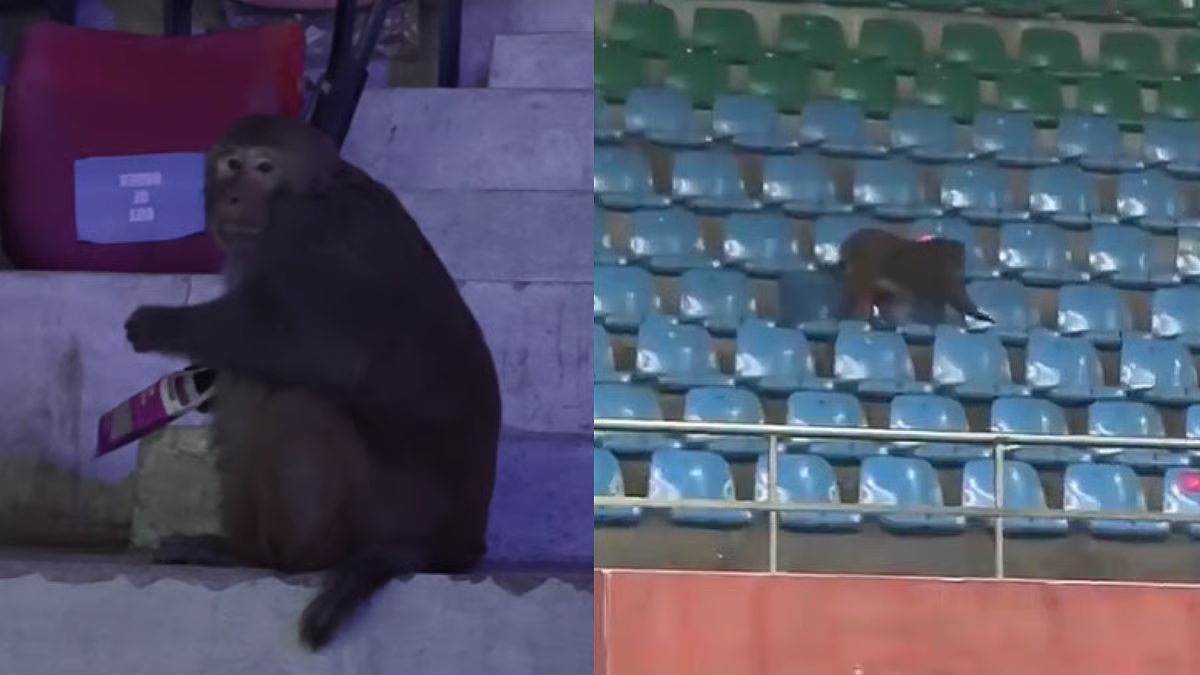
As if the bird-poop episode were not enough, the tournament suffered another embarrassment when a monkey was spotted inside the spectator galleries on Wednesday, January 14 — a day before Prannoy’s interrupted match.
Photographer Azlynna Dewi posted three Instagram stories showing the animal seated in the gold stand, not far from active courts. The sighting was later confirmed by a security official guarding the gate.
“Yes, a monkey entered the spectators’ arena and sat in the gold stand. It was there for 10 minutes and once we received a complaint, we removed it promptly,” the official said, adding that the animal did not harm anyone.
The official explained that low lighting delayed detection but insisted action was taken swiftly once the monkey was noticed.
The issue was not isolated. Korean men’s doubles player Kang Min Hyuk shared a video of another monkey at the KD Jadhav Indoor Hall — the designated training venue — with the caption: “Are animals (given) free admission?”
Though organisers termed the monkey incident “unfortunate” and noted that it did not disrupt training, it added fuel to an already growing backlash over operational lapses.
Players Raise Alarm Over Pollution and Health Risks
Beyond hygiene concerns, Delhi’s chronic air pollution has emerged as a serious health issue for players. Several shuttlers openly questioned whether the national capital was fit to host an international badminton tournament during winter.
Loh Kean Yew spoke candidly about the physical toll. “Everyone’s stamina just dropped like two levels,” he said. “The weather is not good. My health dropped quite a bit. I breathe less. I wear my mask when I can. I stay indoors as much as possible, but that’s the only thing that I can do.”
World No.3 Anders Antonsen of Denmark went a step further, withdrawing from the India Open altogether and accepting a $5,000 fine from the Badminton World Federation (BWF). The Dane cited “extreme” pollution as his reason.
“Due to the extreme pollution in Delhi at the moment, I don’t think it’s a place to host a badminton tournament,” Antonsen wrote in an Instagram story. “Crossing my fingers that it will be better in the summer when the World Championships will take place in Delhi.”
Notably, Antonsen has skipped the India Open for the third consecutive year due to pollution concerns, having pulled out as early as January 4 — even before the Malaysia Open, where he later reached the semifinals.
Monkey spotted at the Practice Arena of KD Jadhav Indoor Stadium during Indian Open 2026 🤷♂️
pic.twitter.com/K1uPc7sDmT— The Khel India (@TheKhelIndia) January 14, 2026
Mia Blichfeldt’s Repeated Criticism of Conditions
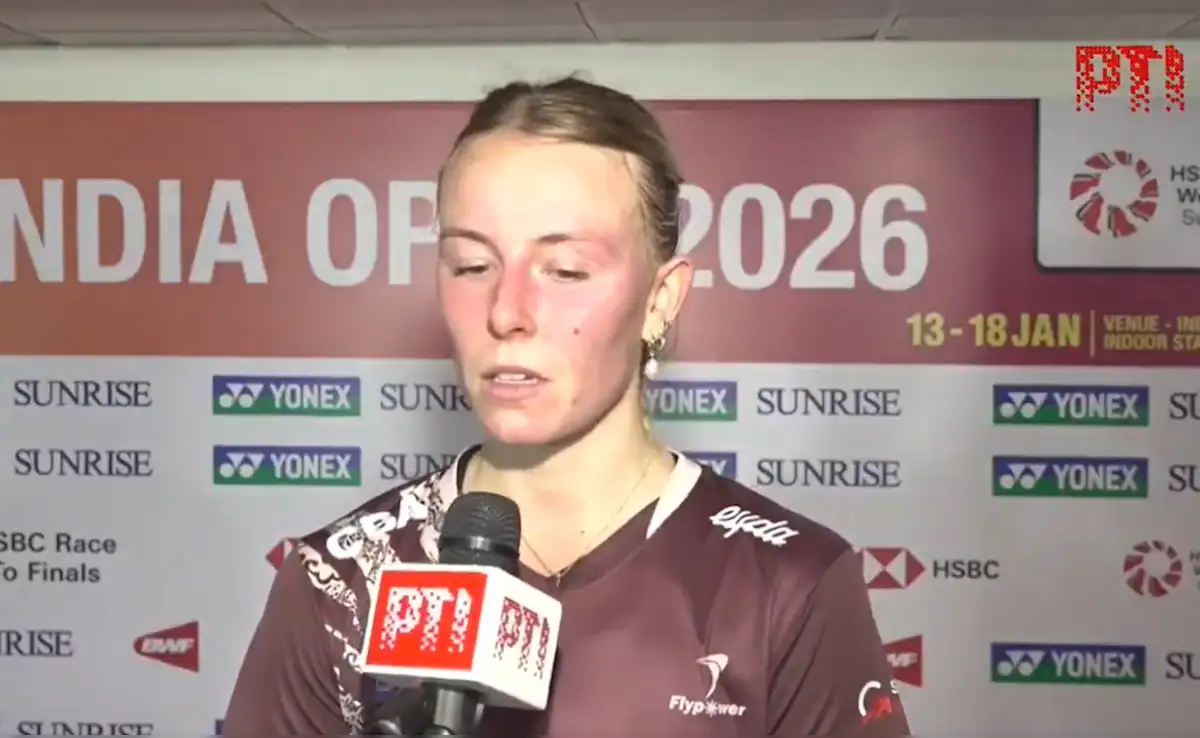
Danish shuttler Mia Blichfeldt, who had raised similar complaints during last year’s edition, once again criticised playing and training conditions after her first-round victory.
“I’m happy with the court conditions but not the health conditions,” she said. “The floors are dirty and there is a lot of dirt on the courts. Also, there are birds flying in the arena, there is bird poop also.”
Despite the tournament being shifted from the KD Jadhav Indoor Hall to the larger Indira Gandhi Indoor Stadium, Blichfeldt said the problems persisted.
“I actually hoped it would be better than the other hall, but it’s still very dirty, and the conditions are really unhealthy for the players,” she told PTI Videos.
She also highlighted the impact of Delhi’s winter cold, noting that players were forced to warm up in multiple layers — including pants, winter jackets, gloves, and hats — which she said was far from ideal preparation for high-intensity badminton.
Blichfeldt urged the BWF to intervene urgently, especially with the World Championships scheduled at the same venue in August. This marks the second consecutive year she has raised concerns during India’s premier BWF event.
Prannoy Downplays Conditions, Others Persist
Despite the growing criticism, HS Prannoy refrained from blaming external factors for his defeat.
“I don’t think so. It’s pretty same for all the players out there,” he said. “When you’re on court, it doesn’t matter. Just up to you what you want to do.”
He acknowledged the cold weather but added, “After the first few points, you get used to it.”
However, not all players shared his stoicism, particularly when it came to air quality and hygiene.
BWF Breaks Silence Amid Mounting Backlash
With global attention intensifying, the Badminton World Federation issued an official statement acknowledging player concerns.
“We acknowledge the concerns raised by several players and teams regarding venue conditions at the YONEX-SUNRISE India Open 2026, held at the Indira Gandhi Sports Complex in New Delhi,” the BWF said.
The federation described the Indira Gandhi Sports Complex as a “significant upgrade” from the KD Jadhav Stadium and confirmed that a comprehensive review of facilities and operational processes was underway. The findings, it said, would guide improvements ahead of the World Championships later this year.
In a separate statement, the BWF attempted to contextualise the issues, attributing many problems to seasonal factors such as fog, cold temperatures, and winter-related air quality issues. It claimed feedback from teams had been “positive and constructive” overall and assured that animal control and cleanliness would be prioritised for the August event, when conditions are expected to be different.
A Troubling Optics Problem for Indian Sport
For India, the optics are hard to ignore. Officials scrubbing bird droppings off a professional badminton court, monkeys wandering indoor arenas, and elite athletes withdrawing over pollution present a damaging narrative — particularly as the country positions itself as a future Olympic host.
With the World Championships looming and international scrutiny intensifying, the India Open 2026 has become more than just a tournament. It is a test of India’s ability to deliver safe, hygienic, and athlete-friendly environments at the highest level of global sport.
Whether meaningful corrective action follows — or whether these scenes linger as cautionary images — may determine how seriously the world views India’s sporting ambitions going forward.
With inputs from agencies
Image Source: Multiple agencies
© Copyright 2025. All Rights Reserved. Powered by Vygr Media.