 By
By 
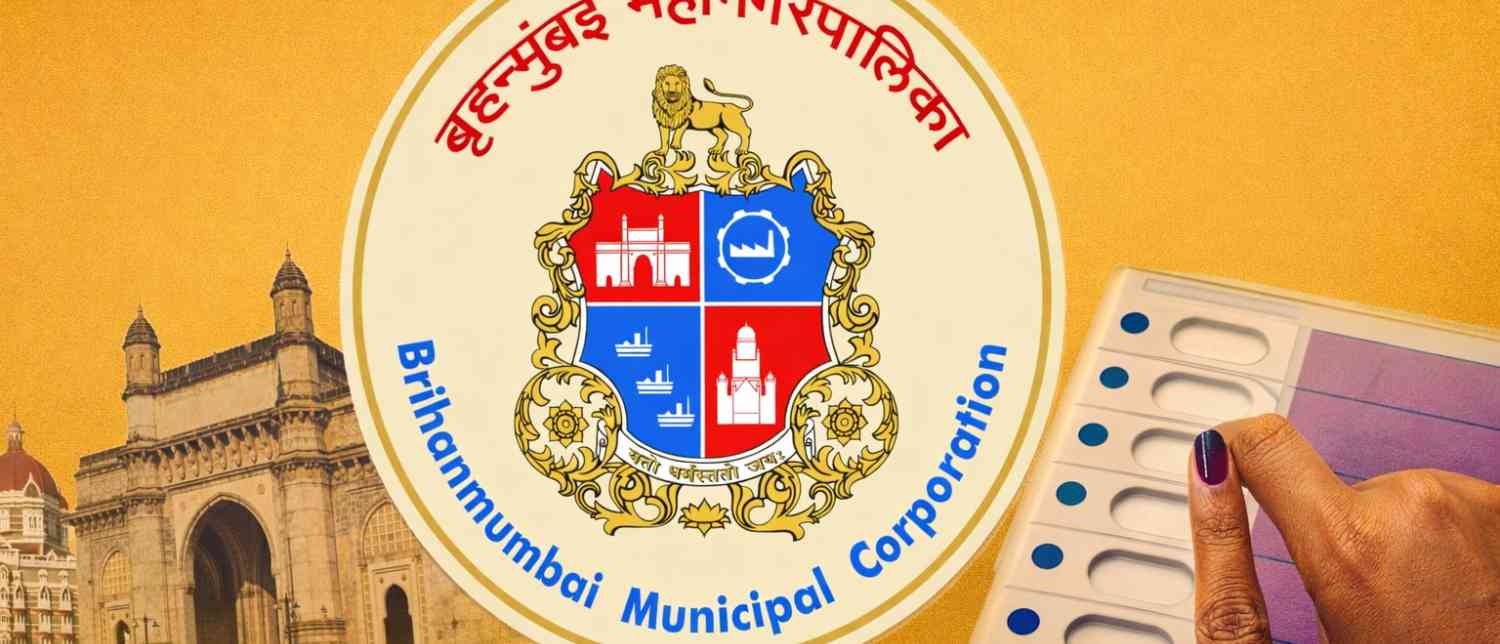
As Maharashtra heads into one of its most closely watched civic exercises, all eyes are firmly on Mumbai. On January 15, voters across 29 municipal corporations in the state will cast their ballots, but none of these contests carries the political and financial weight of the Brihanmumbai Municipal Corporation (BMC) election.
Often described as India’s richest civic body, the BMC controls a budget so vast that it exceeds the total annual spending of several Indian states. The election is not merely about ward-level governance or mayoral politics—it is about who gets to shape the future of India’s financial capital using a ₹74,427-crore balance sheet.
This is the story of how Mumbai’s civic body became wealthier than many state governments, where its money comes from, how it is spent, and why the absence of elected corporators since 2022 has made this election particularly consequential.
Mumbai Votes, But the BMC Commands the Spotlight
Voting for municipal corporations across Maharashtra will take place from 7.30 am to 5.30 pm on January 15, with counting scheduled for the following day. Across the state, more than 15,000 candidates are contesting elections in 29 civic bodies.
In Mumbai alone, 1,700 candidates are battling it out across 227 civic wards to gain control of the BMC. The scale of this contest reflects the scale of the institution itself. Unlike most municipal bodies in India, the BMC is not just a service provider—it is a financial powerhouse whose decisions influence infrastructure, transport, public health, education, and climate resilience for over 12 million residents.
The election also marks the potential end of a long administrative interregnum. Since March 7, 2022, when the term of elected corporators ended, the BMC has been run by an administrator, making this vote the first opportunity in nearly four years for Mumbai to return to elected civic governance.
The Headline Number: A ₹74,427-Crore Budget
On February 4, 2025, the BMC presented its budget for the financial year 2025–26. At ₹74,427 crore, it was the largest budget ever tabled by a municipal body in India and represented a nearly 14 percent increase over the previous year’s estimates.
To put the figure in perspective, capital expenditure alone accounts for ₹43,166 crore—around 58 percent of the total budget. In other words, nearly six out of every ten rupees the BMC plans to spend in FY26 are earmarked for long-term assets such as roads, bridges, sewage systems, and coastal infrastructure.
This level of spending is unusual even for state governments, let alone a city administration.
₹ BMC has presented its Budget Estimates for the financial year 2025-26.
Here are the key takeaways! 📊#BMCBudget#BMCBudget2025_2026#BMCBudget@CMOMaharashtra@mieknathshinde@AjitPawarSpeaks@ShelarAshish@MPLodha pic.twitter.com/y1NIcg5mDW— माझी Mumbai, आपली BMC (@mybmc) February 4, 2025
Bigger Than States, Richer Than Cities
The true scale of the BMC’s finances becomes clear when compared with other governments.
Despite being a municipal corporation, the BMC’s ₹74,427-crore budget surpasses the total annual budgets of several Indian states that are responsible for a far wider range of services, including policing, higher education, welfare schemes, and law and order.
For the 2025–26 financial year:
-
Goa’s total budget stood at ₹28,162 crore
-
Arunachal Pradesh allocated ₹39,842 crore
-
Himachal Pradesh’s budget was ₹58,514 crore
-
Sikkim projected total expenditures of ₹16,196 crore
-
Tripura estimated state spending at ₹31,412 crore
Mumbai’s civic body alone plans to spend more than all of these governments.
Among major Indian cities, the contrast is even starker. The Municipal Corporation of Delhi proposed a ₹16,530-crore budget for 2026–27, while Bengaluru’s Bruhat Bengaluru Mahanagara Palike (BBMP) approved an outlay of approximately ₹19,930 crore for 2025–26. Ranchi Municipality’s entire budget is less than one percent of the BMC’s.
This extraordinary disparity explains why the BMC is often described as India’s most powerful municipal institution—and why control over it carries political significance well beyond Mumbai’s boundaries.
What Is the BMC, and Why Is It So Powerful?
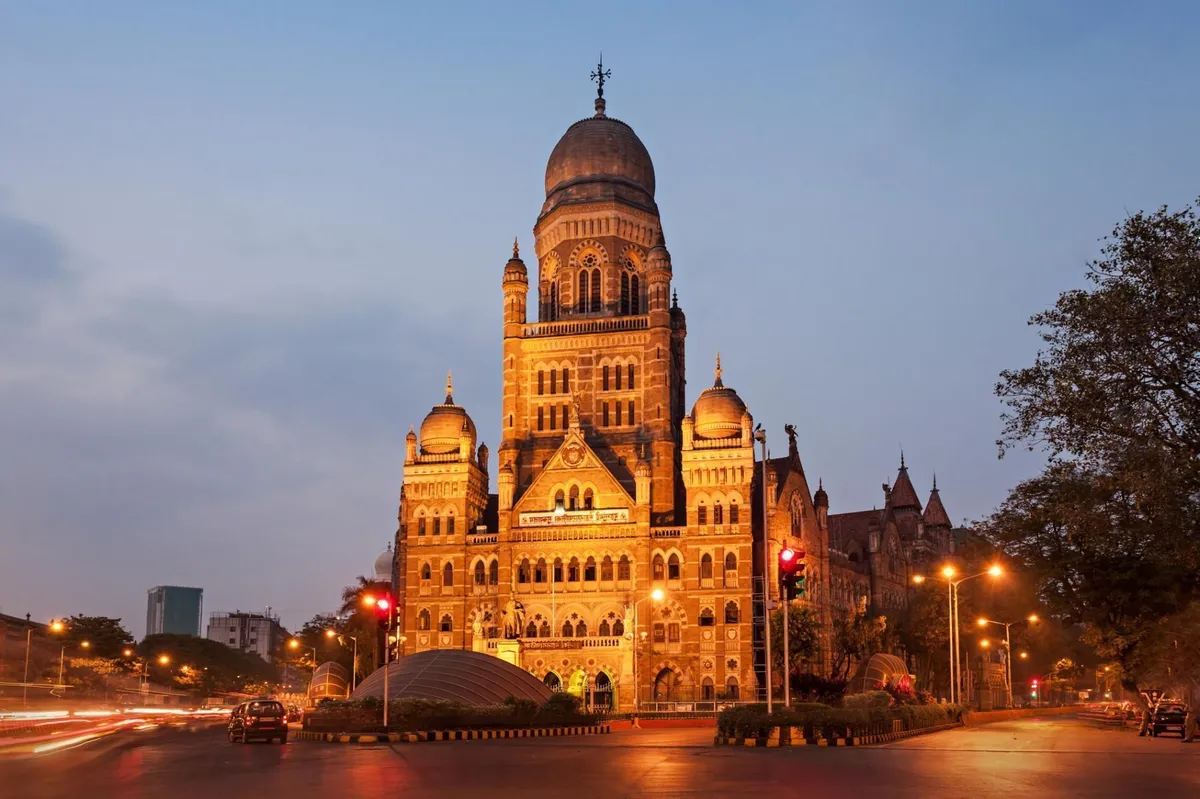
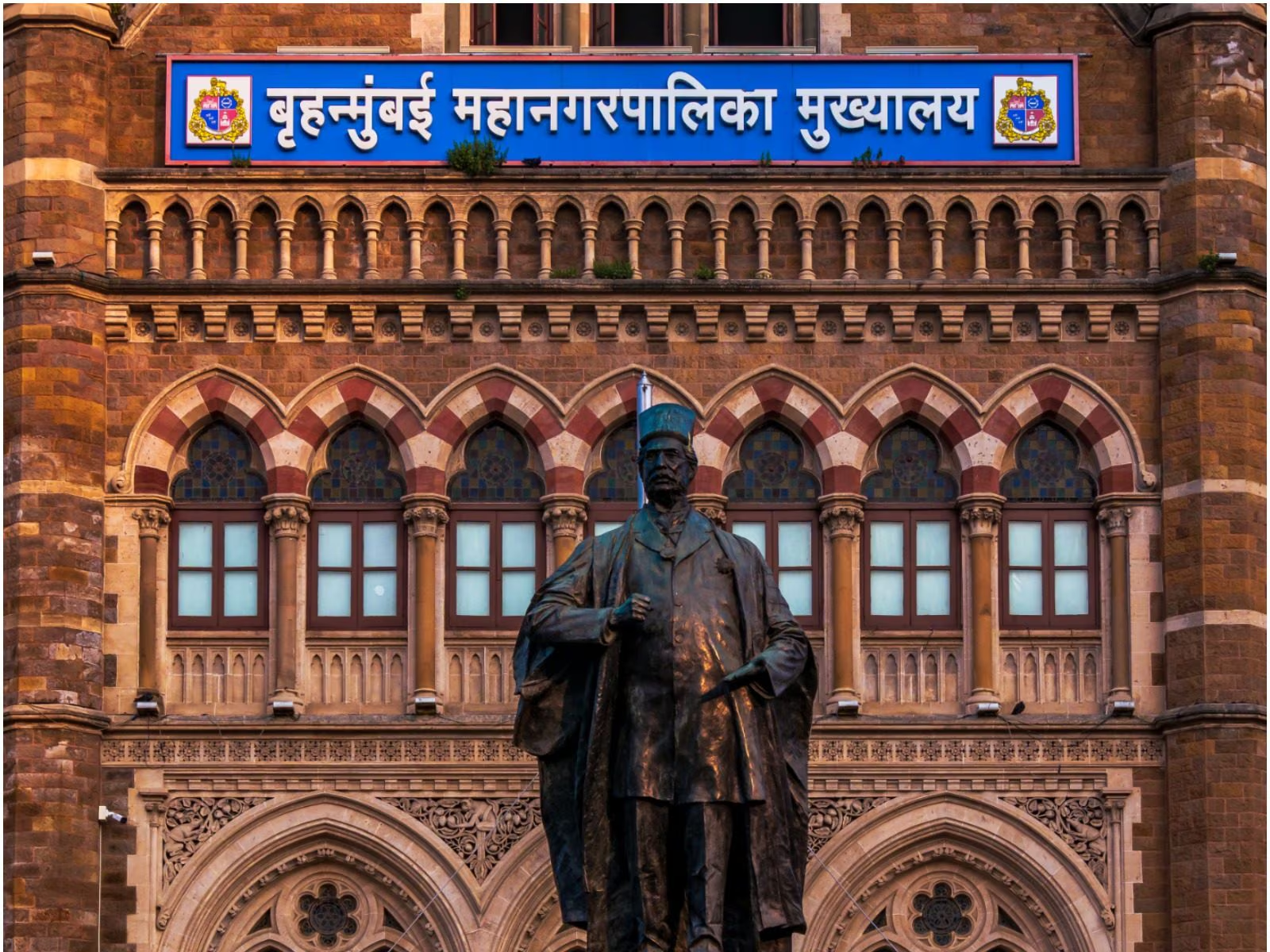
Formally known as the Municipal Corporation of Greater Mumbai (MCGM), the BMC governs Mumbai and some of its suburban areas. It was established under the Bombay Municipal Corporation Act of 1888, making it one of the oldest municipal bodies in Asia.
Its original mandate was to improve civic infrastructure and manage basic urban administration. Over time, as Mumbai grew into India’s commercial and financial hub, the BMC’s responsibilities—and revenues—expanded dramatically.
Today, the BMC oversees everything from water supply and sanitation to public hospitals, schools, roads, stormwater drains, and transport subsidies. Unlike most Indian cities, it also enjoys a revenue base that allows it to plan and execute mega infrastructure projects independently.
Running Without Corporators Since 2022
One of the most striking aspects of the current election is that it follows an extended period without elected representation at the civic level.
Since the term of corporators ended on March 7, 2022, the BMC has functioned under an administrator. During this period, budgets worth tens of thousands of crores have been approved and spent without an elected house scrutinising allocations or implementation.
This has fuelled debates around accountability, transparency, and political influence. RTI-based investigations during the administrator-led period indicated that a disproportionate share of local development funds went to constituencies held by ruling alliance MLAs, while opposition-held areas received minimal allocations.
As a result, the 2026 BMC election is not just about governance—it is also about restoring democratic oversight over one of the largest public spending authorities in the country.
Where Does the BMC Get Its Money?
Contrary to popular belief, the BMC does not rely primarily on property tax. Its financial strength comes from a diversified revenue structure that includes state compensation, fees, taxes, development charges, and investment income.
For FY25, the BMC’s total revenue was estimated at ₹81,774 crore, reflecting the breadth of its income sources.
Revenue Growth in Recent Years
For the financial year 2024–25, the BMC’s revenue income was revised upward from ₹35,749.03 crore to ₹40,693.85 crore. Actual revenue collected until December 31, 2024 stood at ₹28,308.37 crore.
For 2025–26, the civic body has estimated revenue income of ₹43,159.40 crore—about 20.73 percent higher than the initial estimate for 2024–25.
Fees and User Charges: The Single Largest Contributor
Between 2016 and 2025, the BMC earned approximately ₹94,600 crore from “fees and user charges.” This category includes revenue from registration fees, admission charges, licence renewals, demolition fees, swimming pool reservations, advertisement permissions, water connections, and other service-related payments.
These charges form the backbone of the BMC’s income, reflecting Mumbai’s dense economic activity and constant demand for civic permissions and services.
Taxes, Including Property Tax
Taxes remain an important, though not dominant, source of revenue. Between FY16 and FY25, the BMC collected around ₹75,800 crore from various taxes, including street tax, theatre tax, electricity tax, water tax, and property tax.
Property tax alone is estimated to generate ₹5,200 crore in 2025–26. In the previous financial year, the initial estimate of ₹4,950 crore was revised upward to ₹6,200 crore, indicating improved collection efficiency.
Grants, Subsidies, and State Compensation
Another major revenue stream comes from grants and subsidies received from the state and central governments. Over the years, the BMC has earned around ₹86,700 crore through revenue grants for government schemes and services delivered on behalf of other agencies.
A significant component of this is compensation in lieu of octroi. After the introduction of GST, octroi—a major revenue source for Mumbai—was abolished, and the state government began compensating the BMC for the loss. For FY26, this compensation is estimated to be in the range of ₹14,000–15,000 crore, making it one of the largest single revenue lines.
This arrangement has also tied Mumbai’s finances more closely to state-level politics than many residents realise.
Development Charges and Advertising Revenue
Development plan charges, FSI-linked premiums, and building permissions have emerged as major non-tax revenue sources. In recent years, these have been estimated at nearly ₹6,000 crore annually.
The BMC also earns from outdoor advertising, hoardings, and licensing. Advertising revenue alone is projected to exceed ₹300 crore in FY26, according to industry reports.
Interest Income—and a Shrinking Cushion
Historically, the BMC parked large surpluses in fixed deposits, earning substantial interest income. However, recent RTI-based reports indicate that these deposits have declined sharply since FY22 as funds are increasingly deployed for infrastructure projects.
In simple terms, the civic body’s financial cushion is thinning as spending accelerates.
How the BMC Spends Its Money
The BMC’s expenditure reflects the sheer complexity of running a megacity like Mumbai.
Infrastructure Takes Centre Stage
Capital expenditure dominates the budget. For FY26, ₹43,166 crore—58 percent of the total outlay—has been allocated for infrastructure projects.
In 2024 alone, the BMC invested 47 percent of its revenue in infrastructure. Over the past decade, it has spent ₹1,11,600 crore on city upkeep and upgrades.
Major infrastructure allocations include:
-
₹5,545 crore for the Mumbai Sewage Disposal Project, including seven new sewage treatment plants scheduled between 2026 and 2028
-
₹4,000 crore for Phase 2 of the Versova–Dahisar coastal road
-
₹3,111 crore for citywide road concretisation
-
₹1,958 crore for the Goregaon–Mulund Link Road tunnel
-
₹1,516 crore for completion and maintenance of the South Mumbai coastal road
These projects aim to address chronic flooding, traffic congestion, and ageing infrastructure, though many have faced delays.
Day-to-Day Civic Services
Beyond mega projects, a substantial portion of the budget goes toward keeping the city functional. Revenue expenditure covers sanitation, solid waste management, water supply operations, public hospitals, primary education, salaries, and pensions.
Over the past decade, the BMC has allocated ₹36,300 crore for operations and maintenance of public infrastructure and ₹10,700 crore in grants to hospitals, educational institutions, libraries, and social schemes.
Administrative expenses—including audits, insurance, legal costs, advertising, fuel, travel, and vehicles—amounted to ₹8,600 crore during this period.
Healthcare and Public Health Spending
At least 10 percent of the BMC’s budget is dedicated to healthcare services. In FY25, the civic body earmarked ₹99.5 crore for controlling vector-borne diseases and pesticide use, along with ₹12.8 crore for rodent control.
The FY26 budget also includes plans to install 100 battery-operated suction machines across the city’s 24 wards, alongside continued investment in schools and education infrastructure.
Supporting BEST: A Long-Term Commitment
One of the BMC’s most significant recurring expenses is financial assistance to the Brihanmumbai Electric Supply and Transport (BEST) undertaking.
Between 2012–13 and January 2025, the BMC allocated ₹11,304.59 crore to BEST. For 2025–26, a further ₹1,000 crore grant has been proposed.
Additionally, ₹992 crore was sanctioned by the 15th Finance Commission for the procurement of electric buses, of which ₹493.38 crore has already been received and disbursed.
Election Spending: Money Is No Constraint
Running an election of this scale also comes at a cost. The BMC is expected to exceed its 2017 civic election expenditure of ₹130 crore by over 30 percent this time.
This increase is attributed to a higher number of polling booths and staff. More than 64,375 employees are involved in the current election, compared to just 7,500 in 2017. According to senior officials, budgetary constraints are not an issue, with clear instructions to spend wherever necessary.
The Stakes After the Votes Are Counted
On paper, the BMC is a city government. In practice, it is one of India’s largest spending authorities. Whoever controls it will decide how Mumbai is built, repaired, cleaned, protected from floods, and moved.
Yet size alone does not guarantee outcomes. Despite record budgets, capital expenditure has often gone underutilised, with less than 45 percent spent in some years. Infrastructure-heavy budgets have drawn criticism for being “outcome-light,” as deadlines slip and civic problems persist.
As Mumbai votes, the real test will come after the results. The next BMC administration will inherit unprecedented financial power—and a long list of civic promises that the city has heard before. Delivery, more than allocation, will determine whether India’s richest civic body truly serves its citizens.
With inputs from agencies
Image Source: Multiple agencies
© Copyright 2025. All Rights Reserved. Powered by Vygr Media.