 By
By 
New Delhi: The ongoing protest at Delhi’s Jantar Mantar has emerged as one of the most closely watched public demonstrations in recent weeks, with climate activist and education reform advocate Sonam Wangchuk at the centre of a growing movement demanding accountability over alleged examination irregularities. As Wangchuk’s indefinite hunger strike stretches beyond two weeks, concerns over his health have mounted, drawing support from opposition leaders, civil society members, and prominent cultural figures across the country.
The protest, organised by the CJP at Jantar Mantar, seeks the resignation of Union Education Minister Dharmendra Pradhan over alleged irregularities in national examinations, including the NEET controversy. The movement has steadily gathered momentum, attracting students, activists, academicians, farmers' groups, and political leaders who argue that transparency and accountability in India's examination system must be strengthened.
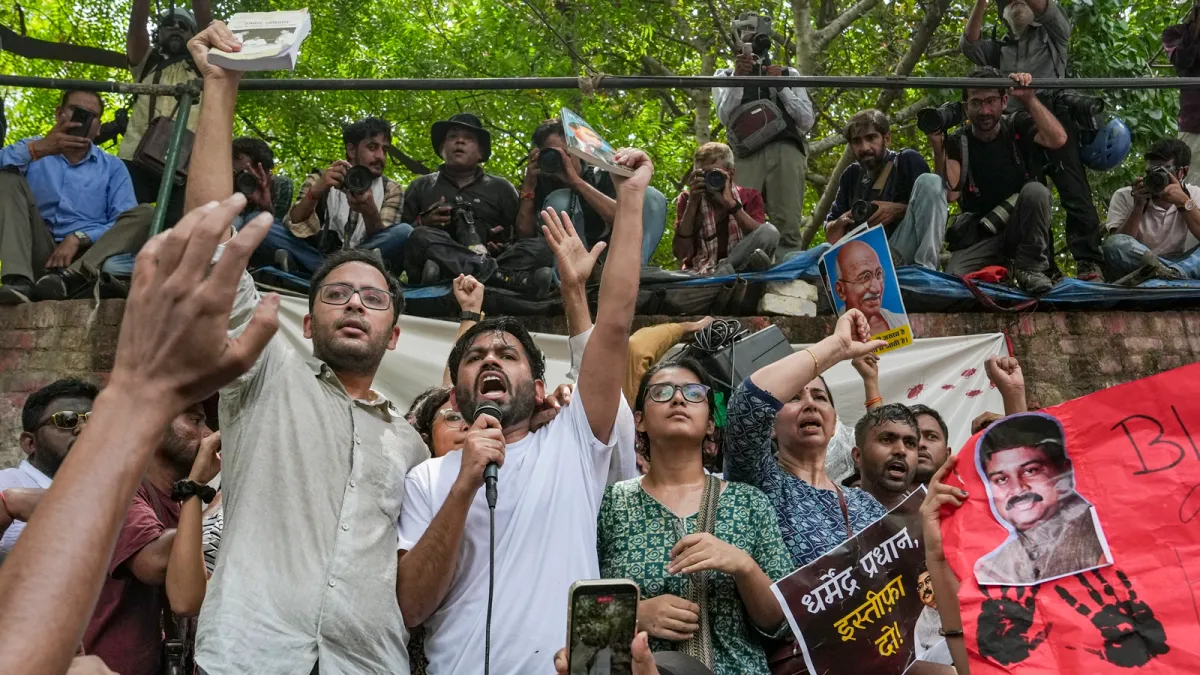
Wangchuk Continues Fast Despite Physical Weakness
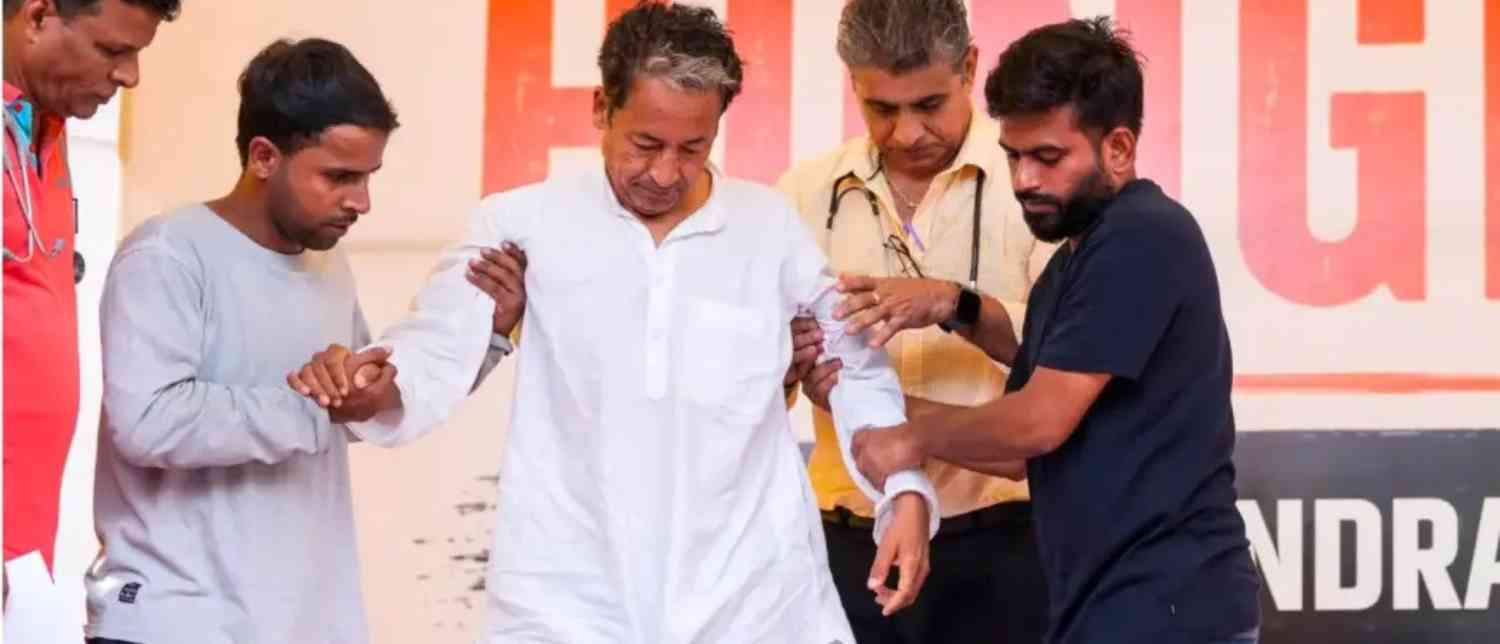
Sonam Wangchuk, the renowned innovator and environmental activist, began his indefinite hunger strike on June 28 after joining the ongoing protest. Since then, he has remained steadfast despite visible signs of physical deterioration.
Speaking from the protest site after completing more than two weeks without food, Wangchuk acknowledged the visible impact of the fast, saying that while his body had become weaker externally, he continued to feel mentally determined. He maintained that peaceful protest remains a constitutional right and insisted that his resolve had not diminished despite the physical challenges. Earlier during the fast, he had revealed that he had lost significant body weight but felt that his body had gradually adapted to prolonged fasting.
As the hunger strike progressed into its later stages, fellow protesters and supporters expressed increasing concern over his health. Reports from the protest site indicated that Wangchuk appeared visibly frail, reinforcing calls for authorities to engage with the protesters and address their demands before the situation worsened.
Political Support Grows at Jantar Mantar
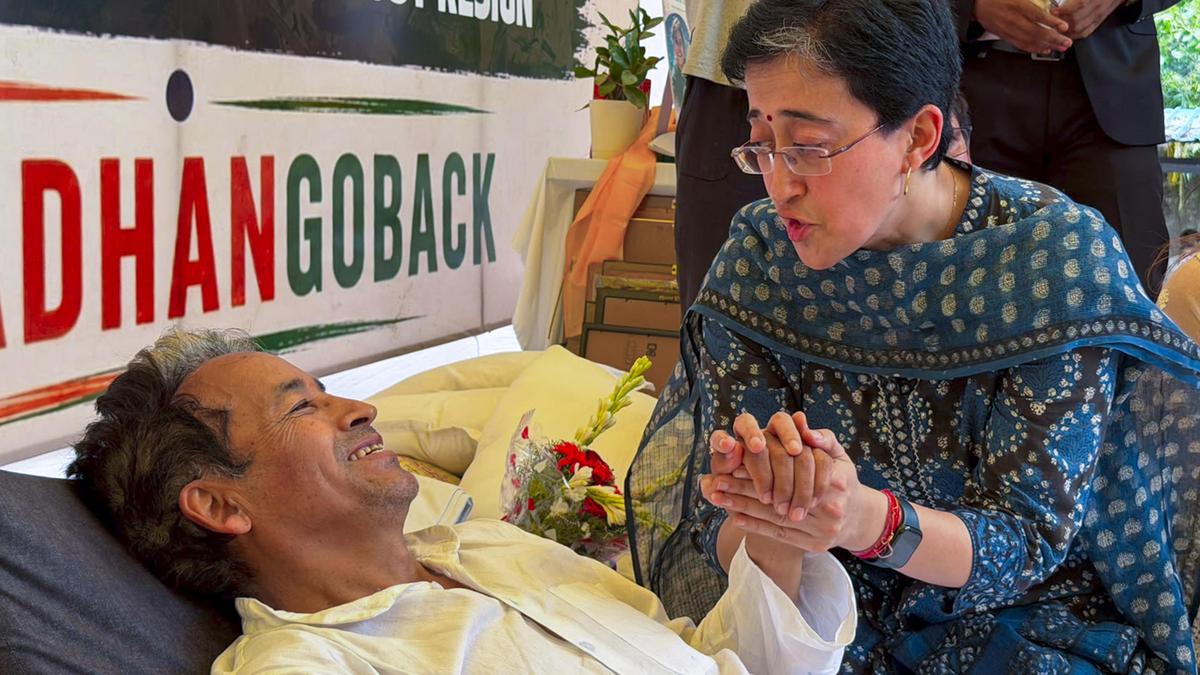
The protest received a significant boost when senior Aam Aadmi Party leader and Leader of Opposition in the Delhi Assembly Atishi visited Jantar Mantar to express solidarity with the demonstrators.
Accompanied by MLA Kuldeep Kumar and former Delhi Mayor Shelly Oberoi, Atishi praised the resilience of the protesters and highlighted what she described as the determination of young participants who had continued their agitation despite difficult circumstances. Her visit underscored the growing political attention surrounding the protest and added momentum to the campaign.
The participation of opposition leaders has widened the visibility of the movement, transforming it from a student-led protest into a broader political and civic campaign focused on educational accountability.
Earlier, Trinamool Congress MP Mahua Moitra had also appealed directly to Wangchuk, urging him to end his fast while assuring him that his concerns had resonated with people across the country. Stressing that his life was invaluable, she encouraged him to continue the larger struggle without risking irreversible damage to his health.
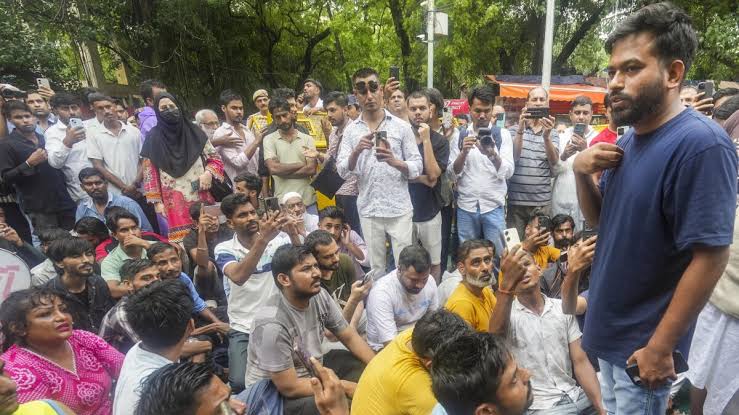
Eminent Citizens Appeal for End to Hunger Strike
As Wangchuk's health continued to deteriorate, a group of distinguished public intellectuals, actors, writers and academics released a joint appeal urging all protesters observing indefinite hunger strikes to end their fast.
The appeal was signed by several well-known personalities, including author Arundhati Roy, veteran actor Naseeruddin Shah, actor Ratna Pathak Shah and other eminent citizens.
While reiterating their full support for the protesters' demand for accountability in examination-related issues, the signatories expressed deep concern over the physical toll of prolonged fasting. They argued that the movement would require sustained leadership in the months ahead and that preserving the health of its leading voices was essential for the struggle to continue effectively.
The statement noted that allowing the hunger strike to continue indefinitely could cause irreversible harm, urging Wangchuk and fellow protesters to safeguard their health while pursuing democratic means of protest.
The appeal reflected a broader sentiment among supporters—that the movement's objectives remained important but should not come at the cost of the well-being of those leading it.
Protest Focuses on Examination Accountability
At the heart of the agitation is the demand for greater transparency and accountability in India's examination system.
The CJP has alleged serious irregularities in competitive examinations, particularly in the conduct of NEET, arguing that repeated controversies have eroded public trust in the country's educational institutions. Protesters have demanded institutional reforms and accountability from the Ministry of Education, including the resignation of the Union Education Minister.
Participants at Jantar Mantar have maintained that their movement is not limited to a single examination but represents a larger campaign for fairness, transparency and equal opportunity for millions of students whose futures depend on competitive entrance tests.
The demonstration has remained largely peaceful, with protesters repeatedly emphasising constitutional methods of dissent through sit-ins, public meetings and symbolic fasting.
Public Concern Continues to Grow
With each passing day, images of Wangchuk's visibly weakened condition have circulated widely on social media, prompting increasing concern among citizens, activists and public figures.
Supporters continue to gather at Jantar Mantar to express solidarity, while many have appealed to the government to initiate dialogue with protest leaders. Simultaneously, appeals urging Wangchuk to discontinue his fast have grown louder, reflecting an attempt to balance support for the cause with concern for his health.
Despite the appeals, Wangchuk has consistently projected determination, stating that peaceful democratic protest remains one of the strongest tools available to citizens seeking accountability.
What Lies Ahead
As the protest enters a critical phase, two parallel developments are shaping its trajectory. On one hand, political backing and public attention continue to expand, bringing greater visibility to the demands surrounding examination reforms. On the other, Wangchuk's deteriorating health has become an urgent concern, prompting repeated appeals from political leaders, fellow activists and respected cultural figures for him to end his hunger strike.
Whether these appeals influence the protest's future remains uncertain. However, the movement has already succeeded in reigniting national debate over transparency in public examinations and the mechanisms for ensuring accountability within India's education system.
For now, the gathering at Jantar Mantar remains both a symbol of democratic protest and a reminder of the personal sacrifices some activists are willing to make in pursuit of institutional reform. As support continues to pour in from across political and social spectrums, attention remains firmly fixed on whether dialogue, policy action or compromise will emerge before the health of the protest's leading voices deteriorates further.
With input from agencies
Image Source: Multiple agencies
© Copyright 2026. All Rights Reserved. Powered by Vygr Media.