 By
By 
New Delhi: Indian scientists have developed an experimental “smart” cancer drug that could mark a significant step towards more selective cancer treatment. Named RK-251, the drug has been designed to remain relatively inactive in normal tissues and become activated primarily inside cancer cells, potentially reducing the damage to healthy cells associated with conventional chemotherapy.
The research has been led by Dr Asis Bala of the Institute of Advanced Study in Science and Technology (IASST) and Dr K.P. Bhabak of IIT Guwahati. The drug has shown encouraging results in preclinical studies, particularly against triple-negative breast cancer (TNBC) cells, one of the more aggressive forms of breast cancer. However, researchers have stressed that RK-251 is still at the experimental stage and is not yet available as a treatment for cancer patients.
Why RK-251 Is Being Called a ‘Smart’ Cancer Drug
One of the biggest challenges in cancer treatment is destroying malignant cells without causing extensive damage to healthy tissue.
Traditional chemotherapy works by attacking rapidly dividing cells. Since many healthy cells also divide rapidly, chemotherapy can affect normal tissues along with cancer cells, leading to side effects. This has driven scientists to develop treatment approaches that can distinguish cancer cells from healthy cells more precisely.
RK-251 follows that principle by using a biological characteristic commonly found in cancer cells: elevated levels of reactive oxygen species, or ROS.
ROS are chemically reactive molecules produced naturally during cellular processes. Cancer cells can have unusually high levels of these molecules because of their altered metabolism and rapid growth. Researchers have used this difference as a trigger for RK-251.
The idea is relatively simple: the drug travels through the body in a comparatively inactive form, but when it encounters the ROS-rich environment inside a cancer cell, it switches on and releases its active anticancer component.
How Does RK-251 Work Inside Cancer Cells?
The science behind the drug goes a step further than simply responding to ROS.
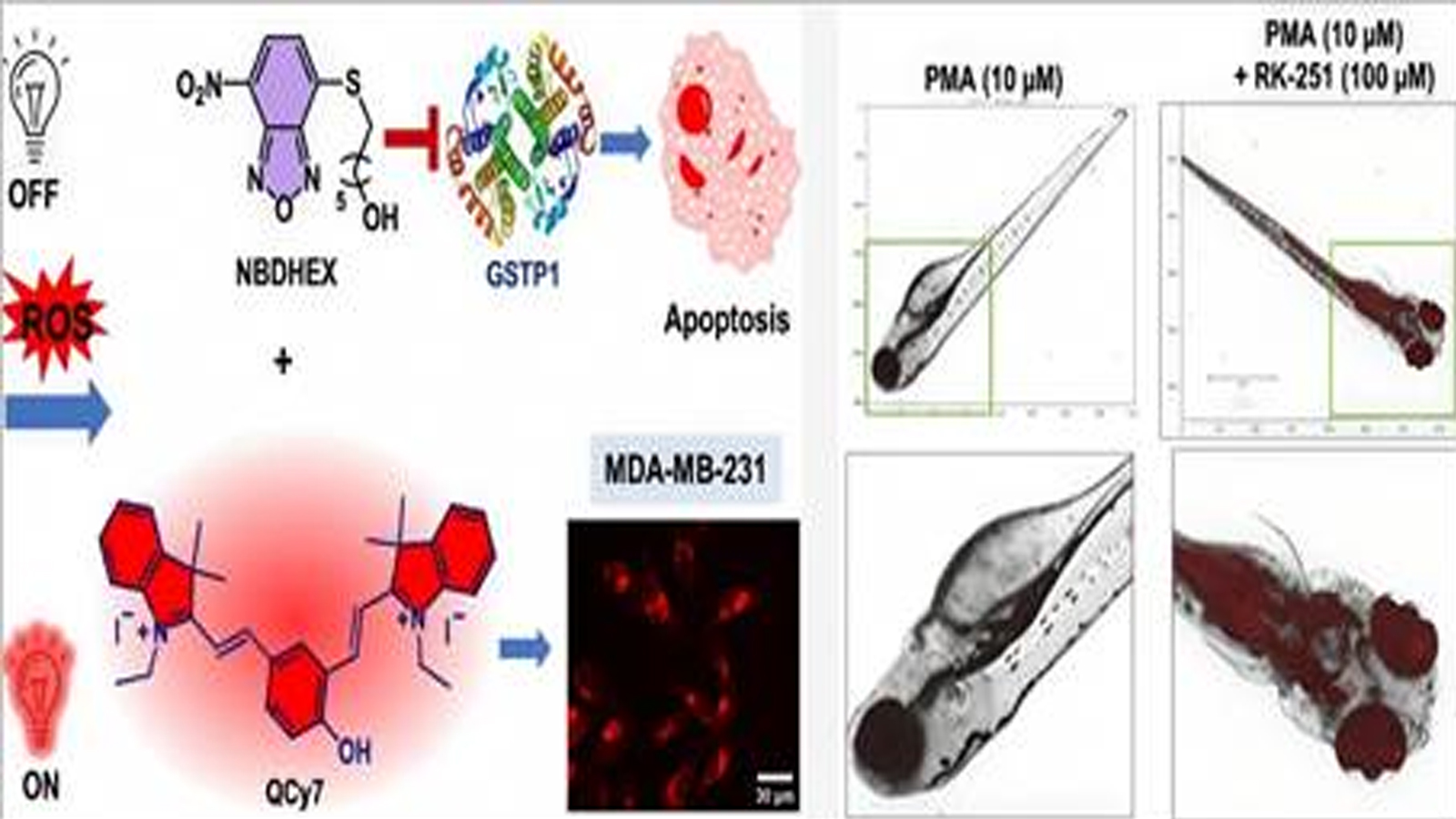
RK-251 has been developed as a prodrug, meaning it is initially inactive and is designed to become active under specific biological conditions. Inside a cancer cell containing high levels of ROS, the chemical trigger causes RK-251 to break apart and release NBDHEX, the compound responsible for the anticancer action.
NBDHEX targets an enzyme called GSTP1, which is produced in elevated amounts by many cancer cells. GSTP1 can help cancer cells survive by neutralising certain anticancer drugs and contributing to treatment resistance.
By releasing NBDHEX inside the tumour environment, RK-251 is designed to inhibit GSTP1 and make cancer cells more vulnerable.
This creates a targeted chain of events:
Cancer cell → high ROS levels → RK-251 activation → NBDHEX release → GSTP1 inhibition → anticancer activity
The approach could potentially limit exposure of healthy tissue to the active drug, although whether that advantage will hold true in humans remains to be established through further testing.
RK-251 Also Has a Diagnostic Element
Another notable feature of RK-251 is that it is not designed only to deliver an anticancer compound.
The drug also contains a fluorescent component called QCy7. When RK-251 is activated and releases its components, it produces near-infrared fluorescence. This allows researchers to observe whether the drug has been activated in an ROS-rich environment.
This gives RK-251 what researchers describe as a theranostic approach — combining therapeutic action with a diagnostic or imaging capability.
In practical terms, the fluorescence could help scientists track the behaviour and activation of the drug during research. That combination is particularly interesting because targeted cancer therapies increasingly focus not only on delivering drugs to tumours but also on understanding where and how those drugs become active.
Promising Early Results Against Triple-Negative Breast Cancer
The early findings are particularly relevant to triple-negative breast cancer, or TNBC.
Unlike some other breast cancers, TNBC does not have three commonly targeted receptors — oestrogen receptor, progesterone receptor and HER2. That limits some established targeted treatment options and can make the disease more difficult to manage.
In preclinical experiments, RK-251 showed strong activity against aggressive TNBC cells while producing substantially less effect on healthy cells. These results provide an important basis for further investigation of the drug's potential.
Researchers also tested the candidate drug using zebrafish embryos (Danio rerio). The behavioural assessment did not show obvious signs of toxicity under the conditions tested. The drug also produced the expected fluorescence when exposed to ROS, supporting the proposed mechanism of activation.
Still, these results should be viewed in the right context. Activity in cancer cells and zebrafish models does not establish that a drug will be safe or effective in people.
Can RK-251 Replace Chemotherapy?
The prospect of a cancer drug that selectively attacks tumour cells while largely sparing healthy tissue is understandably exciting. But calling RK-251 a replacement for chemotherapy at this stage would be premature.
The drug has not yet been tested in cancer patients. Before it can enter human clinical trials, researchers will need to establish several critical factors, including its safety, appropriate dosage, behaviour inside the human body and ability to produce meaningful tumour responses.
Cancer is also not a single disease. Different cancers — and even different patients with the same type of cancer — can behave very differently. A mechanism that works effectively against one tumour type may not produce the same results elsewhere.
Experts have therefore cautioned against viewing RK-251 as an immediate substitute for chemotherapy. If future human trials demonstrate that it is safe and effective, the drug could instead become another tool in the broader cancer-treatment arsenal. Depending on the cancer and the patient's condition, it could potentially be investigated as a standalone treatment or alongside chemotherapy, targeted therapy and other established approaches.
What Happens Next?
The immediate priority is further research.
The promising preclinical findings need to be followed by more extensive laboratory and animal studies before the drug can be considered for testing in humans. Researchers will have to determine whether the selective activation seen in experimental models can be reproduced safely inside the human body.
They will also need to understand how the drug is absorbed, distributed and eliminated, establish suitable dosing and evaluate potential toxicities that may not appear in early models.
Only after those questions are addressed can human clinical trials provide evidence about whether RK-251 can actually improve outcomes for cancer patients.
The research has been published in the Journal of Medicinal Chemistry, adding to the scientific basis for continued investigation of the drug.
A Promising Direction, But Not Yet a Cancer Cure
RK-251 represents an important idea in the continuing search for more precise cancer treatments: instead of exposing the entire body to an active anticancer compound, activate that compound where the disease is located.
Its ROS-responsive mechanism, GSTP1 inhibition, fluorescence-based tracking and early activity against triple-negative breast cancer make the candidate scientifically noteworthy. The preliminary findings also suggest that researchers may be able to combine treatment and imaging within a single drug platform.
But the most important distinction is between promise and proof.
RK-251 is currently a preclinical drug candidate, not an approved cancer medicine. There is no evidence yet that it can replace chemotherapy or cure cancer in patients. The next stage of research will determine whether its promising laboratory performance can translate into a treatment that is genuinely safe, effective and useful in clinical practice.
For now, RK-251 offers something more measured than a breakthrough cure: a promising new direction in targeted cancer-drug development. If subsequent studies confirm its ability to activate preferentially inside tumours while limiting harm to healthy tissue, it could eventually contribute to a future in which cancer treatment is not only powerful, but considerably more precise.
With input from agencies
Image Source: Multiple agencies
© Copyright 2026. All Rights Reserved. Powered by Vygr Media.