 By
By 
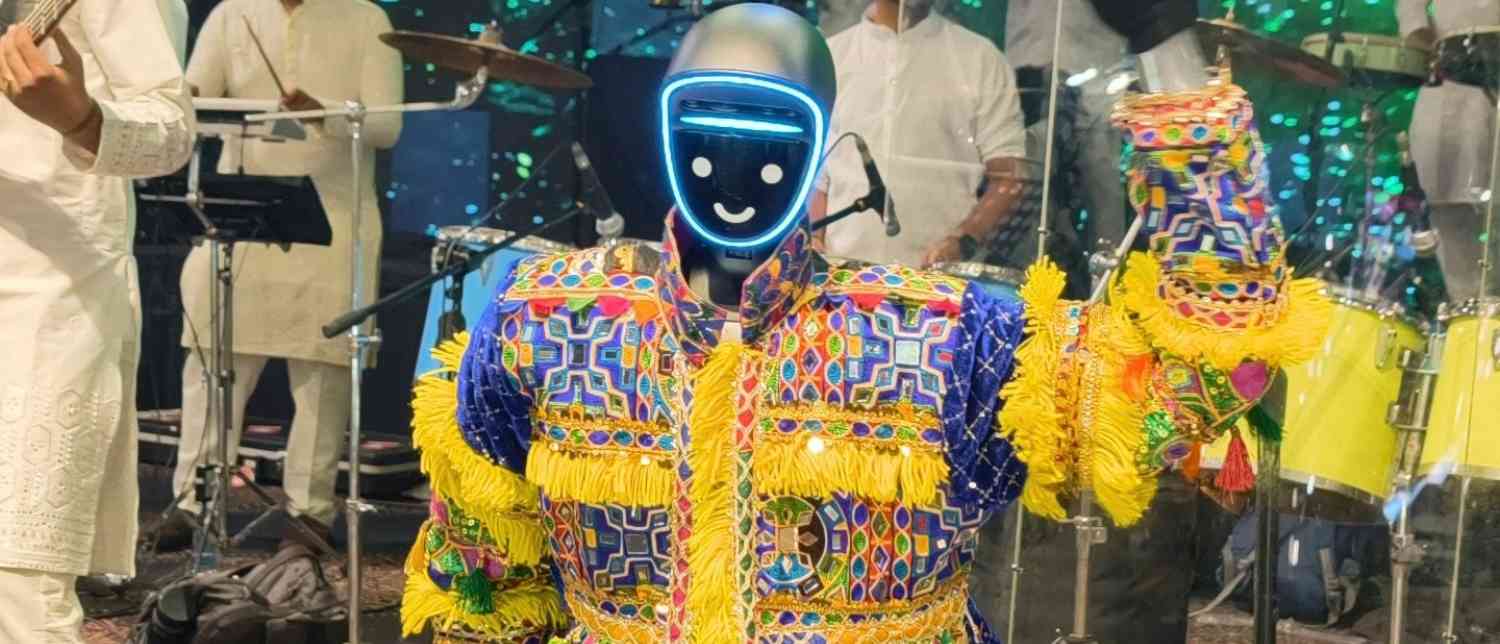
A humanoid robot dressed in traditional Gujarati attire has become a talking point at a Navratri celebration in Navsari, Gujarat, after videos showed the machine performing Garba and Raas to the songs of popular folk singer Geeta Rabari. The unusual sight brought a modern technological attraction to one of Gujarat’s most recognisable cultural celebrations, drawing attention to the growing intersection of robotics and traditional festivities.
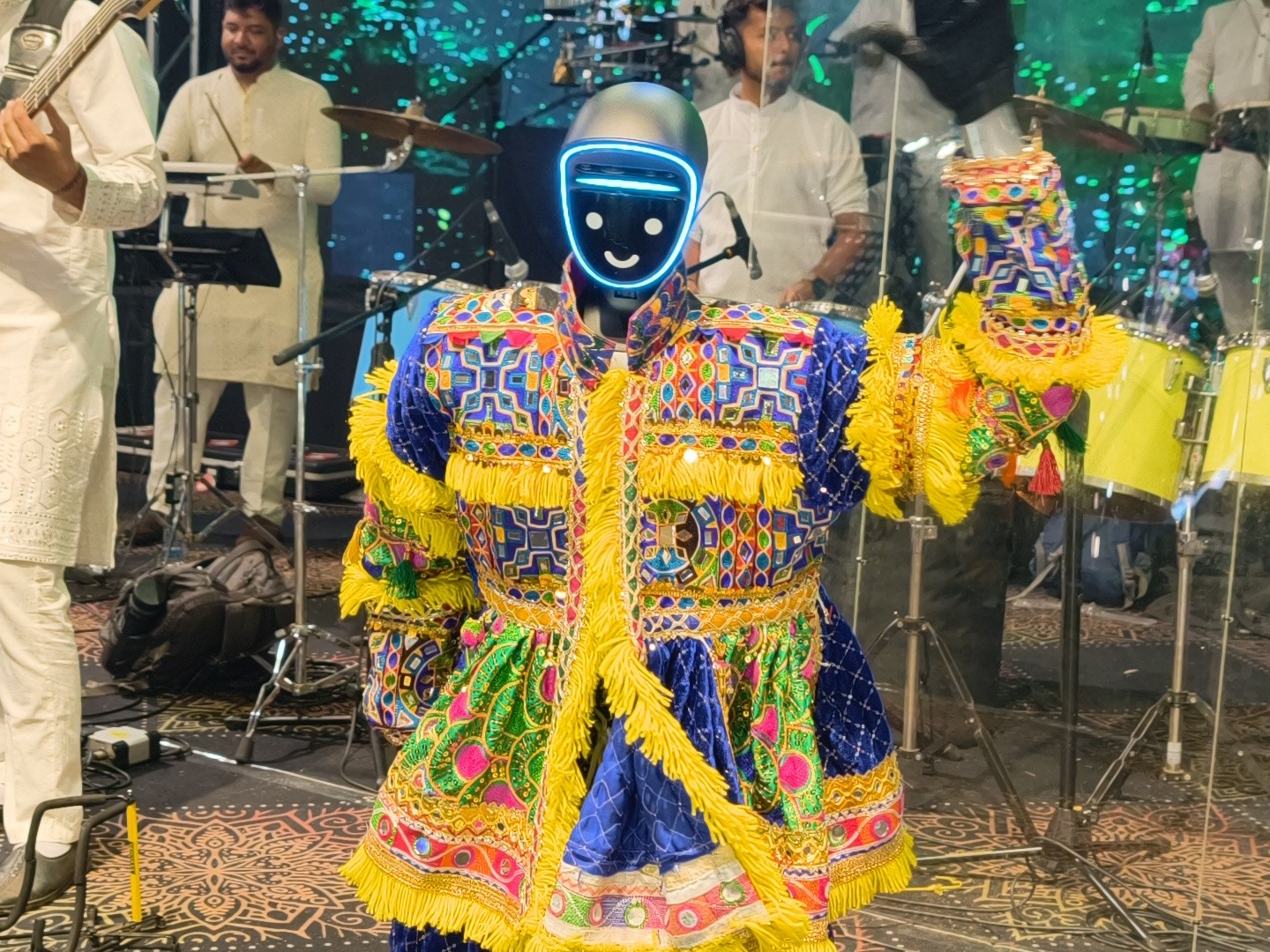
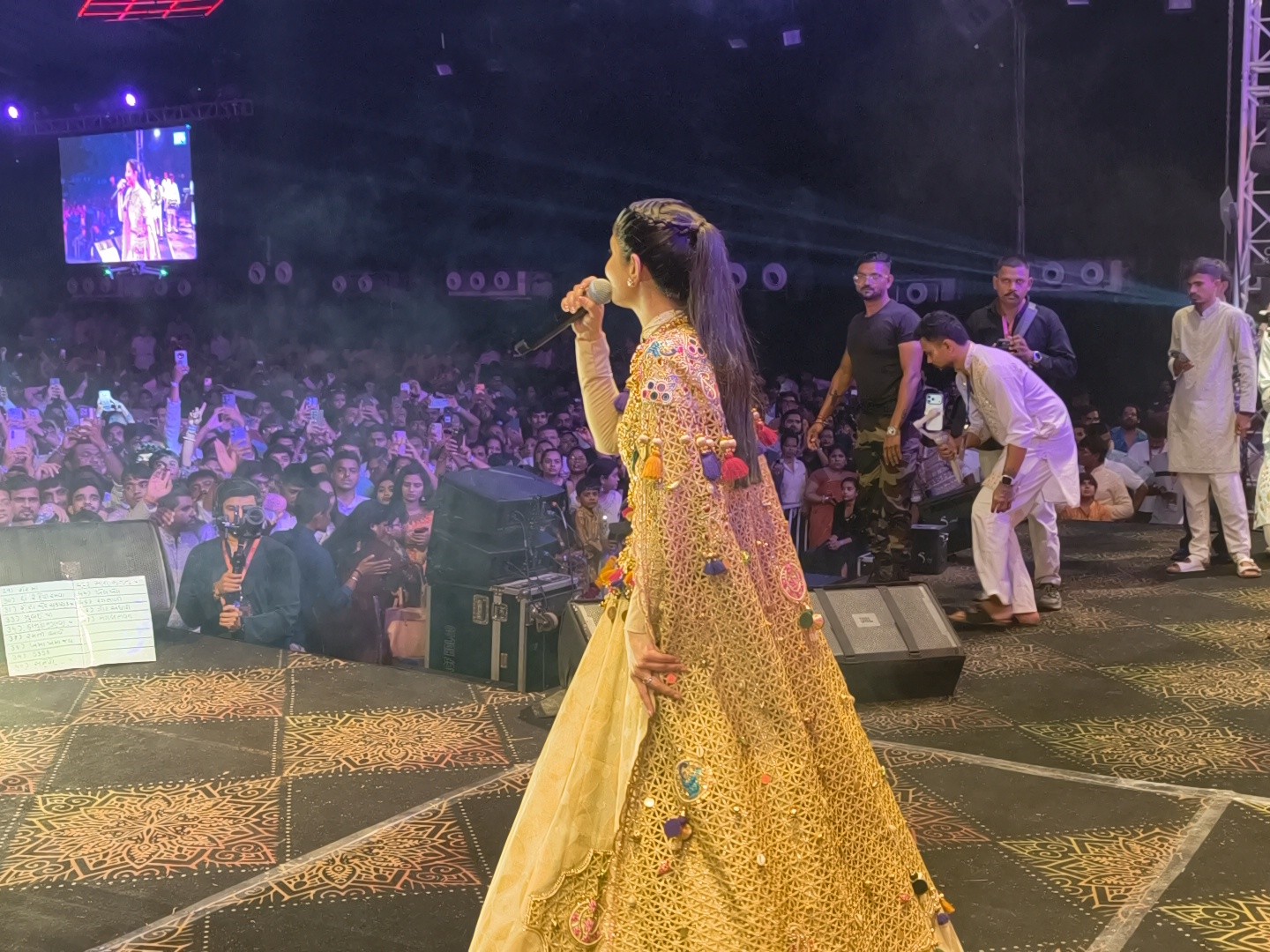
The robot appeared at the Raaslok Navratri event held on October 8 at OM Party Plot in Jamalpore, Navsari, where Geeta Rabari was scheduled to perform during a special pre-Navratri celebration. The sight of a robot participating in the festivities, complete with traditional clothing and a turban, added an unexpected dimension to the event.
The performance has since attracted attention online, with the robot’s movements offering a striking contrast to the familiar sight of people dancing in colourful traditional outfits during Gujarat’s festive season.
Beyond the novelty of a machine joining the Garba celebrations, the appearance also highlighted an effort to introduce younger generations to technology through a setting they already recognise and enjoy.
Humanoid Robot Becomes an Attraction at Navsari Navratri
Navratri celebrations in Gujarat are closely associated with Garba, a traditional folk dance performed to rhythmic music during the festival. Every year, large gatherings bring together families, friends and dance enthusiasts, with traditional clothing, music and community participation forming an important part of the experience.
This year, a humanoid robot added an unusual attraction to the celebrations in Navsari.
Unlike conventional robotic demonstrations conducted in laboratories or technology exhibitions, the machine appeared in a festive environment, where music and dance were already at the centre of attention. Its participation offered visitors an opportunity to see robotics in a setting that was both familiar and entertaining.
Videos of the robot performing Raas in traditional attire circulated online, attracting attention for the unusual combination of technology and Gujarati folk culture.
The robot’s appearance also reflected how public events can provide opportunities to introduce technological innovations to audiences who might not otherwise encounter them outside educational institutions, demonstrations or digital platforms.
For festivalgoers, the spectacle presented a different kind of participant on the Garba ground. Instead of another human dancer joining the celebration, a human-like machine became part of the festive atmosphere.
Robot Dances to Geeta Rabari’s Songs
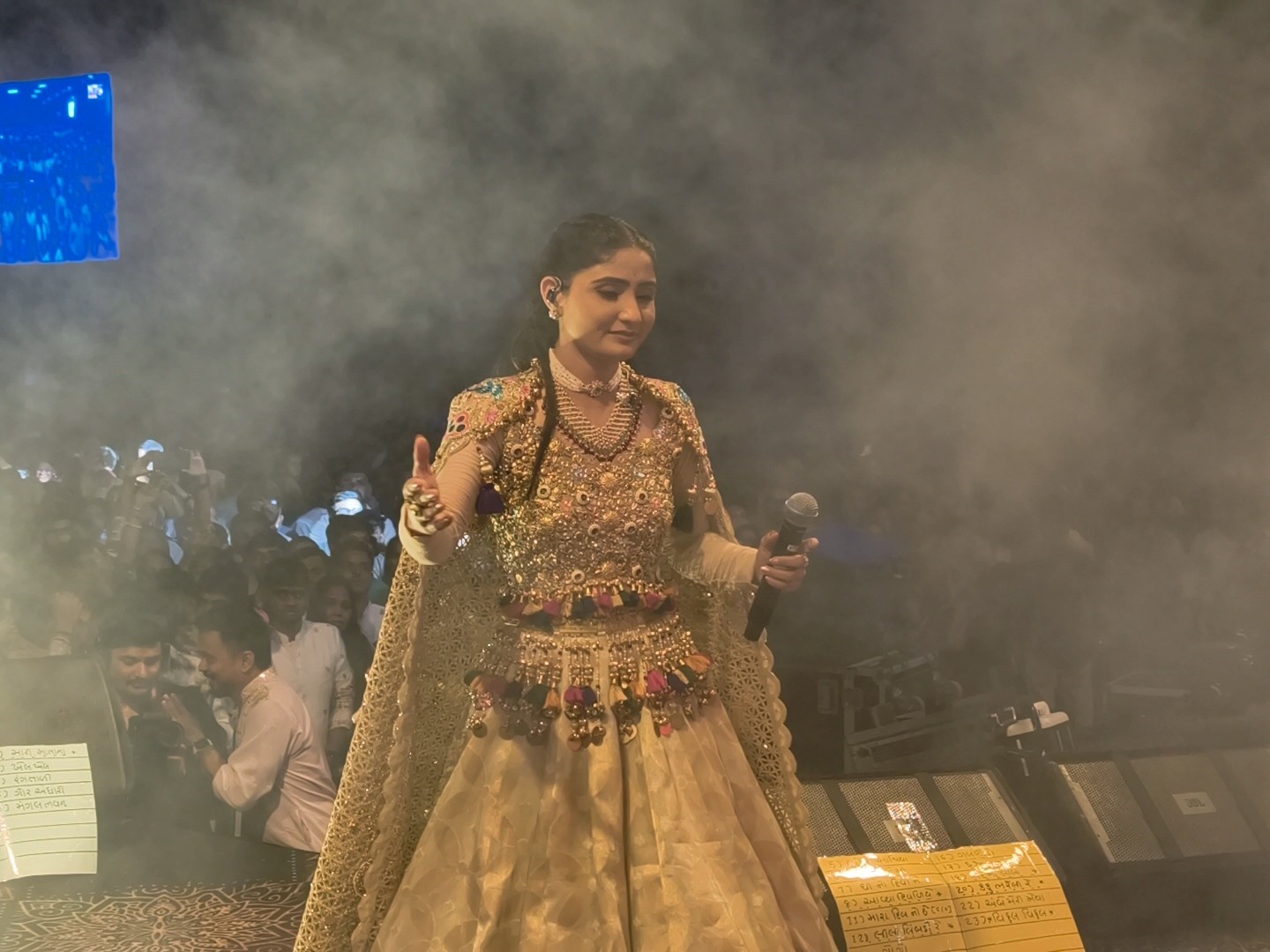
One of the defining features of the Navsari event was the association between the humanoid robot and the music of Geeta Rabari, the popular Gujarati folk singer widely recognised for her contribution to regional folk and Garba music.
Rabari’s songs are closely associated with Gujarati musical traditions and festive performances. Her scheduled appearance at the Raaslok celebration gave the event a musical focus, while the robot added a technological element to the festivities.
The combination created an unusual visual contrast: a machine performing dance movements to music rooted in a cultural tradition that is normally experienced through human performers and group participation.
Garba and Raas involve rhythmic movements coordinated with music. Their appeal lies not only in the steps themselves but also in the shared energy of dancers moving together during the festival.
A humanoid robot attempting these movements introduces a different dimension to that experience. It demonstrates how machines can be incorporated into public entertainment and how technological displays can be presented in ways that attract attention beyond conventional technology audiences.
However, the available reports do not establish that the robot performed every traditional Garba step or provide a detailed technical account of its movements. Its appearance and dance performance, rather than any verified claim about advanced capabilities, remain the central elements of the story.
What Do We Know About the Humanoid Robot?
Additional coverage of the Navsari incident identifies the machine as a Unitree G1 humanoid robot, a model associated with Unitree Robotics.
A separate report on the event states that the robot was imported from China by Pinal Barot of Surat. The report describes the machine as approximately 4.3 feet tall and weighing around 35 kilograms.
These details provide further context about the machine featured in the viral Garba videos. However, the available reporting does not provide independently verified information about the precise configuration used during the performance, its programming for the event or the technical arrangements behind its dance movements.
A humanoid robot is designed with a body structure that resembles aspects of the human form, generally including a head, torso, arms and legs. Depending on the model and its configuration, such robots can be developed for movement, demonstrations, research and human interaction.
The Unitree G1 identification connects the Navsari appearance to a specific robot model rather than leaving it as an unidentified machine. Nevertheless, details about its operation during the festival should not be confused with the capabilities of every robot in the same category.
The available information also does not establish whether the robot operated autonomously throughout the performance or relied on remote control for particular movements.
Why Was the Robot Brought to the Navratri Celebration?
The reported objective behind bringing the humanoid robot to Navsari was to connect the younger generation with technology.
That intention gives the appearance a significance beyond entertainment. Rather than introducing robotics exclusively through classrooms, laboratories or formal exhibitions, the initiative placed a technological demonstration within a popular cultural gathering.
Such an approach can make technology more approachable. Children, teenagers and young adults who attend a festival primarily to enjoy music and dance may find themselves curious about how a human-like machine moves, responds to instructions and performs coordinated actions.
A public demonstration can also encourage questions about robotics, electronics, computer science and artificial intelligence. For young visitors, seeing a robot in action may offer a more immediate introduction to these subjects than encountering them only through textbooks or screens.
However, watching a robot perform is only an initial point of exposure. A deeper understanding of robotics requires opportunities to learn about the engineering, software and control systems that make such demonstrations possible.
The Navsari appearance nevertheless illustrates how cultural events can provide a platform for making technological innovations visible to a wider audience.
Navratri in Gujarat: Where Tradition Meets Technology
Garba occupies an important place in Gujarat’s cultural life, particularly during Navratri. The festival brings together music, dance, devotion and community participation, with traditional attire and familiar rhythms contributing to its distinctive atmosphere.
Technology entering this environment creates an interesting contrast without necessarily removing the cultural elements that make the celebration meaningful.
In Navsari, the humanoid robot’s traditional clothing and turban helped connect its appearance to the visual language of the festival. Instead of appearing solely as a machine in a technology demonstration, it was presented as a participant in the broader festive setting.
That combination is part of what made the event visually distinctive. The robot represented a modern technological development, while its surroundings remained rooted in Gujarati music and dance.
The incident also raises a broader question about how traditional celebrations can accommodate new forms of entertainment and public engagement. Festivals have long provided spaces for performances and shared experiences. Introducing a robot into such a setting adds another possibility, particularly when the aim is to spark curiosity among younger visitors.
At the same time, the presence of technology does not replace the cultural significance of Garba itself. The dance continues to depend on music, movement and community participation, whether the audience encounters a traditional performance or an unconventional technological attraction.
Viral Robot Garba Video Puts the Spotlight on Innovation
The circulation of videos featuring the humanoid robot has helped bring attention to the Navsari celebration beyond the event venue.
The visual premise is straightforward: a human-like machine dressed in traditional clothing performing dance movements during a Gujarati festival. That contrast makes the footage distinctive and gives viewers an immediate reason to stop and watch.
The incident also offers a reminder of how technology can become part of public entertainment without requiring a conventional technology exhibition. By placing the robot in a recognisable cultural setting, the organisers created an opportunity to reach people through an experience they already understand.
Still, the available reports do not establish the video's total reach, the number of people who watched it or the extent of audience reactions. Claims about its popularity should therefore remain limited to the attention it has received in online coverage.
What is clear is that the robot's appearance has brought together two subjects that do not ordinarily occupy the same space in the public imagination: traditional Gujarati Garba and humanoid robotics.
What the Navsari Robot Performance Means for the Future
The humanoid robot at Navsari's Navratri celebration is a small but interesting example of how technological demonstrations can be incorporated into cultural events.
Its significance lies not in proving that machines can replace human dancers, but in showing how robotics can become a subject of public curiosity when presented in an accessible environment.
For young visitors, the experience may encourage questions about how robots are designed, how their movements are controlled and how technology could be used in other settings. For event organisers, it offers an example of how an unconventional attraction can complement a traditional celebration.
The longer-term educational impact of the initiative remains unknown. There is no verified information establishing whether the appearance will lead to workshops, robotics programmes or further demonstrations in Navsari.
Nevertheless, the event provides a memorable illustration of tradition and technology sharing the same space.
As Gujarat's festive season continues, the robot dancing to Geeta Rabari's songs stands out as an unusual moment in Navratri celebrations. It brought a machine into a setting defined by human expression, music and collective participation, creating a visual reminder that technological innovation can also find a place in everyday cultural experiences.
For Navsari, the episode offered something different from the usual Garba performance: a glimpse of robotics in action, presented through one of Gujarat's most familiar festive traditions.
Image source: Bhaskar English
© Copyright 2026. All Rights Reserved. Powered by Vygr Media.