 By
By 
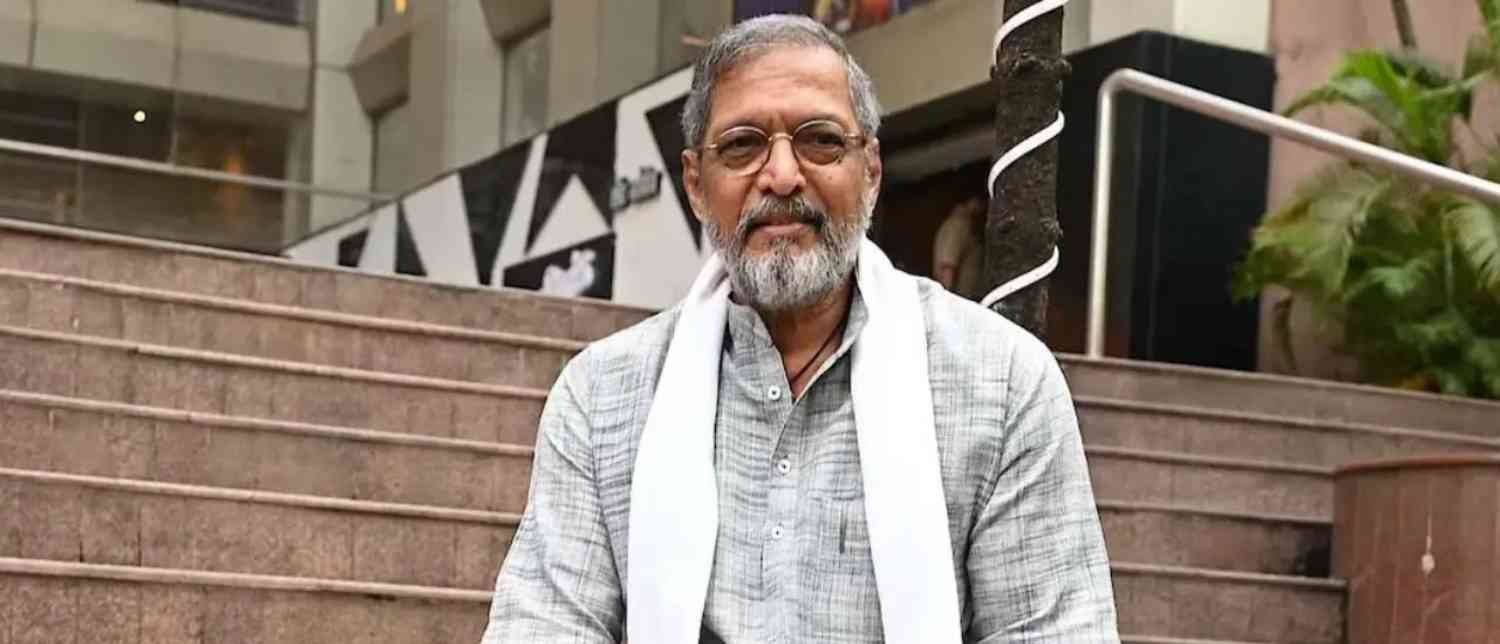
The Indian film industry has lost one of its most distinctive voices. Veteran actor, filmmaker and theatre artiste Nana Patekar died on October 8 at the age of 75 after reportedly suffering a cardiac arrest at his home in Goa. Doctors reportedly attempted to revive him, but he could not be saved.
For audiences who grew up watching Hindi and Marathi cinema, however, Nana Patekar was never simply another celebrated actor. He was an intensity unto himself — an artist whose voice could sound threatening, vulnerable, furious or unexpectedly funny, sometimes within the same scene.
His death marks the end of a five-decade career that produced some of Indian cinema's most memorable characters. From the terrifying Anna Seth in Parinda and the furious Pratap Tilak in Krantiveer to the broken theatre veteran in Natsamrat and the comic gangster Uday Shetty in Welcome, Patekar repeatedly demonstrated that a performer did not need conventional heroism, glamour or polished mannerisms to command the screen.
He had something more difficult to manufacture: presence.
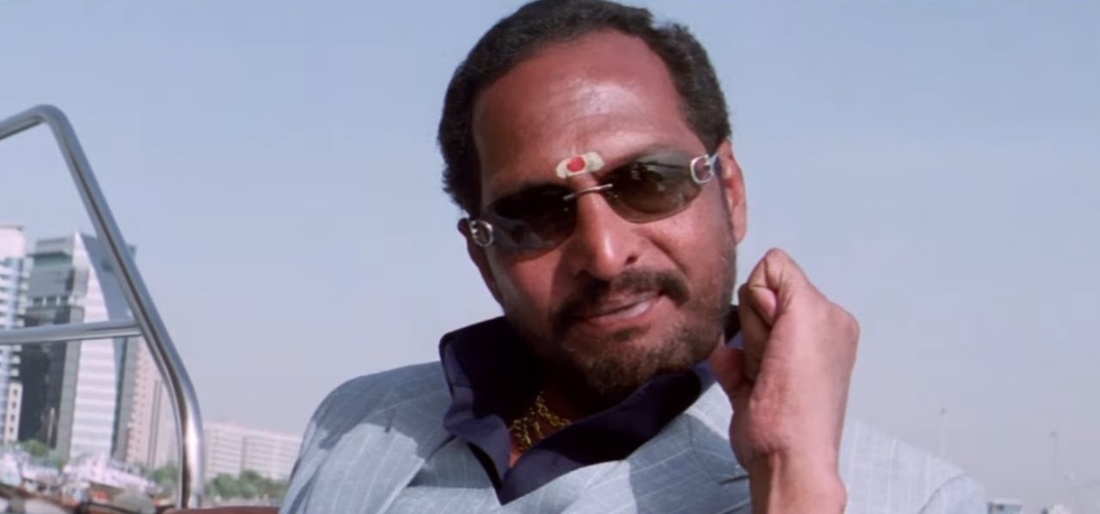
Nana Patekar death brings an era of uncompromising acting to an end
News of Nana Patekar's death has prompted widespread remembrance of an actor who never seemed entirely comfortable with the machinery of celebrity.
Even after achieving considerable fame, Patekar maintained a remarkably low-key lifestyle. He was known for his blunt interviews, his dislike of unnecessary showmanship and his preference for work over the rituals of stardom. In later years, he increasingly divided his time between cinema and a quieter life around his farmhouse, animals and agricultural work.
That distance from conventional Bollywood stardom was part of his appeal.
Patekar did not build his career around looking like a traditional leading man. His screen power came from his eyes, voice, physicality and extraordinary command of silence. He could walk into a scene and change its emotional temperature without raising his voice.
And when he did raise it, audiences listened.
His death therefore feels larger than the passing of a popular actor. It represents the loss of a performer whose acting style was almost impossible to imitate because it appeared to come from somewhere deeply personal.
Nana Patekar and the rise of a different 'angry young man'
Long before the phrase became associated with nostalgia for 1970s Bollywood, the angry young man had been embodied by Amitabh Bachchan. His characters represented a generation frustrated by inequality, corruption and a system that seemed designed to keep ordinary people powerless.
Nana Patekar emerged later, at a time when that classic image was beginning to change.
His version of the angry young man was rougher, less glamorous and considerably less reassuring.
There was no heroic polish to his rage. His characters sweated, shouted, lost control and often appeared emotionally damaged. They did not necessarily look like men who were going to save society. They looked like men who had simply run out of patience.
That distinction became crucial to Patekar's identity as an actor.
In Krantiveer, his Pratap Narayan Tilak became one of the defining angry characters of 1990s Indian cinema. In the film's climactic sequence, facing execution, his character unleashes a furious critique of society and its divisions. The performance earned Patekar the National Film Award for Best Actor.
But his angry-man image had already begun taking shape several years earlier.
From Parinda to Krantiveer: A talent that refused to stay within one box
Patekar's performance as Anna Seth in Parinda demonstrated why he was different from conventional villains.
Anna was violent and unpredictable, but he was not a flat, one-dimensional antagonist. Patekar gave the character a disturbing humanity. His expressions could move from warmth to brutality with frightening speed.
The performance earned him his first National Film Award, for Best Supporting Actor. He would go on to win three National Film Awards in total, including another Best Supporting Actor honour for Agni Sakshi and the Best Actor award for Krantiveer.
What made his career remarkable was that he never allowed those intense roles to define his entire range.
He could be terrifying, but he could also be tender.
He could dominate a scene with a speech, but he could also communicate enormous emotion without speaking.
In Khamoshi: The Musical, he played Joseph Braganza, a hearing-impaired father, relying heavily on expression and body language. In Ab Tak Chhappan, he portrayed encounter specialist Sadhu Agashe with a very different combination of toughness and vulnerability. In Raajneeti, he moved away from his familiar aggression and played a composed, thoughtful political patriarch.
The contrast was deliberate and revealing.
Patekar's talent was never dependent on one personality. His intensity could be turned up or down depending on the character.
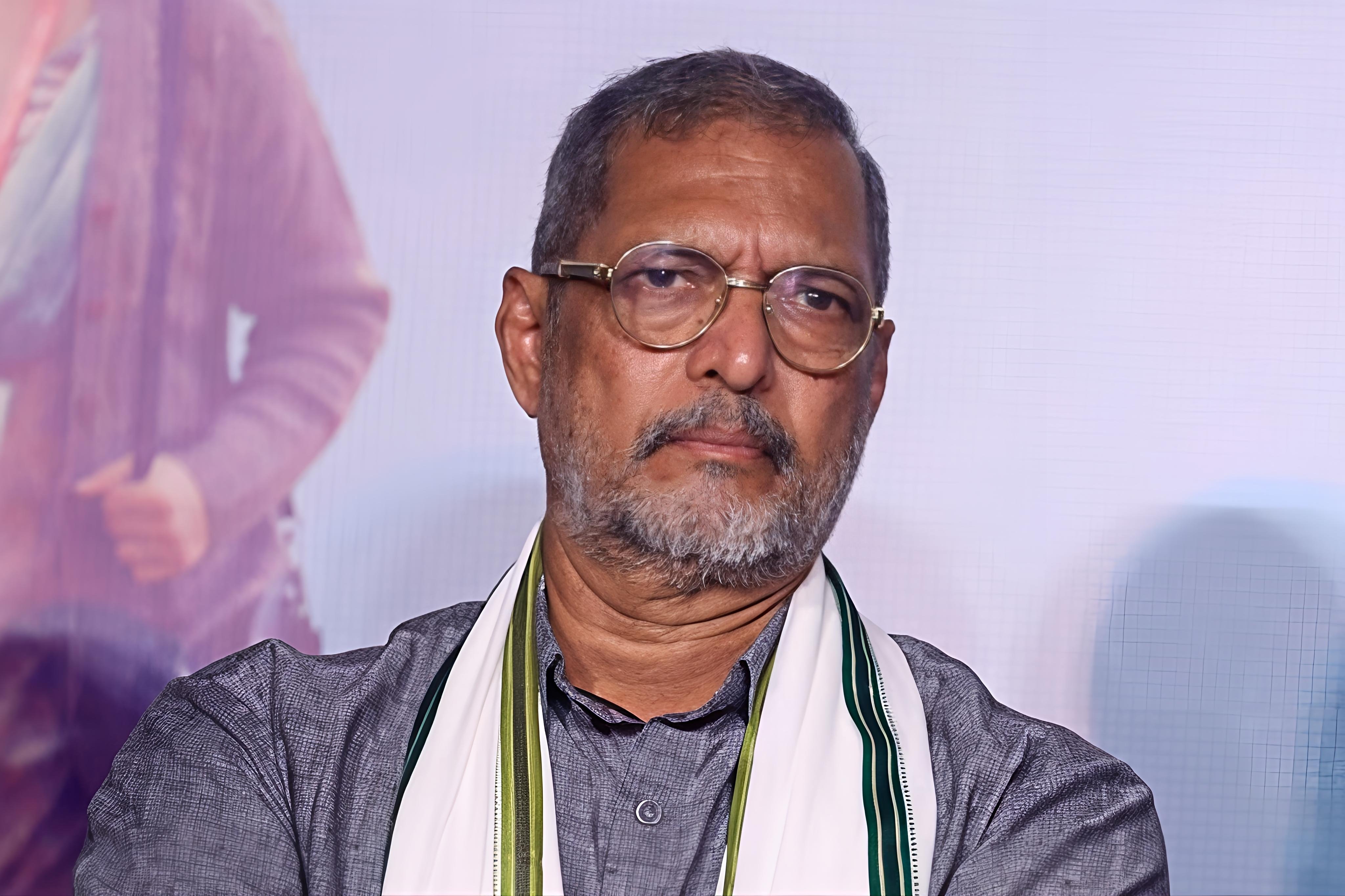
Natsamrat became a deeply personal artistic milestone
Among the many films in Nana Patekar's career, Natsamrat occupies a special place.
Before playing Ganpat Belwalkar, Patekar had watched the legendary Marathi theatre production starring Dr Sriram Lagoo numerous times. Decades later, he stepped into the role of the ageing theatre actor whose life begins to unravel after he leaves the stage.
The story gave Patekar an opportunity to explore something that had long been central to his identity: theatre.
Ganpat Belwalkar is a performer who has spent his life being applauded, only to discover the painful loneliness that can follow when the applause stops. His relationships with his children, his memories of the stage and his struggle with ageing give the film a melancholy that goes beyond conventional family drama.
For Patekar, the role seemed almost tailor-made.
His performance carried the arrogance, vulnerability, pride and wounded dignity of a great performer confronting the possibility that the world no longer needs him.
It was also an ironic reflection of an actor who had spent decades resisting the superficial demands of celebrity while remaining intensely committed to his craft.
Nana Patekar's temper was both his burden and part of his legend
There was another side to Nana Patekar that followed him throughout his career: his temper.
Patekar himself openly acknowledged that anger had cost him professionally. In interviews, he spoke about his inability to always control his reactions and admitted that his aggressive temperament had resulted in lost opportunities.
That reputation contributed to the industry's complicated relationship with him.
Here was an actor capable of extraordinary performances, yet someone whose personality could make professional relationships difficult. He acknowledged that contradiction rather than attempting to completely disguise it.
In one interview, he described acting as something much more fundamental than a profession. For Patekar, it was almost a way of breathing.
That intensity could be a gift on camera and a liability away from it.
His career consequently became a study in contradiction: immense talent alongside a difficult temperament, enormous fame alongside an apparent discomfort with celebrity, and fierce public anger alongside a deep concern for vulnerable communities.
The actor who could make audiences laugh
If Patekar's career had ended with Krantiveer and Parinda, he would still have been remembered as one of India's most formidable dramatic actors.
But then came Uday Shetty.
In Welcome, Patekar transformed himself into a comic gangster, proving that his intensity could be weaponised for humour just as effectively as it had been used for drama.
Uday Shetty was intimidating on paper, but Patekar understood the absurdity beneath the character's aggression. His comic timing came not from exaggerated attempts to make the audience laugh but from playing the situation with complete seriousness.
The result was one of the most memorable comic performances of his later career.
The character also became part of a new phase of Nana Patekar's popularity. His dialogues and expressions began circulating widely online and eventually became meme material, introducing his work to a younger digital audience.
It was another reminder that Patekar could not comfortably be placed into a single category.
Hero. Villain. Character actor. Comedian. Theatre artiste.
He could be all of them.
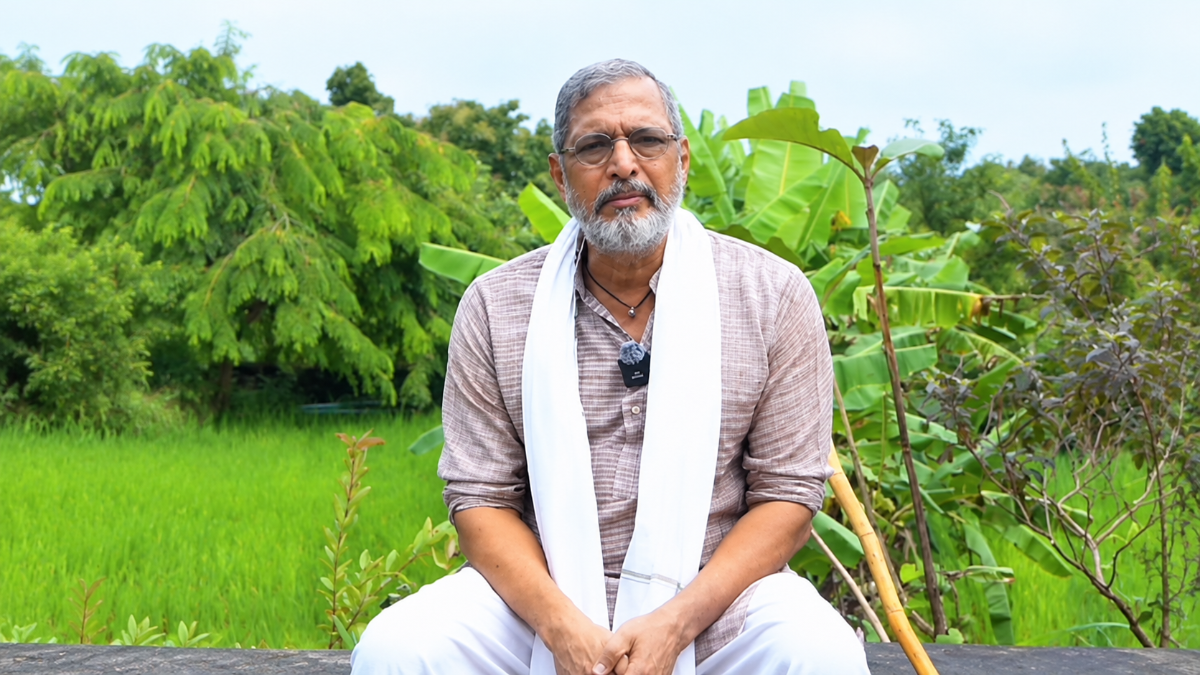
Away from Bollywood, Nana Patekar found purpose in farming
Perhaps the most revealing part of Nana Patekar's life was what he did when the cameras stopped.
The actor had a longstanding connection with rural life and farming. His relationship with farmers eventually became much more than a personal interest.
In 2015, Patekar and fellow Marathi actor Makarand Anaspure co-founded the Naam Foundation in response to the severe distress faced by farmers in Maharashtra. The organisation focused on areas including water conservation, rural development and farmer welfare.
The motivation was personal rather than merely symbolic.
Patekar had spoken about being deeply affected after seeing the family of a farmer who had died by suicide being interviewed on television. He questioned the purpose of money sitting unused and eventually channelled resources and public attention towards rural communities.
But his involvement went beyond writing cheques or appearing at charity events.
He spent time around farmers and spoke about their emotional distress, dignity and sense of isolation. Even shortly before his death, he continued discussing the problems faced by farmers and urging those struggling with suicidal thoughts to seek help.
His farmhouse life offered another glimpse of the man away from the film industry.
He spoke about spending time with dogs, cows and bullocks and living a life considerably removed from Mumbai's relentless celebrity culture. He had increasingly found value in agriculture, rural life and the ordinary routines that existed outside cinema.
For an actor who had spent decades portraying angry policemen, gangsters, rebels and troubled men, the contrast was striking.
The man audiences associated with rage increasingly found peace in the soil.
A childhood shaped by struggle
The depth of Patekar's connection with ordinary people can also be traced to his own early life.
Born Vishwanath Patekar in Murud-Janjira, Maharashtra, in 1951, he came from modest circumstances. He began theatre while still young, studied at the Sir J.J. Institute of Applied Art and worked in advertising before making his way into films.
His early experiences of hunger, hardship and humiliation became part of the texture he brought to his performances.
Patekar never appeared to be acting from a completely detached understanding of suffering. His characters often carried the physical and emotional weight of men who had experienced frustration firsthand.
That may help explain why even his most theatrical speeches could feel grounded.
He was not merely performing anger.
He seemed to understand it.
Prahaar and the actor's connection with soldiers
Patekar's artistic ambitions also extended behind the camera.
In 1991, he made his directorial debut with Prahaar: The Final Attack, a film centred on an army commando. To prepare for the project, he trained with the Maratha Light Infantry for three years. Parts of the film were shot around Belagavi, where he developed a lasting connection with military personnel.
The film later acquired an unexpected significance in the life of Captain Vikram Batra, whose exposure to Prahaar reportedly helped motivate his interest in joining the armed forces. Batra would later become one of the most recognised heroes of the Kargil War.
It was an unusual legacy for an actor-director: a film intended as cinema becoming, for at least one young viewer, part of a life-changing inspiration.
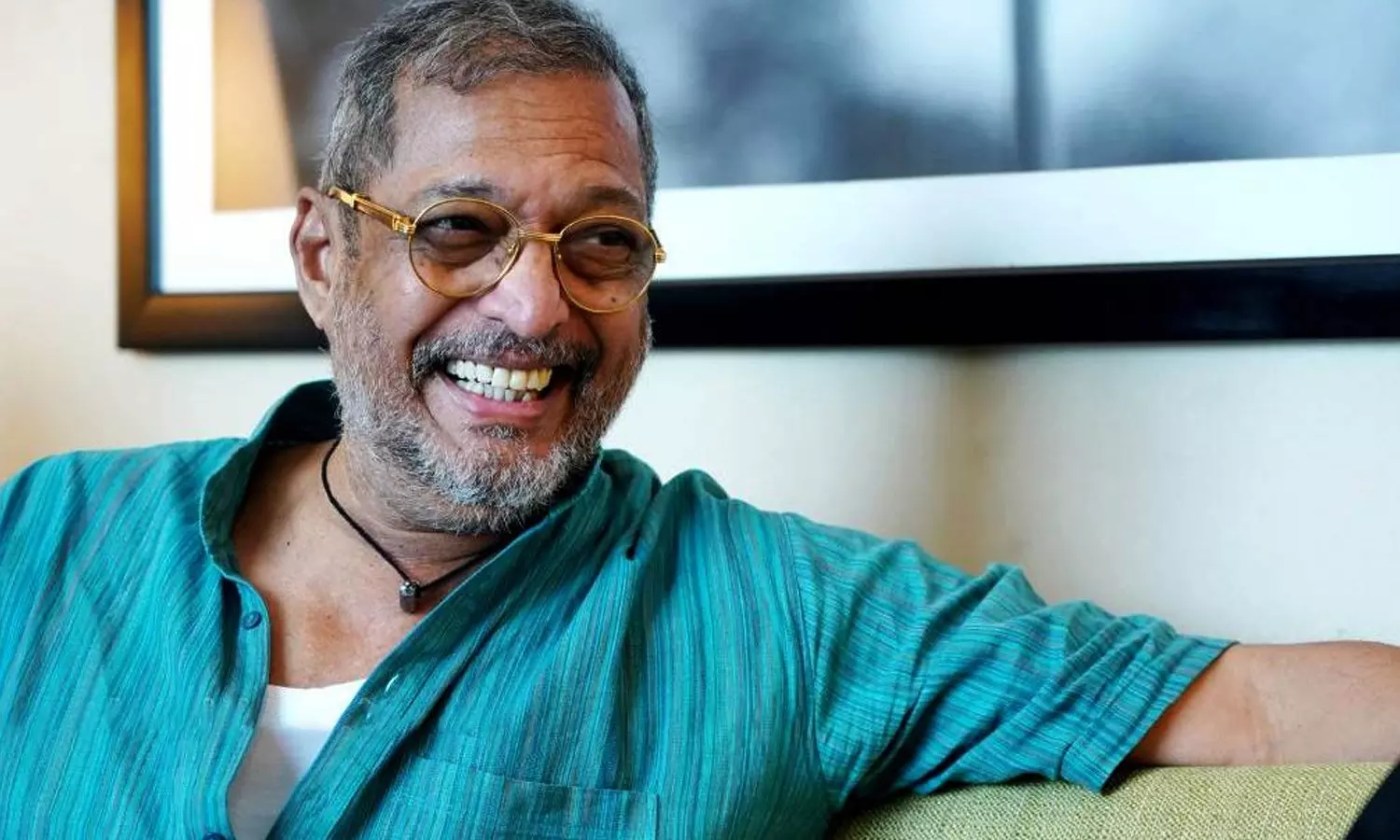
Nana Patekar's legacy is bigger than his awards
Patekar received three National Film Awards and was awarded the Padma Shri in 2013. His filmography spans mainstream Bollywood, Marathi cinema, serious drama, action films, comedy and theatre-inspired performances.
But reducing his legacy to awards would miss what made him unique.
His greatest contribution was perhaps the expansion of what an Indian screen actor could look and sound like.
He did not need the physicality of a conventional action hero. He did not need the smoothness associated with traditional Bollywood stars. He could be uncomfortable, abrasive, wounded and imperfect.
That imperfection was often his greatest strength.
Whether he was standing at the gallows in Krantiveer, frightening audiences as Anna Seth in Parinda, breaking hearts as Ganpat Belwalkar in Natsamrat or making millions laugh as Uday Shetty in Welcome, Patekar never seemed interested in giving audiences a perfectly polished human being.
He gave them people.
Complicated people.
Broken people.
Angry people.
Funny people.
And sometimes, all four at once.
Remembering Nana Patekar beyond the screen
In the days following Nana Patekar's death, much of the conversation will inevitably centre on his most famous films, his iconic dialogues and his National Awards.
But perhaps the most fitting tribute lies elsewhere.
It lies in the contradiction of a man who played some of Indian cinema's angriest characters while spending his later years talking about farmers and rural distress.
It lies in an actor who achieved enormous fame but remained suspicious of the celebrity machine.
It lies in a performer who could dominate a room with a fiery monologue but also understood the power of a pause.
And it lies in an artist who, despite his flaws and controversies, left behind performances that generations of viewers will continue to revisit.
Nana Patekar once spoke about the need to prove oneself every day. His career became an extended demonstration of that philosophy.
He kept reinventing himself.
He moved between theatre and cinema, villainy and heroism, drama and comedy, anger and vulnerability. Even as age changed his priorities, he remained selective about the work he accepted and increasingly valued life away from the spotlight.
Now, with Nana Patekar dies at 75 becoming one of the defining entertainment stories of the day, Indian cinema is being forced to confront an ending that feels difficult to imagine.
Because actors come and go.
Stars rise and fade.
But occasionally, an actor becomes so inseparable from the way a character speaks, pauses, looks and breathes that the performance seems to belong to no one else.
Nana Patekar was one of those actors.
The voice may have fallen silent, but the characters remain — angry, wounded, funny, frightening and unforgettable.
And somewhere beyond the lights, awards and applause, the image of Nana Patekar on his farm, among animals and farmers, may be the simplest way to understand the man behind the legend.
A celebrated actor who never completely forgot the life he came from.
A difficult man who could be deeply compassionate.
A star who never seemed entirely interested in being one.
And, above all, an artist who made it impossible to look away.
© Copyright 2026. All Rights Reserved. Powered by Vygr Media.