 By
By 
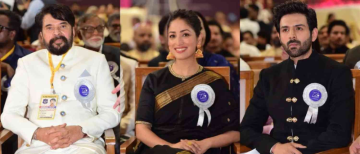
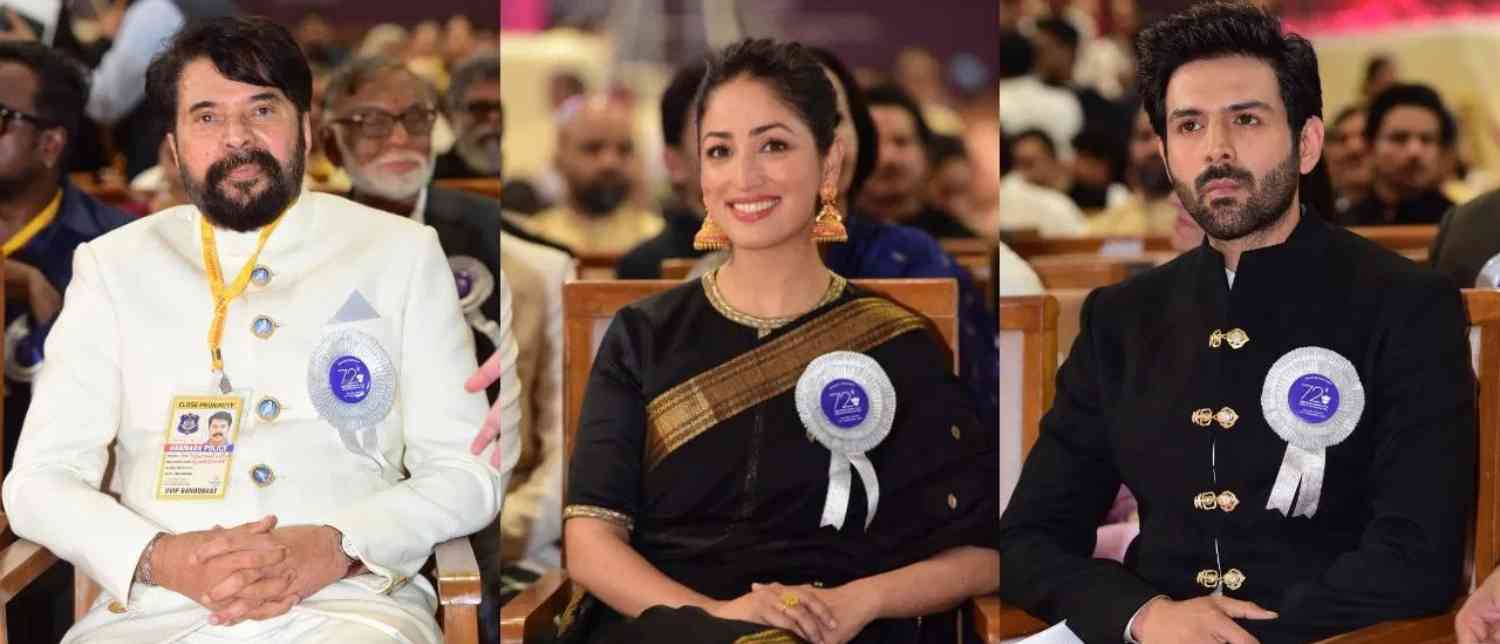
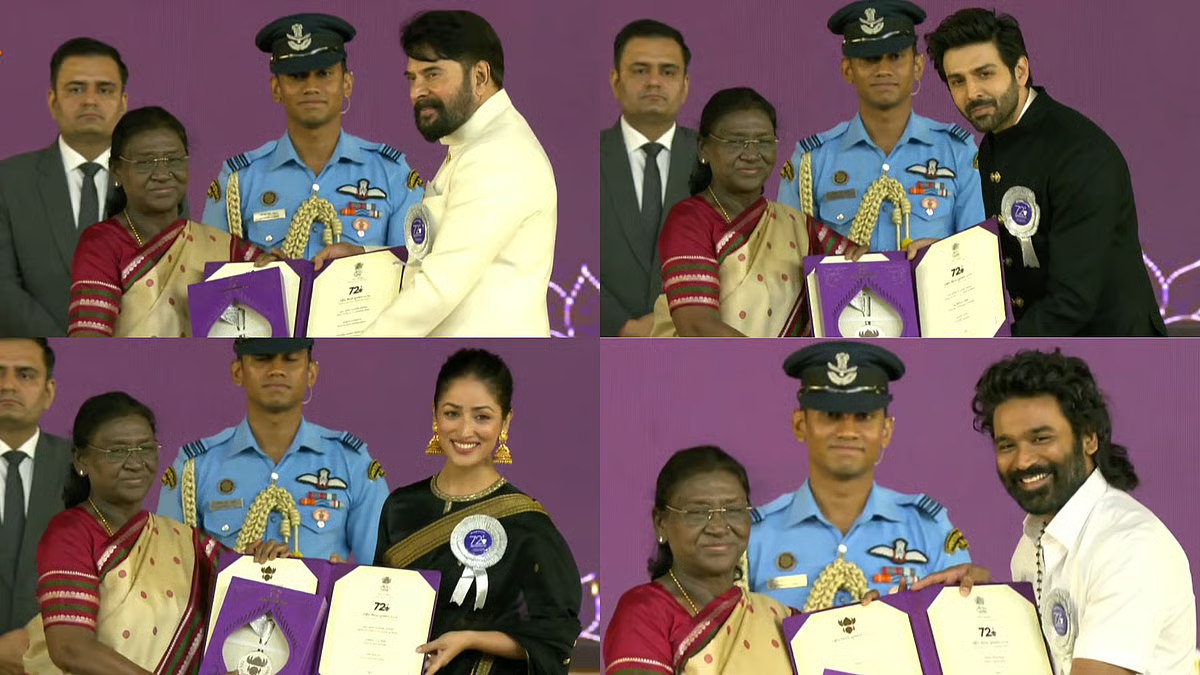
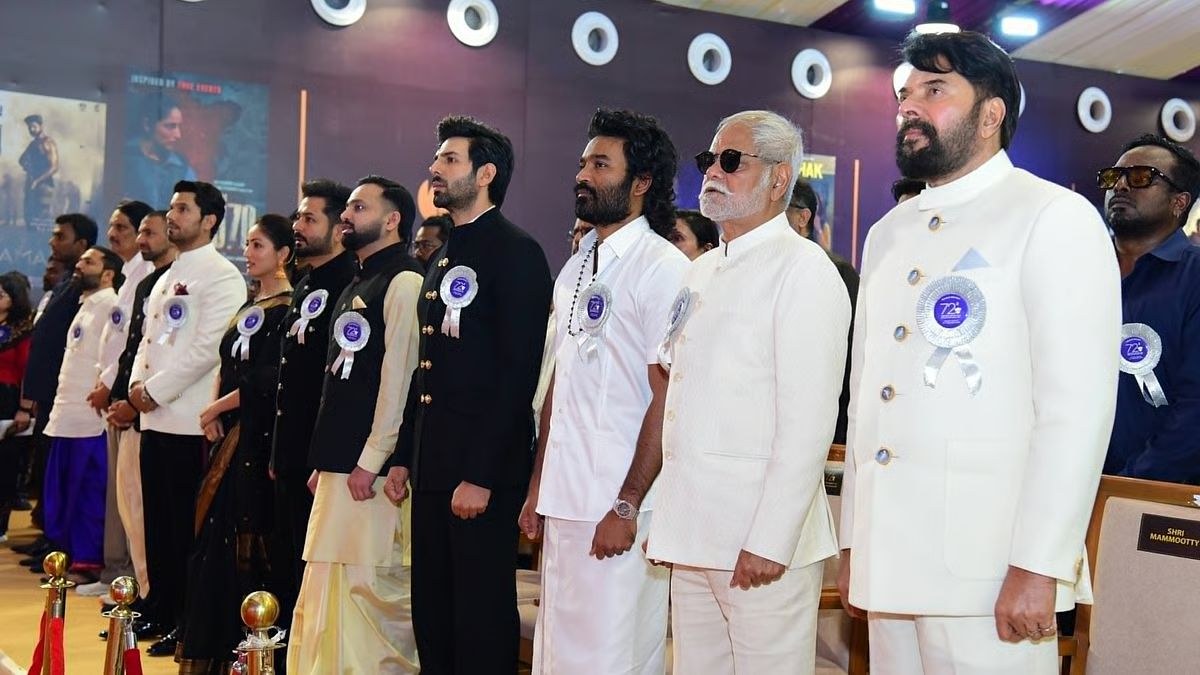
The 72nd National Film Awards brought together some of the biggest names in Indian cinema on September 22, with veteran actor Anant Nag receiving the prestigious Dadasaheb Phalke Award and Mammootty, Yami Gautam and Kartik Aaryan taking home major acting honours. Held at Ekta Nagar in Gujarat against the backdrop of the Statue of Unity, the ceremony also marked a significant change in the long-standing tradition of hosting the awards in New Delhi.
The awards recognised Indian films certified during 2024, even though the ceremony itself took place in 2026. The winners had been announced on July 18, while the formal presentation was held on Tuesday by President Droupadi Murmu.
This year's ceremony celebrated achievements across mainstream cinema, regional filmmaking, documentaries and non-feature films, highlighting the breadth of India's film industry.
Anant Nag receives Dadasaheb Phalke Award
One of the defining moments of the evening was the presentation of the Dadasaheb Phalke Award to veteran Kannada actor Anant Nag.
The honour recognises his contribution to Indian cinema over a career spanning more than five decades. Nag has been a prominent figure in Kannada cinema while also appearing in Hindi and other Indian-language films during his long career.
The Dadasaheb Phalke Award is the country's highest cinema honour and is given for outstanding contribution to Indian cinema. Unlike the competitive categories, its recipient is selected through a specially constituted committee of eminent film personalities.
Nag's recognition added a strong veteran presence to an edition that also celebrated several contemporary stars and filmmakers.
Mammootty equals Amitabh Bachchan's National Award record
Malayalam superstar Mammootty added another major milestone to his extraordinary career by winning the Best Actor in a Leading Role award for his performance as Kodumon Potti in the psychological horror film Bramayugam.
The victory marks Mammootty's fourth National Film Award for Best Actor, putting him level with Amitabh Bachchan for the highest number of wins in the category.
Mammootty's previous Best Actor National Awards came for Oru Vadakkan Veeragatha and Mathilukal, Ponthan Mada and Vidheyan, and Dr. Babasaheb Ambedkar. His latest recognition comes 28 years after his previous Best Actor National Award.
Speaking ahead of the ceremony, Mammootty described the recognition as an inspiration for performers and acknowledged the directors, writers, co-stars, producers and audiences who had supported him throughout his career.
The Best Actor award was shared with Kartik Aaryan, who was recognised for his portrayal of Paralympic champion Murlikant Petkar in Chandu Champion.
The joint win underlined the range of performances recognised this year, spanning a psychological horror film and a sports biographical drama.

Yami Gautam wins her first National Award
Yami Gautam had a landmark evening as she received her first National Film Award for her performance in Article 370.
The actor was named Best Actress in a Leading Role for playing NIA officer Zooni Haksar in the 2024 political thriller. Yami attended the ceremony with her husband, filmmaker Aditya Dhar, who was also associated with the film as a co-producer.
The award added another major achievement to Article 370, which was named Best Feature Film at the 72nd National Film Awards.
Directed by Aditya Suhas Jambhale, the film is based on the events surrounding the 2019 revocation of Jammu and Kashmir's special status under Article 370 of the Constitution. Yami's character, Zooni Haksar, is an NIA officer involved in the operation depicted in the film.
The movie also received the award for Best Music Direction for Shashwat Sachdev.
Article 370, which was released on February 23, 2024, reportedly had a production budget of around Rs 20 crore and earned approximately Rs 110 crore at the box office.
For Yami, however, the National Award represented recognition beyond commercial performance. She described it as the biggest validation an actor could receive and said she was still absorbing the significance of the moment.
Randeep Hooda wins for directorial debut
Actor Randeep Hooda also emerged among the notable winners after receiving the Best Debut Film of a Director award for Swatantrya Veer Savarkar.
The film marked Hooda's transition from acting to filmmaking, with him taking on the role of director while also playing the central character.
His win reflected the National Film Awards' recognition of filmmaking across different creative roles, extending beyond acting performances.
Amaran earns major recognition
Tamil cinema also had a strong presence at the awards, with Amaran emerging as one of the important winners.
Rajkumar Periasamy won Best Direction for the film, while G. V. Prakash Kumar received recognition for its background music. The film also won the award for Best Editing.
Starring Sivakarthikeyan and Sai Pallavi, Amaran is based on the life of Major Mukund Varadarajan and his service in the Indian Army.
The film's multiple honours placed Tamil cinema prominently among the year's recognised regional industries.
Kalki 2898 AD and other popular films honoured
The awards also recognised some of India's biggest commercial releases.
Kalki 2898 AD was named Best Popular Film Providing Wholesome Entertainment. The science-fiction epic, directed by Nag Ashwin, had emerged as one of the biggest Indian theatrical releases of 2024.
Other commercially successful films also received recognition across categories. Pushpa: The Rule Part-02, Stree 2 and Bhool Bhulaiyaa 3 were among the popular films that featured in the awards list.
The honours demonstrated that commercial success and national recognition were not necessarily separate tracks, with large-scale productions finding space alongside independent and regional works.
National Film Awards 2026: Why are the films from 2024?
One question surrounding the 72nd National Film Awards is why a ceremony held in 2026 is honouring films released in 2024.
The answer lies in the awards' established eligibility cycle.
The 72nd edition covers films certified by the Central Board of Film Certification between January 1 and December 31, 2024. The winners were announced in July 2026, followed by the formal award ceremony in September.
This time gap is part of the National Film Awards' institutional process. Entries are invited for films certified during the preceding calendar year and are subsequently examined by juries before the winners are announced and the awards formally presented.
For feature films, the selection process includes regional panels followed by a central jury. Separate juries evaluate non-feature films and writing on cinema.
The awards therefore do not function as an annual ceremony recognising films from the same calendar year. Instead, they follow a structured cycle that allows films from the eligible period to undergo scrutiny before the honours are finalised.
A ceremony that moved beyond Delhi
The location of this year's ceremony was another major talking point.
For the first time, the National Film Awards were presented at Ekta Nagar, formerly known as Kevadia, in Gujarat. The Statue of Unity served as the backdrop for the ceremony.
The move is part of a broader plan to take future National Film Award ceremonies to different states and cities instead of keeping them centred in the national capital.
The change also reinforces the awards' focus on representing the country's diverse filmmaking traditions and regional cultures.
Instituted in 1954, the National Film Awards have spent more than seven decades recognising feature films, non-feature films and writing on cinema. Their scope extends across India's many languages and film industries.
President Murmu's message to film stars
Beyond the awards themselves, President Droupadi Murmu's address added another dimension to the ceremony.
She urged popular film personalities to be mindful of the products they endorse, particularly those that could be harmful to people's health.
Highlighting the influence celebrities have over children and young people, she said popular artists can shape habits and choices among their audiences. She called on stars to avoid endorsing products harmful to health and linked celebrity influence with a broader sense of social responsibility.
Murmu also praised the quality of Indian cinema and expressed confidence that films from the country could establish world-class benchmarks.
Her remarks placed the cultural influence of cinema alongside the industry's creative achievements.
A celebration of Indian cinema's range
The 72nd National Film Awards brought together veteran performers, established stars, first-time winners, regional filmmakers and large-scale commercial productions.
Anant Nag's Dadasaheb Phalke Award represented a lifetime of contribution. Mammootty's fourth Best Actor honour created a new chapter in his long-standing National Award record, while Yami Gautam's first win marked a significant milestone in her career.
At the same time, films such as Article 370, Bramayugam, Chandu Champion, Amaran, Kalki 2898 AD and Swatantrya Veer Savarkar demonstrated the variety of stories and filmmaking styles recognised at the national level.
With the ceremony moving outside Delhi for the first time and future editions expected to travel to different parts of the country, the National Film Awards are entering a new phase—one that puts India's linguistic, regional and creative diversity even more visibly at the centre of the country's biggest film honours.
With input from agencies
Image Source: Multiple agencies
© Copyright 2026. All Rights Reserved. Powered by Vygr Media.