 By

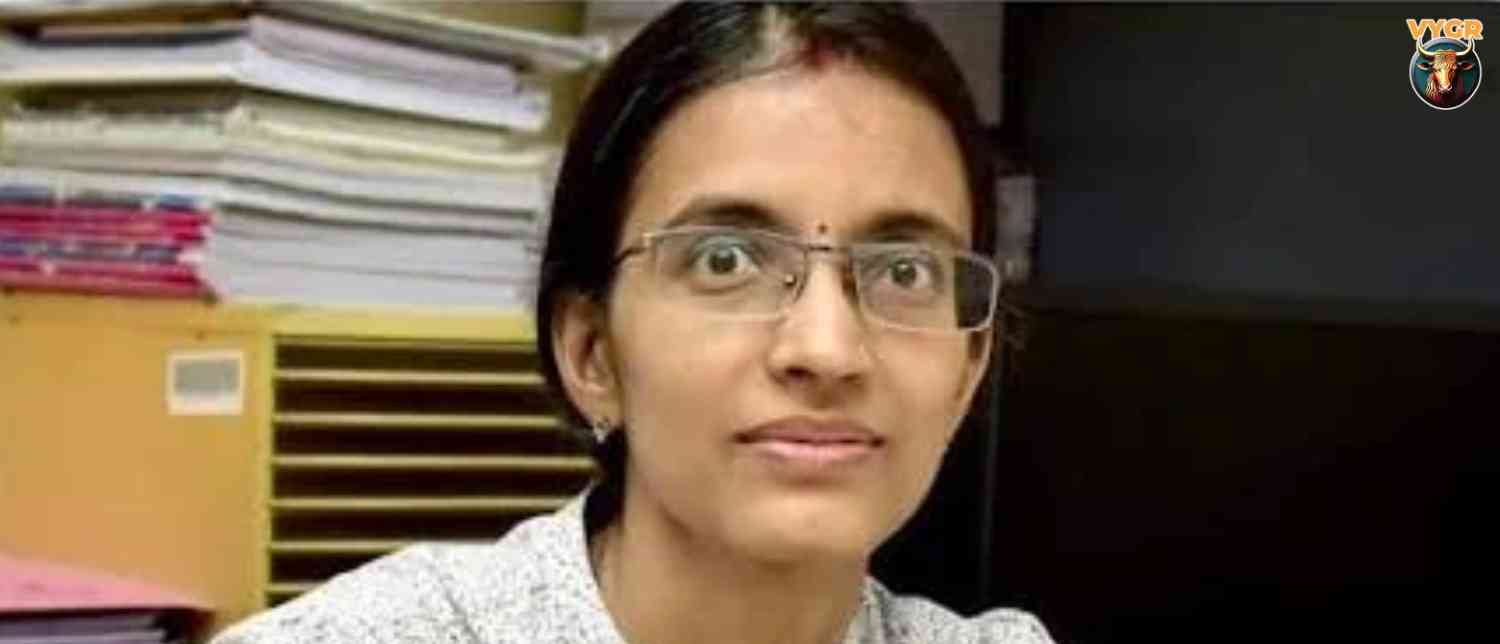
Neena Gupta, a professor at the Indian Statistical Institute (ISI), Kolkata, has earned a place on the inaugural TIME100 Next India 2026 list. The recognition comes for her work on a problem that puzzled mathematicians for nearly seven decades, the Zariski Cancellation Problem. Her journey, from a Kolkata childhood spent enjoying maths puzzles to the global stage, has become an inspiration for young scientists across India.
What Is TIME100 Next India?
The TIME100 Next India list recognises 100 emerging Indians shaping the future across science, technology, the arts, business, and advocacy. Gupta features in the Innovators category, which honours researchers and professionals in health and science. She is among 14 science and health pioneers recognised in the list, whose work spans fields such as genetics, climate science, healthcare, and aerospace.
The Problem That Stumped Experts for 70 Years
The Zariski Cancellation Problem goes back to the mathematician Oscar Zariski, who raised a version of it in 1949. It sits in algebraic geometry, the branch of mathematics that studies shapes defined by equations.
In simple terms, the problem asks a “cancellation” question. If you take a shape and multiply it by a line, and the result looks exactly like ordinary higher-dimensional space, must the original shape have been ordinary space too? In everyday terms, can you “cancel” the extra line and be sure of what you started with?
The answer was known to be yes in low dimensions, but for higher dimensions the question remained open for decades, resisting some of the best minds in the field.
Neena Gupta’s Breakthrough
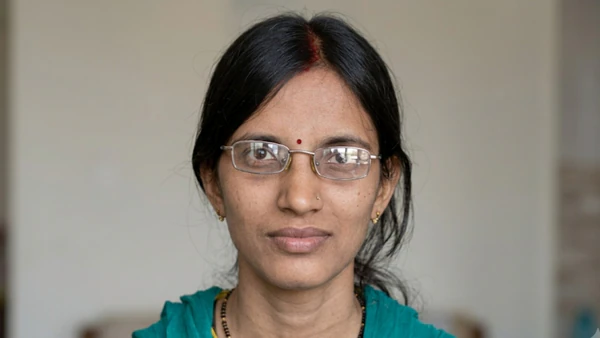
Gupta began working on the problem in 2011. In 2014, she showed that the answer can be no in certain settings. Using a three-dimensional variety first constructed by the mathematician Teruo Asanuma, she proved that the cancellation property fails in positive characteristic, a setting where the arithmetic of the underlying numbers behaves differently from the usual number systems. Her result appeared in the journal Inventiones Mathematicae.
This was a major result. A senior national science body described her work as among the best in algebraic geometry in recent years anywhere in the world. Her later work produced counterexamples in higher dimensions as well.
One important detail: her solution applies to positive characteristic. The question in characteristic zero, the standard setting of ordinary numbers, is still open, which means the problem is not fully closed yet.
From Childhood Puzzles to Global Recognition
Gupta was born in Kolkata in 1984. Her mother, Gyanlata, made mathematics feel like fun during her school years, and that early love of puzzles shaped her path. She earned her honours degree in mathematics from Bethune College in 2006, her master’s from ISI in 2008, and her PhD from ISI in 2011, specialising in algebraic geometry.
She returned to ISI as a researcher and later became a professor there, working in the institute’s Statistics and Mathematics Unit.
A String of Major Honours
Gupta’s work has been recognised with several of India’s top scientific awards and international prizes:
- Saraswathi Cowsik Medal (2013)
- INSA Young Scientist Medal (2014)
- Swarna Jayanti Fellowship (2015)
- B.M. Birla Science Prize in Mathematics (2017)
- Shanti Swarup Bhatnagar Prize (2019), India’s highest science honour, awarded when she was among its youngest recipients and one of the few women to receive it
- DST-ICTP-IMU Ramanujan Prize for young mathematicians from developing countries (2021)
- Nari Shakti Puraskar from the President of India (2021)
- Fellowship of the Indian Academy of Sciences (2021)
- Infosys Prize in Mathematical Sciences (2024)
Beyond the Zariski problem, she has also worked on methods connected to invariants of group actions on affine spaces.
Why Her Story Matters
Gupta’s rise is significant for several reasons. It shows that world-class mathematical research can be done and nurtured in Indian institutions. It adds to the small but growing number of women recognised at the highest levels of mathematics. And it reminds students that curiosity, patience, and a willingness to challenge long-held assumptions can lead to breakthroughs, even in problems that have stood unsolved for generations.
Her story is also a tribute to the quiet, long-term effort behind mathematical discovery. The result came after years of sustained work on a problem few were willing to attempt.
What Comes Next
With the characteristic-zero version still unresolved, mathematicians continue to build on her ideas. Researchers, including those at ISI, have used her methods to construct new families of examples. The attention from the TIME100 list may bring even more focus to this area of research and inspire a new generation to take up the challenge.
© Copyright 2026. All Rights Reserved. Powered by Vygr Media.