
 By

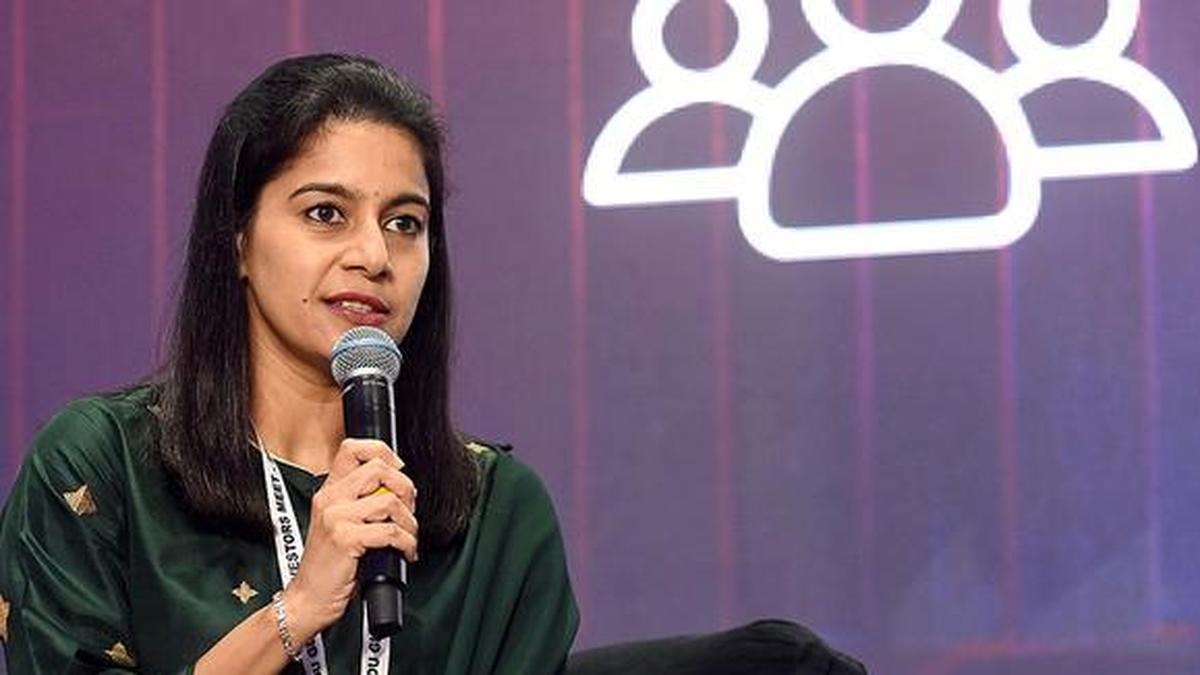
The succession battle within the ₹1.9 lakh crore TVS Group has taken a dramatic turn, bringing one of India's most prominent business families into the spotlight for reasons far removed from its corporate achievements. Lakshmi Venu, daughter of industrialist Venu Srinivasan, has approached the Madras High Court seeking the partition of joint family assets and what she considers her rightful share of the family wealth.
At first glance, the dispute may appear to be another disagreement over inheritance among wealthy business families. However, the developments raise much bigger questions about gender equality, family business succession, transparency in wealth distribution and the difference between managing a business and actually owning its underlying assets.
More importantly, the case challenges an assumption that has shaped several traditional business families for generations: that assigning a daughter responsibility for certain businesses is necessarily equivalent to giving her an equal stake in the family's wealth.
Lakshmi's legal move is therefore significant beyond the immediate family disagreement. It brings the question of women's inheritance rights into the heart of a major Indian corporate empire and highlights why succession planning cannot simply be reduced to dividing businesses between heirs.
The TVS Family Dispute: How Did the Succession Battle Begin?
The TVS Group traces its origins to 1911, when T V Sundaram Iyengar established the business that would eventually grow into one of India's most recognised industrial groups. Over generations, the family expanded its presence across automobiles, automotive components, financial services, mobility and agricultural equipment.
Like many large family-controlled enterprises, TVS eventually faced the complicated task of distributing business interests among different branches of the founding family.
A wider restructuring took place in 2020, separating business interests among different family branches. The arrangement was intended to provide greater clarity over ownership, management and future business responsibilities.
However, the present dispute concerns a narrower but equally important question: how were the assets allocated to Venu Srinivasan's branch supposed to be divided among the members of his immediate family?
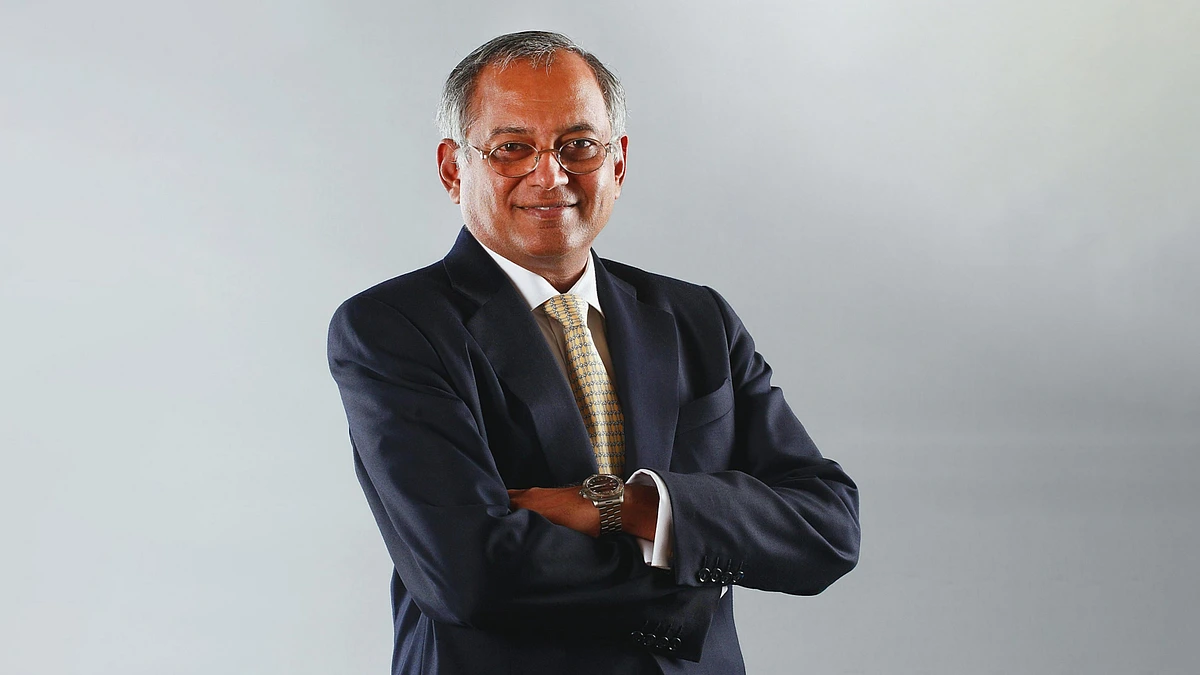
The four central figures are Venu Srinivasan, his wife Mallika Srinivasan, their daughter Lakshmi Venu and their son Sudarshan Venu.
While Sudarshan is associated with the group's prominent two-wheeler and three-wheeler businesses, Lakshmi has leadership responsibilities at Sundaram-Clayton and TAFE. She serves as managing director of Sundaram-Clayton and vice chairperson of TAFE, while Mallika heads the tractor manufacturer.
The disagreement is not necessarily about whether both siblings have received business responsibilities. It is about whether those responsibilities adequately reflect their respective economic interests in the family's underlying wealth.
That distinction is at the centre of the TVS succession battle.
What Does Lakshmi Venu Want From the TVS Family Empire?
Lakshmi Venu has approached the Madras High Court seeking the formal partition of joint family assets belonging to the Venu Srinivasan branch of the TVS family.
Her demands go beyond simply seeking a particular business or leadership position. She wants her claimed share of the joint family property to be legally recognised and the assets to be divided fairly.
Another significant aspect of her petition concerns transparency.
She has alleged that repeated requests for documents and information about the family's wealth, holdings and ownership arrangements have not been adequately addressed. Consequently, she has sought the court's intervention to obtain access to the relevant financial records and details.
The assets involved include interests connected with VS Trust and entities such as TVS Holdings, TVS Motor Company, TVS Credit Services and Sundaram-Clayton.
This is particularly important because the ownership structure is not straightforward. Family interests are held through trusts and holding companies, making it necessary to understand the underlying beneficial ownership rather than simply compare the market values of individual businesses.
Lakshmi's position appears to rest on a fundamental principle: the family legacy built over generations cannot automatically become the exclusive economic entitlement of one child merely because that child has been assigned a particular business or leadership responsibility.
Her mother, Mallika Srinivasan, has publicly supported her daughter's position, arguing that a son and daughter should have equal rights and that Lakshmi has a legitimate claim to the family assets.
The disagreement has now moved beyond private conversations, making the court's eventual examination of ownership documents, family agreements and applicable inheritance laws particularly important.
Why the 2020 and 2024 Family Agreements Matter
One of the most complicated aspects of the TVS family feud is the series of agreements and arrangements that preceded the legal action.
The wider TVS family restructuring in 2020 divided business interests among different branches of the founding family. However, Lakshmi and Mallika maintain that this arrangement did not necessarily settle the economic interests of the members within Venu Srinivasan's immediate family.
In March 2024, Venu, Mallika, Lakshmi and Sudarshan entered into another memorandum of understanding.
The agreement covered matters including the use of the TVS brand, restrictions on entering specified competing businesses and future cooperation among family members.
An important development followed in August 2024, when Lakshmi ceased to be a director of TVS Motor Company, having initially joined its board in September 2014.
Venu's position is that the family had already reached agreements establishing the distribution of business responsibilities and economic interests. His side maintains that the arrangements were consensual and binding and that the matter should not be reopened.
Lakshmi and Mallika, however, dispute the suggestion that these agreements amounted to a complete and transparent settlement of the family's wealth.
This disagreement highlights a crucial legal and financial distinction. An agreement determining who manages a business, who can use a brand or which family member will operate in a particular sector does not necessarily answer every question concerning ownership of joint family assets.
Whether the existing agreements legally settled the claims now being raised is ultimately a matter for the court to examine.
The 2017 Family Settlement: The Strongest Argument Against Reopening the Dispute
While Lakshmi's claim has attracted considerable attention, the opposing side has presented arguments that cannot be overlooked.
Venu Srinivasan's legal team has pointed to a written family settlement signed by all four immediate family members in 2017. According to his lawyer, senior advocate Abhishek Manu Singhvi, the agreement dealt with the division of ancestral assets and the dissolution of the Hindu Undivided Family (HUF).
His argument is that the family had already settled the relevant inheritance questions and that there is no remaining undivided family property to partition.
The defence has also questioned the assumption that every asset under discussion is ancestral property. There is an important legal difference between ancestral or coparcenary property and self-acquired assets. An individual generally has the right to decide how to distribute self-acquired wealth, subject to applicable legal obligations.
Another argument concerns the financial commitments undertaken by Venu Srinivasan to consolidate control over the automobile business.
According to his legal team's account, Venu acquired shares held by his brothers for just under ₹2,000 crore. He had reportedly expected Mallika and Lakshmi to contribute towards the acquisition, although the family agreement did not make such a contribution compulsory. The money was eventually raised through borrowings, with the resulting debt remaining with Venu's side of the family.
The defence has also pointed to the VS Trust, arguing that Lakshmi's son has been named as a beneficiary.
These arguments introduce an important dimension to the dispute: inheritance cannot be assessed simply by looking at the present-day valuation of businesses. Earlier settlements, financial contributions, liabilities, ownership structures and the legal classification of assets must also be considered.
Ultimately, neither side's interpretation can be treated as an established legal conclusion. The court will have to determine whether the earlier agreements were legally effective and whether any property remains subject to a valid partition claim.
Does the Hindu Succession Act Give Lakshmi Venu an Equal Share?
Perhaps the most consequential aspect of the TVS family dispute is its connection with women's inheritance rights under Indian law.
The Hindu Succession Act, 1956, particularly following the 2005 amendment to Section 6, recognises daughters as coparceners in Mitakshara Hindu Undivided Families.
In simple terms, daughters have the same rights and liabilities as sons in ancestral coparcenary property. Their entitlement does not depend on whether the family considers them suitable successors to a particular business or whether they actively participate in its management.
Tamil Nadu had also introduced an amendment in 1989 that recognised daughters' coparcenary rights, subject to the applicable statutory conditions.
However, there is an important distinction that deserves attention. Equal inheritance rights do not automatically translate into an equal share of every asset owned by a parent. The nature of the property, its acquisition history, the existence of a legally recognised partition and the applicable succession provisions all matter.
This is precisely why the TVS succession battle is legally complicated.
Lakshmi's side argues that the assets in question include joint family property and that her rights cannot be denied through arrangements that primarily distribute management responsibilities.
Venu's side, meanwhile, maintains that the family had already settled its ancestral property through the 2017 agreement and that subsequent arrangements were consensual.
The Madras High Court will therefore need to examine the legal classification of the disputed assets, the validity and consequences of earlier settlements, and whether any enforceable coparcenary rights remain.
The distinction matters because the 2005 amendment does not automatically reopen every partition completed before its commencement.
This case should consequently not be reduced to a simplistic argument that every daughter is automatically entitled to half of her father's entire business empire. Equally, it would be wrong to assume that assigning a daughter a business is sufficient to satisfy her inheritance rights.
The law requires a much closer examination of the actual ownership and character of the property.
The ₹1.9 Lakh Crore Question: Is Business Control the Same as Wealth Ownership?
One reason the TVS family feud has attracted such widespread attention is the enormous economic value associated with the businesses involved.
The dispute touches interests connected with TVS Holdings, TVS Motor Company, TVS Credit Services and Sundaram-Clayton.
TVS Motor has a market capitalisation running into lakhs of crores, while Sundaram-Clayton and other associated entities have their own substantial valuations.
However, comparing the market capitalisations of individual companies does not provide a complete picture of the family's wealth.
The ownership structure is layered.
TVS Holdings holds a 50.26% stake in TVS Motor, while the family trust VS Trust holds a substantial interest in TVS Holdings. This structure makes it essential to distinguish between direct shareholding, beneficial ownership, trust interests and management control.
It also explains why Lakshmi's demand for access to financial documents is significant.
Without complete information about the family's holdings, liabilities, trust arrangements and valuations, determining the economic value of individual family members' interests becomes difficult.
This is where the title of the dispute becomes particularly relevant: having a seat at the table is not necessarily the same as receiving an equal slice of the pie.
A family member may be given the responsibility of managing a business worth thousands of crores without necessarily receiving an equivalent ownership interest in the wider family estate.
Similarly, another family member may exercise considerable influence over a larger business without personally owning all its underlying assets.
In large business families, these distinctions are often blurred in public discussions. The TVS dispute demonstrates why they must be examined separately.
Why This Is Bigger Than a Brother-Sister Inheritance Dispute
It would be easy to portray the entire controversy as a disagreement between a brother and sister over who gets a larger share of a family business.
That interpretation, however, misses the larger issue.
For generations, Indian family businesses have frequently followed succession practices in which sons were considered natural inheritors of major business interests, while daughters were expected to receive different assets, financial arrangements or separate business responsibilities.
Such arrangements may have worked in some families, particularly when everyone involved understood and accepted the terms.
But modern inheritance laws, changing social expectations and greater professional participation by women have made traditional assumptions increasingly difficult to defend.
A daughter's contribution to a family business should not be measured only by the company she manages. Nor should her inheritance entitlement depend on whether she has been assigned a particular leadership position.
The central question should be whether the distribution of ownership is transparent, legally valid and fair to all eligible family members.
Mallika Srinivasan's public support for her daughter makes this aspect even more significant. Her position is that a son and daughter are equal and that Lakshmi has a legitimate claim to the family assets.
This is not merely a symbolic statement. It reflects a growing recognition that women should be treated as equal stakeholders in family wealth rather than being viewed as secondary beneficiaries.
At the same time, fairness must work in both directions. Any final distribution must account for legally established ownership, previous settlements, financial obligations and the rights of every relevant family member.
Equality does not mean ignoring contractual commitments or treating different categories of property as identical.
It means applying the same legal principles without gender-based assumptions.
What the TVS Succession Battle Reveals About India's Family Businesses
The TVS dispute offers an important lesson for India's wider corporate landscape: succession planning is not complete simply because business responsibilities have been distributed.
A successful family succession plan must address at least three separate questions.
First, who will manage the businesses?
Leadership responsibilities must be clearly assigned, with an understanding of who will make operational and strategic decisions.
Second, who legally owns the businesses and underlying assets?
Shareholding, beneficial ownership, trust arrangements and inheritance entitlements must be documented clearly. Management authority should never be confused with ownership rights.
Third, have all family members genuinely agreed to the economic settlement?
A signed memorandum may establish important obligations, but disagreements can still emerge if family members have different interpretations of what was settled.
The TVS family arrangements spanning 2017, 2020 and 2024 demonstrate how multiple agreements can create layers of complexity rather than necessarily eliminating uncertainty.
For other Indian business families, the lesson is straightforward: succession planning requires more than a handshake, a family understanding or an informal allocation of companies.
Independent valuations, transparent financial disclosures, clearly drafted legal documents and professional mediation can help prevent disagreements from escalating.
More importantly, these conversations should happen before disagreements become deeply personal and difficult to resolve.
What Happens Next in the Lakshmi Venu vs Venu Srinivasan Case?
With Lakshmi approaching the Madras High Court on November 25, 2026, the TVS family succession dispute has entered a new phase.
The immediate questions before the court will include the nature of the disputed assets, the legal validity and effect of the 2017 family settlement, and whether the subsequent arrangements in 2020 and 2024 settled the economic interests of Venu Srinivasan's immediate family.
The court will also have to consider Lakshmi's request for access to financial records and her claim to a share in the joint family assets.
Her legal team has indicated that it intends to seek interim relief to prevent the creation of fresh beneficial interests in the disputed assets while the proceedings continue.
However, it is important to remember that the court has not yet established the merits of either side's arguments. The outcome will depend on the evidence, relevant documents and applicable law.
The case is therefore far from a straightforward victory for either party.
Its eventual outcome could also influence how other Indian family-controlled businesses approach inheritance, ownership restructuring and succession planning.
The Real Question Is Whether Family Legacy Comes With Equal Rights
The TVS succession battle is about considerably more than the division of a wealthy family's business interests.
At its heart lies a question that many traditional Indian business families have not adequately addressed: when a legacy is built across generations, who gets to decide which family member deserves to own it?
Lakshmi Venu's decision to approach the Madras High Court has brought that question into the public domain. Her claim challenges the idea that business responsibilities and inheritance rights can be treated as interchangeable.
At the same time, Venu Srinivasan's defence highlights the importance of respecting earlier family settlements, financial commitments and the legal distinction between ancestral and self-acquired property.
The court will ultimately determine the legal merits of the competing claims. But the broader lesson is already clear.
A family business cannot build a sustainable future on ambiguous ownership arrangements, incomplete disclosures or assumptions about who should inherit what. Nor can a succession plan be considered successful if the people expected to honour it do not share a common understanding of its terms.
The real measure of a fair succession plan is not simply how many businesses each heir manages. It is whether ownership, responsibilities and economic rights have been distributed transparently and in accordance with the law.
For the TVS family, the immediate challenge is to resolve a deeply consequential disagreement without undermining the businesses built over more than a century.
For India's family businesses, the message is even bigger: a legacy may be inherited, but fairness, transparency and trust must be deliberately built.
© Copyright 2026. All Rights Reserved. Powered by Vygr Media.