 By
By 
India’s tourism landscape is undergoing a powerful transformation driven by renewed central government initiatives that focus on sustainability, community participation, and world-class infrastructure. Among the most impactful of these efforts are the revamped Swadesh Darshan 2.0 (SD 2.0) and the Challenge Based Destination Development (CBDD) schemes, both overseen by the Union Ministry of Tourism. Maharashtra, one of the country’s most culturally and historically vibrant states, has been identified as a major beneficiary under these initiatives.
The Ministry has reiterated its commitment to accelerating tourism-related infrastructure and developing destinations in Maharashtra with an approach rooted in sustainability and community-led growth. This aligns with the broader national framework of transforming tourism into a key engine of economic development, employment generation, and cultural preservation.
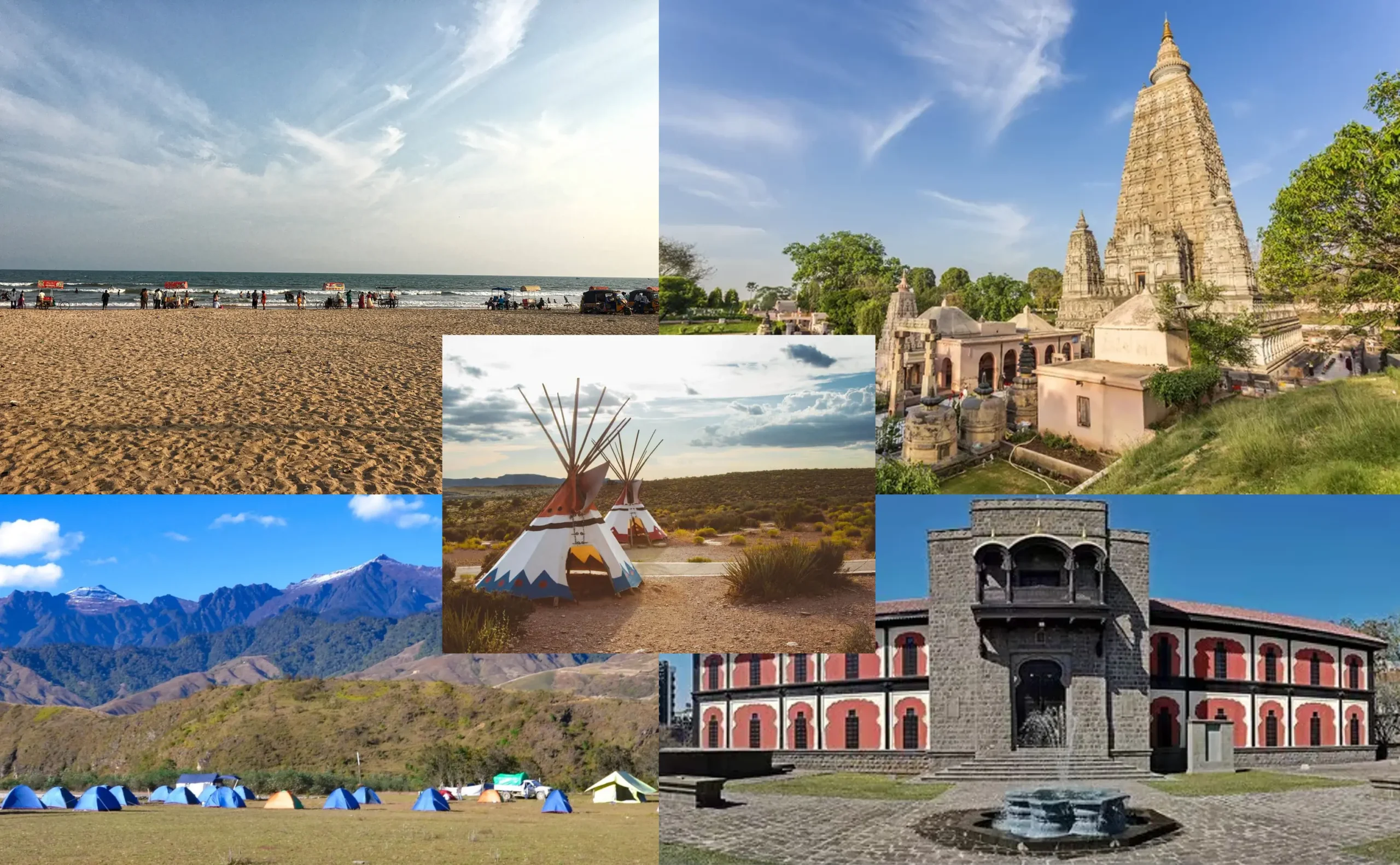
Maharashtra’s Projects Under Swadesh Darshan 2.0 and CBDD
Under the SD 2.0 and CBDD schemes, the Ministry of Tourism has sanctioned 53 projects under Swadesh Darshan 2.0 and 36 projects under CBDD across India. The aim is not only to upgrade infrastructure but also to enrich visitor experiences and ensure local communities play an integral role in managing and benefiting from tourism.
Swadesh Darshan 2.0 Project in Maharashtra
-
Project: Shivsrushti Historical Theme Park – Phase 3
-
Year of Sanction: 2023–24
-
Sanctioned Cost: ₹76.22 crore
The Shivsrushti Historical Theme Park is envisioned as a comprehensive cultural destination that will celebrate Maharashtra’s historical legacy, particularly the era of Chhatrapati Shivaji Maharaj. With Phase 3 now sanctioned under SD 2.0, the project emphasizes immersive experiences, state-of-the-art visitor facilities, and interpretation centres that can draw both domestic and international tourists.
CBDD Project in Maharashtra
-
Project: Development of Ahmednagar Fort
-
Year of Sanction: 2024–25
-
Sanctioned Cost: ₹25.00 crore
Under CBDD, the Ahmednagar Fort—a structure that occupies a significant place in India’s political and military history—has been selected for development. The project aims to enhance accessibility, restore heritage structures, introduce guided trail facilities, and enable the fort’s integration into regional tourism circuits.
Both these projects, along with others across the country, are expected to be completed by March 2026, according to instructions issued by the Ministry of Tourism to State Governments and Union Territories.
New Guidelines for Developing Homestays in Tribal Areas
In the fiscal year 2025–26, the Ministry of Tourism also released detailed guidelines under the Swadesh Darshan scheme for the ‘Development of Homestays in Tribal Areas.’ This initiative targets responsible tourism while boosting livelihood opportunities in tribal communities.
The scheme includes:
-
Up to ₹5 lakh for village community requirements
-
Up to ₹5 lakh for building two new rooms per household
-
Up to ₹3 lakh for renovating existing rooms for each household
By encouraging sustainable tourism models, the initiative aims to enable travellers to engage directly with tribal cultures while supporting inclusive economic development. These guidelines empower communities to adopt environmentally responsible practices and position their villages as authentic, culturally rich destinations.
These details were formally shared in the Lok Sabha by the Union Minister for Culture and Tourism, Shri Gajendra Singh Shekhawat, on November 8, 2025, in response to a question raised by MP Shri Gowaal Padavi.
Transforming Iconic Tourist Sites Across India
Beyond Maharashtra, the Government of India’s broader goal of elevating India’s most significant tourism destinations has taken shape through the Development of Iconic Tourist Sites, a flagship initiative of the Ministry of Tourism. The mission is to transform selected heritage, natural, spiritual, and cultural sites into globally recognized tourism hubs with world-class infrastructure and branding.
Special Assistance to States for Capital Investment (SASCI)
A major supporting mechanism in this transformation is the Special Assistance to States for Capital Investment (SASCI).
-
In FY 2024–25:
40 projects were sanctioned across 23 states, amounting to ₹3,295.76 crore, including those in Punjab. -
Objective:
To ensure comprehensive development of iconic tourist centres and promote them at an international level. -
Implementation:
Projects are executed by respective State Governments/UT Administrations, with financial releases handled by the Department of Expenditure.
These projects focus heavily on infrastructure development, marketing, and aligning tourism initiatives with broader state-level development agendas.
Other Central Sector Schemes Strengthening Tourism Infrastructure
India’s developing tourism landscape is supported by several schemes that work in tandem:
-
Swadesh Darshan (SD): 76 projects sanctioned worth ₹5,290.33 crore
-
Swadesh Darshan 2.0 (SD2.0): 53 projects worth ₹2,208.27 crore
-
Challenge Based Destination Development (CBDD): 36 projects worth ₹648.11 crore
-
PRASHAD (Pilgrimage Rejuvenation and Spiritual Heritage Augmentation Drive): 54 projects worth ₹1,726.74 crore
Together, these interventions target infrastructure upgrades, enhanced visitor facilities, sustainable tourism practices, and robust global marketing.
Focus Areas and Significance of Iconic Site Development
The Ministry’s vision revolves around several core priorities:
-
Improving roads, visitor centres, and public amenities
-
Strengthening heritage conservation and spiritual tourism
-
Showcasing Indian tourism at global platforms
-
Ensuring synergy with state proposals and national development priorities
These efforts aim to ensure:
-
India’s top heritage and natural destinations get global recognition
-
Tourists enjoy improved, modern facilities without compromising authenticity
-
Local communities benefit through employment opportunities and tourism-driven economies
Understanding Swadesh Darshan Scheme and Swadesh Darshan 2.0
Launched in 2014–15, the Swadesh Darshan Scheme marked a major step forward in India’s tourism infrastructure development. It emphasized the creation of theme-based circuits that enhanced accessibility and amenities at key destinations.
From 2014 to 2019:
-
76 projects were sanctioned across 31 States/UTs
-
₹5,292.57 crore was allocated
-
Circuits included Coastal, Spiritual, Buddhist, Heritage, and more
These projects improved transport facilities, built tourism amenities, upgraded hotels, enhanced signage, and introduced visitor-friendly services—expanding India’s overall tourism potential.
Notable Projects Sanctioned Under the Original Swadesh Darshan Scheme
The scheme supported projects across diverse circuits and states. Some notable examples include:
-
Andaman & Nicobar Islands (Coastal Circuit 2016–17): ₹27.57 crore
-
Andhra Pradesh (Coastal Circuit 2014–15): ₹67.83 crore
-
Assam (Wildlife Circuit 2015–16): ₹94.68 crore
-
Goa (Coastal Circuit 2016–17): ₹97.65 crore
-
Jammu & Kashmir (Himalayan Circuit 2016–17): ₹91.84 crore
-
Kerala (Eco Circuit 2015–16): ₹64.08 crore
-
Maharashtra (Coastal Circuit 2015–16): ₹19.06 crore
-
Uttar Pradesh (Ramayana Circuit 2017–18): ₹127.21 crore
-
West Bengal (Coastal Circuit 2015–16): ₹67.99 crore
These projects strengthened connectivity, promoted local tourism economies, and enhanced visitor experiences at some of India’s most important natural and heritage locations.
Swadesh Darshan 2.0: A Revamped, Sustainable Vision
After the initial scheme’s success, the Ministry launched Swadesh Darshan Scheme 2.0, shifting from theme-based circuits to a destination-centric model. The aim is to promote responsible, sustainable, and community-driven tourism.
Key improvements introduced in SD 2.0 include:
-
Broader Central Sanctioning and Monitoring Committee
-
Stronger state-level structures for implementation
-
Strategic destination selection
-
Balance between hard infrastructure and soft skill development
This new model ensures that tourism benefits local communities directly while preserving the natural and cultural integrity of destinations.
Major Projects Sanctioned Under Swadesh Darshan 2.0
Some highlighted destinations include:
-
Andhra Pradesh (Araku–Lambasingi): ₹29.87 crore
-
Arunachal Pradesh (Nacho): ₹14.02 crore
-
Assam (Kokrajhar): ₹26.67 crore
-
Goa (Porvorim Creek): ₹23.56 crore
-
Karnataka (Hampi): ₹26.30 crore
-
Ladakh (Julley Leh Biodiversity Park): ₹24.89 crore
-
Meghalaya (Sohra Cave Experience): ₹32.45 crore
-
Punjab (Attari Border Tourism): ₹25.90 crore
-
Maharashtra (Pune — Shivsrushti Historical Theme Park): ₹76.22 crore
Each of these projects centres on immersive experiences, environmental sustainability, and robust infrastructure.
Objectives and Key Principles of Swadesh Darshan 2.0
SD 2.0 is strategically designed to:
-
Generate employment and self-employment opportunities
-
Support local economies through sustainable tourism
-
Improve tourism-related skills among youth
-
Encourage private investments
-
Preserve cultural and natural resources
To achieve this, the scheme follows principles such as:
-
Destination-centric, community inclusive development
-
Integrated tourism planning and management
-
Promotion of domestic tourism
-
Synergy with other central/state initiatives
-
Sustainable operations and maintenance
Financial Assistance and Circuits Under Swadesh Darshan
By 2020, 34 projects under SD 2.0 had been sanctioned at a cost of ₹793.20 crore, including projects in border areas. The introduction of the Challenge-Based Destination Development (CBDD) further allowed the identification of 42 high-potential destinations, including five Vibrant Village locations.
Swadesh Darshan Circuits
The scheme originally developed circuits around themes like:
-
Buddhist
-
Heritage
-
Spiritual
-
Coastal
-
Eco-Tourism
-
North-East
-
Ramayana
-
Wildlife
Together, across circuits:
-
76 projects were developed
-
₹5,294.11 crore was sanctioned
Why Swadesh Darshan is in the News: The Shift to SD 2.0
In 2023, the Ministry rolled out the first phase of SD 2.0, identifying 15 states for focused development. This marks a shift from theme-based circuits to destination-specific development, aligning with "Vocal for Local" and the government’s Aatmanirbhar Bharat vision.
Prominent destinations identified include:
-
Jhansi and Prayagraj (Uttar Pradesh)
-
Gwalior, Chitrakoot, and Khajuraho (Madhya Pradesh)
-
Ajanta and Ellora (Maharashtra)
These destinations will undergo infrastructure enhancement, cultural preservation, and tourist amenity upgrades to increase domestic and global appeal.
Impact on Rural and Border Regions
The Swadesh Darshan Scheme also focuses strongly on regions traditionally lacking tourism infrastructure—rural and border areas. Investments in these areas:
-
Create employment for local residents
-
Support micro-economies
-
Encourage community-driven tourism models
-
Improve standard of living
With SD 2.0, these regions gain the dual benefit of economic upliftment and sustainable, heritage-conscious tourism development.
Final Thoughts
The combined push from Swadesh Darshan 2.0, CBDD, and other central tourism initiatives is reshaping India’s tourism narrative. From Maharashtra's Shivsrushti Theme Park and Ahmednagar Fort to major circuits across the nation, these programs are designed to modernize infrastructure, enhance visitor experiences, and empower local communities.
India’s approach has now evolved from merely creating circuits to developing holistic, sustainable, and globally competitive destinations. With clear timelines, strategic resource allocation, and strong community participation, the Swadesh Darshan Scheme continues to play a central role in transforming India’s tourism potential while preserving its cultural and natural heritage.
With inputs from agencies
Image Source: Multiple agencies
© Copyright 2025. All Rights Reserved. Powered by Vygr Media.