
 By
By 
India’s largest airline, IndiGo, has been navigating one of the most turbulent operational meltdowns in its recent history. Over the course of just 48 hours, more than 200 IndiGo flights were cancelled, hundreds more were delayed, and airports across the country witnessed scenes of long queues, angry passengers, frayed tempers, and widespread confusion. For thousands of travellers, the sudden collapse of schedules brought journeys to a standstill and raised a larger question: What exactly triggered this unprecedented disruption?
A combination of new safety regulations, crew shortages, technical glitches, and the pressure of winter operations created a perfect storm that overwhelmed IndiGo’s tightly packed network. While the entire aviation sector is adjusting to newly implemented Flight Duty Time Limitations (FDTL), IndiGo’s scale, structure, and scheduling patterns made it particularly vulnerable.

A Sudden Breakdown: What Happened at Airports?
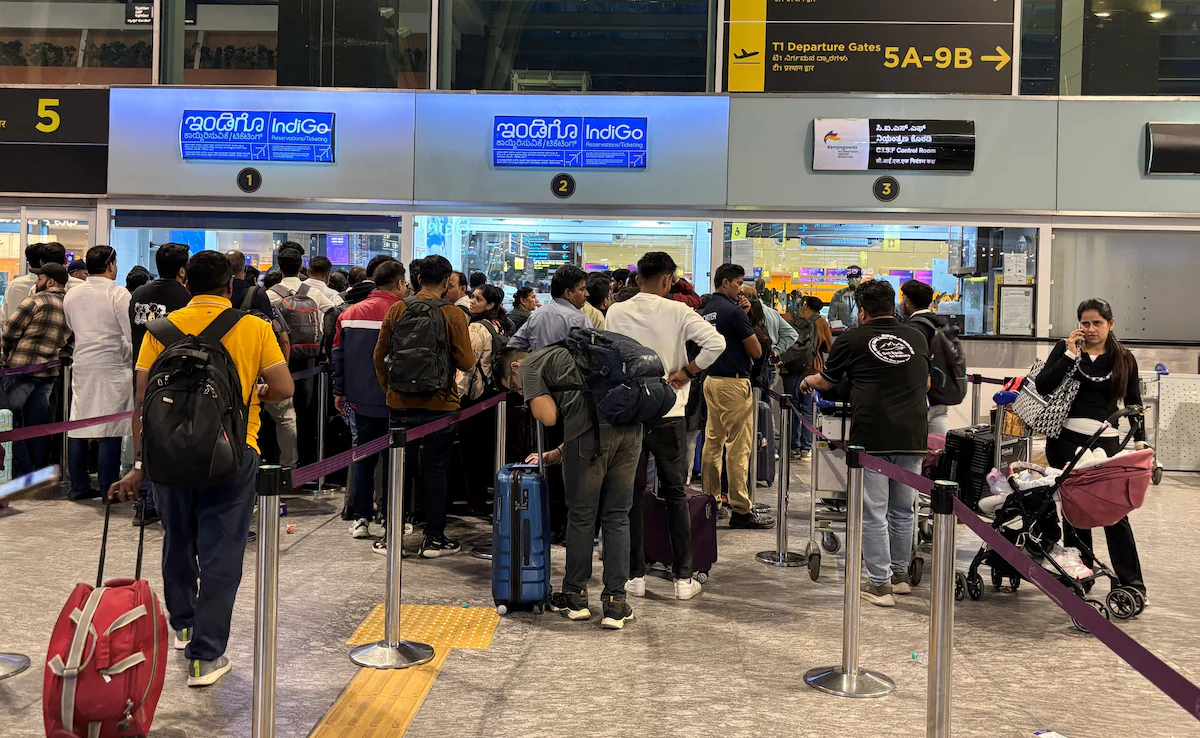
Scenes of chaos unfolded across major hubs including Delhi, Mumbai, Bengaluru, Pune, and Hyderabad. IndiGo counters saw waves of fliers seeking answers even as staff struggled to manage a growing backlog of delayed departures and last-minute cancellations.
Many passengers spent long hours—some over half a day—waiting for clarity. Social media was flooded with complaints: families stuck overnight, fliers alleging misinformation, and frustration over repeated assurances that crew members were “on the way.”
The government’s data underscored the severity of the situation. On a day IndiGo typically operates over 2,200 flights, its on-time performance fell to just 35%, meaning more than 1,400 flights were delayed in a single day.
But this was far from a simple operational hiccup. The root causes ran deep.
Why Did IndiGo Cancel Over 200 Flights? The Full Breakdown
1. A Sharp Crew Shortage Triggered by New FDTL Rules
The biggest immediate factor behind the meltdown was a sudden and acute shortage of pilots and cabin crew.
On November 1, India fully implemented an updated set of duty-time regulations that sharply reduced how long pilots could fly and increased mandatory rest intervals. The changes were designed for safety but had a dramatic effect on scheduling.
Because of the new rules:
-
Many pilots who were earlier scheduled were no longer legally eligible to fly.
-
Several rotations had to be cancelled due to unavailable crew.
-
Crew rosters that previously functioned smoothly were thrown off balance overnight.
Inside sources confirmed that IndiGo reached a point where entire sequences of flights had to be grounded simply because no legal crew pairings remained.
2. New FDTL Norms Created Immediate Network Strain
The updated Flight Duty Time Limitations placed strict controls on fatigue-related risks. These included:
-
Weekly Rest: Increased from 36 to 48 hours
-
Night Duty Window: Extended from 00:00–05:00 to 00:00–06:00
-
Cumulative Duty: Reduced from 100 to 95 hours within 14 days
-
Rest After Night Duty: Increased from 10 to 12 hours
-
Night Landings: Reduced from six to two in each roster period
-
Mandatory Fatigue-Risk Management Systems requiring predictive fatigue monitoring
Additionally, DGCA caps flight time at:
-
8 hours/day
-
35 hours/week
-
125 hours/month
-
1,000 hours/year
Crew must also receive rest twice the length of their duty period, with at least 10 hours of rest in any 24-hour cycle.
For an airline with heavy overnight operations, these restrictions immediately limited how many flights could legally take off within existing staffing levels.
3. Technical Glitches at Major Airports
As if the new duty norms weren’t enough, airports like Delhi and Pune suffered outages in check-in and departure system software on Tuesday. These glitches led to long queues that further delayed departures.
Because IndiGo operates a fast-turnaround model, even small delays have ripple effects. Once the morning rotations were pushed back, the backlog snowballed, affecting dozens of later flights.
4. Winter Traffic, Fog, and Congestion
Late-year travel always strains India’s aviation hubs:
-
Fog disrupts early-morning schedules.
-
Winter holiday traffic pushes airports to capacity.
-
Hourly congestion limits how many flights can be rescheduled.
With IndiGo’s network spread thin due to staff shortages, even minor weather disruptions resulted in a cascading failure.

New Safety Rules 2025: What Changed and Why It Matters
India’s aviation regulator updated safety norms to reduce fatigue and bring operations in line with global standards. The biggest shifts include:
-
Longer mandatory rest
-
Stricter night duty limits
-
Reduced duty windows
-
Reduced number of permitted night landings
-
Mandatory use of scientific fatigue-risk management systems
While designed to enhance safety, these changes require more pilots and greater scheduling flexibility—both of which IndiGo struggled to adapt to quickly.
Why Was IndiGo Affected More Than Other Airlines?
Even though all Indian carriers are bound by the same DGCA norms, IndiGo’s disruption was uniquely widespread. The reasons lie in its scale, structure, and operational philosophy.
1. Its Massive Scale Amplifies Any Disruption
IndiGo operates over 2,200 flights a day, nearly double Air India’s daily count.
A 10–20% disruption for such a massive network easily translates to 200–400 affected flights.
2. Heavy Dependence on Overnight Flights
IndiGo runs a dense network of night-time operations, which are now strictly limited by the new FDTL caps:
-
Night duty window expanded
-
Night landings reduced from 6 to 2
This hit IndiGo harder than airlines with fewer late-night sectors.
3. Extremely Tight Crew Utilisation Model
As a low-cost carrier, IndiGo maximises crew productivity and minimises downtime. The new rules immediately exposed gaps in this system.
4. Limited Flexibility to Reshuffle Rosters
Airlines with smaller networks found it easier to adjust.
IndiGo’s vast interconnected matrix made realignment slow and cumbersome.
5. Alleged Understaffing and Delayed Planning
According to the Airline Pilots’ Association of India, carriers were given nearly two years to prepare. Yet, IndiGo reportedly:
-
Implemented a hiring freeze
-
Engaged in non-poaching agreements
-
Maintained a pilot pay freeze
-
Failed to restructure rosters 15 days in advance
The Federation of Indian Pilots went further, calling IndiGo’s strategy “unorthodox” and “lean to a fault,” leading directly to the current crisis.
How Many Flights Were Affected?
Across two days:
-
300+ flights were cancelled
-
Hundreds more faced severe delays
-
Another 100 cancellations were expected the following day
Cities hit hardest included:
-
Hyderabad: 33+ cancellations
-
Bengaluru: 70+ cancellations
-
Delhi, Mumbai, Pune: widespread delays
Passengers reported waiting 12 hours or more in terminals with no clear communication from the airline.
When Will the Situation Improve?
IndiGo has stated that it is undertaking “calibrated adjustments” to stabilise operations over 48 hours. These steps include:
-
Redeploying crew on the most affected routes
-
Cutting some rotations in advance to avoid last-minute chaos
-
Adjusting night schedules
-
Reworking aircraft-crew pairing cycles
The airline apologised, citing a “multitude of unforeseen operational challenges” ranging from winter congestion and weather disruptions to crew rostering issues and system glitches.
DGCA has summoned IndiGo’s senior management to explain its corrective plan, especially given that India is currently handling over five lakh domestic passengers daily.
-1764777480901_1764848268.webp)
What Passengers Should Do If They’re Flying Soon
Travellers booked on IndiGo should take practical precautions:
-
Check flight status frequently before leaving for the airport
-
Arrive early because queues may be unusually long
-
Carry essentials such as snacks, water, and medication
-
Choose refundable or flexible tickets if booking anew
-
Track IndiGo’s announcements on social media
-
Contact customer care for rebooking or refunds
These steps can prevent additional stress in case of unexpected delays or cancellations.
What Needs to Change for Preventing Future Chaos
Stakeholders in the aviation sector have raised several red flags.
1. Adequate Staffing Must Be Ensured
Pilot bodies argue that IndiGo should not have implemented hiring freezes or restrictive agreements given the known impact of new FDTL norms.
2. DGCA Should Approve Schedules Only After Pilot Availability Is Proven
Both ALPA and the Federation of Indian Pilots recommend that airlines must demonstrate sufficient crew strength before seasonal schedules are approved.
3. No Relaxation of Safety Norms
Some experts suspect certain airlines may be pressuring the regulator for relaxations in the new rules. ALPA warns that any such move would compromise passenger safety.
Scientific fatigue assessment—not commercial pressure—must guide future decisions.
The Bottom Line
IndiGo's mass flight cancellations were not the result of a single failure but a convergence of new safety rules, crew shortages, technical glitches, and the pressure of winter traffic. Its vast scale and operational model magnified the impact, leaving thousands of passengers stranded across the country.
With regulatory pressure mounting and corrective action underway, the airline aims to restore normalcy within days. But the crisis has sparked a crucial industry-wide conversation: airline efficiency cannot come at the expense of safety, staffing, or preparedness.
With inputs from agencies
Image Source: Multiple agencies
© Copyright 2025. All Rights Reserved. Powered by Vygr Media.