 By
By 
Indian cricket has entered one of its most turbulent phases in recent memory. Once defined by dominance at home, clarity in leadership, and a unified dressing room, the current landscape is overshadowed by fractured relationships, public intrigue and escalating internal tension. What began as murmurs about communication gaps has spiralled into a full-blown narrative of distrust involving four of the most influential figures in Indian cricket: Virat Kohli, Rohit Sharma, head coach Gautam Gambhir, and chief selector Ajit Agarkar.
The immediate trigger is the BCCI’s directive asking senior players—most notably Kohli and Rohit—to participate in domestic cricket, specifically the Vijay Hazare Trophy, to stay in contention for ODI selection. While Rohit has complied, Kohli pushed back with a pointed remark after his goosebumps-inducing century in Ranchi: “I have never been a believer in too much preparation.”
Coming from India’s biggest contemporary star, the statement resonated like a challenge to the establishment.
But behind this moment lies a deeper web of history, mistrust and simmering egos that the BCCI can no longer afford to ignore.
The Backdrop: A History of Hurt and Perceived Grievances
Virat Kohli’s relationship with cricketing authority has always been complicated. Over the years, he has often been perceived as a man battling detractors—real or imagined—to fuel his performances. His famous 82* against Pakistan in the 2022 T20 World Cup came amid the turmoil of giving up the T20I captaincy, being removed from ODI captaincy, and stepping down from Test leadership.
Each episode fed a narrative of conflict, starting with the fallout with then-coach Anil Kumble, then with then-BCCI President Sourav Ganguly, and now, reportedly, with Ajit Agarkar and Gautam Gambhir. Kohli’s camp has long maintained that he was never asked to reconsider relinquishing T20 captaincy, contrary to Ganguly’s public claim—an early indicator of mistrust.
Now living in London and playing only ODIs, Kohli sees the demand to play domestic cricket not as routine procedure but as yet another attempt to corner him. The sense of grievance has accumulated, shaped partly by how his captaincies ended and how he eventually exited Test cricket.
Rohit Sharma, too, hasn’t been immune to upheaval. After India’s triumphant T20 World Cup campaign, the selectors began transitioning to a younger generation. But with India’s recent stumbles in home Tests and Rohit’s own batting struggles—so concerning that he voluntarily dropped himself from the Sydney Test—Ajit Agarkar’s selection panel moved to nudge him out ahead of the England tour.
The ODI captaincy handover to Shubman Gill, many believe, came prematurely, especially on the heels of Rohit’s Test exit and T20I retirement.
In a star-driven ecosystem like Indian cricket, these were seismic moves. Agarkar was doing what the job demanded—but the fallout was inevitable.
The Gambhir Factor: A Changing Dressing Room Atmosphere
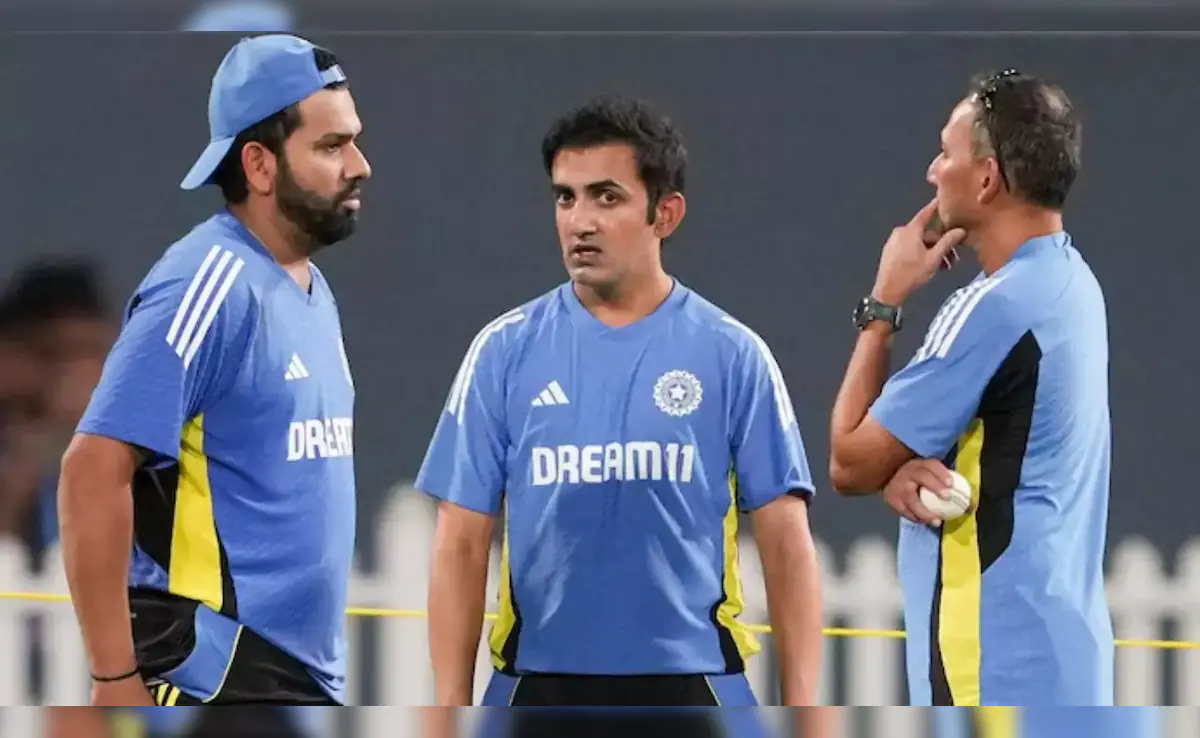
Gautam Gambhir’s arrival as head coach has brought its own complexities. Known for his strong will, directness, and an unflinching belief in his methods, Gambhir has never been one to seek popularity. Public perception has long painted him as someone who doesn’t see eye-to-eye with Kohli and had an edgy equation with MS Dhoni as well.
The recent ODI and Test performances have amplified scrutiny. Gambhir’s instinctive decisions—such as the Kolkata pitch fiasco and aggressive chopping and changing during the South Africa series—have backfired. India’s humiliating 0–2 Test loss severely weakened his position, making Rohit’s and Kohli’s ODI resurgence appear to some as poetic justice.
Behind the scenes, BCCI insiders say the atmosphere has grown “poor” during ODIs, even though the dressing room remained positive during Tests and T20Is.
Reports claim:
-
Kohli and Gambhir have barely spoken in recent weeks.
-
Rohit and Agarkar did not interact during the Australia ODI series, despite Rohit scoring 73 and an unbeaten 121, and Kohli hitting 74*.
-
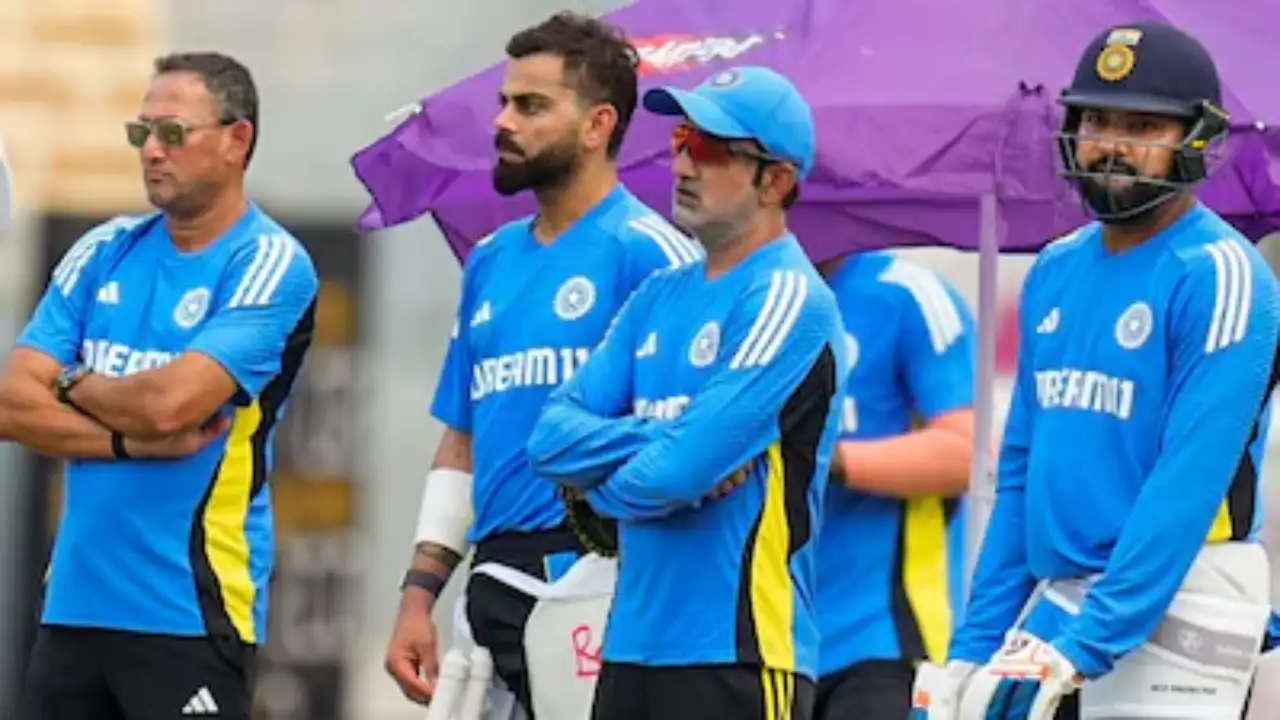
Visuals from the first ODI against South Africa showed Kohli walking past Gambhir after the win, ignoring him, and Rohit engaged in an intense, animated conversation with the coach.
Meanwhile, BCCI officials are reportedly upset that fan groups of Rohit and Kohli have been relentlessly trolling Gambhir on social media, further poisoning the environment.
BCCI Alarmed as Rift Deepens; Emergency Meetings Expected
The situation has reached a point where the BCCI feels compelled to intervene. According to reports in Dainik Jagran and Times of India, the board has grown increasingly alarmed by the “complete breakdown” in relationships among Kohli, Rohit, Gambhir, and Agarkar.
A meeting—initially expected after the ODI series—may now take place after the T20Is against South Africa, concluding on December 19. The agenda has shifted dramatically:
-
Instead of evaluating India’s falling Test performances,
-
The BCCI now wants to address the deteriorating dressing room atmosphere and the future of Rohit and Kohli in ODIs.
Venues like Raipur (2nd ODI) or Visakhapatnam (3rd ODI) have been mentioned as possible locations for the urgent discussions.
Any decision will likely shape India’s roadmap toward the 2027 ODI World Cup. And right now, the roadmap seems blurred by mistrust.
The Stars Shine Bright — Even As the Clouds Gather
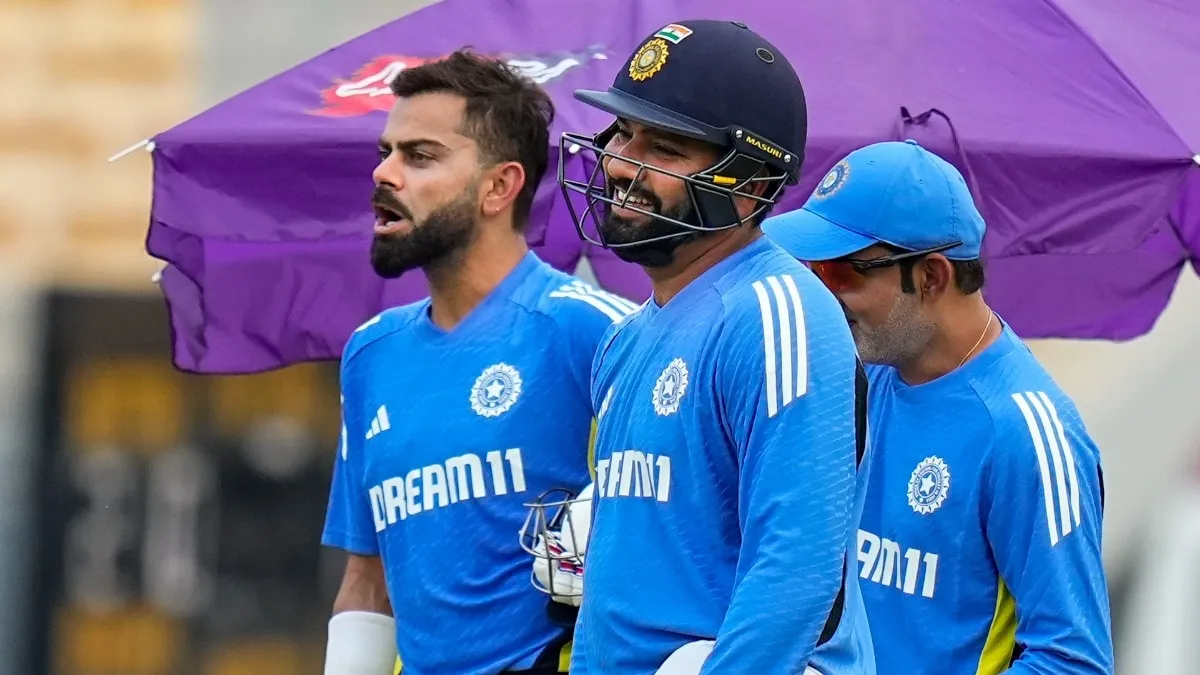
Ironically, all the drama is unfolding at a time when Rohit Sharma and Virat Kohli are in sensational form.
In 2025 alone:
-
Rohit Sharma: 561 runs in 12 innings at an average of 51, with 2 centuries and 3 fifties, including a top score of 121*.
-
Virat Kohli: 484 runs in 11 innings at an average of 53.77, with 2 centuries and 3 fifties, and a personal best of 135.
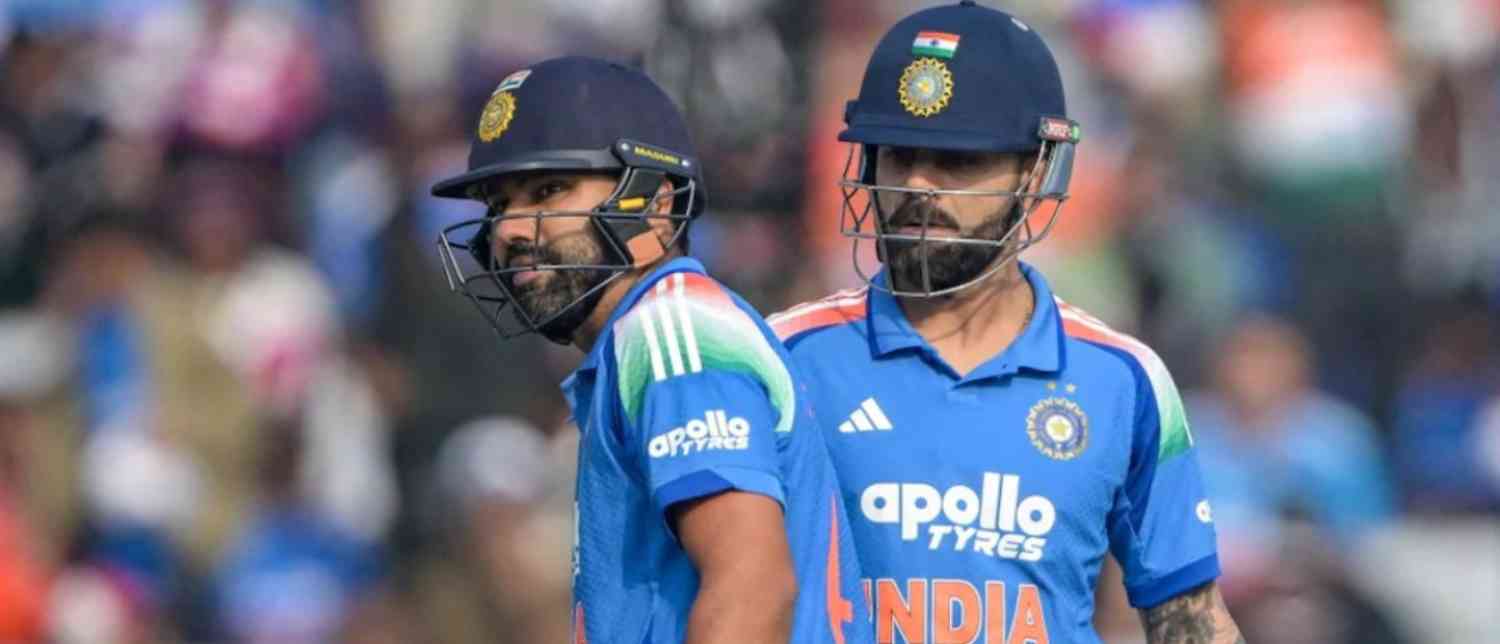
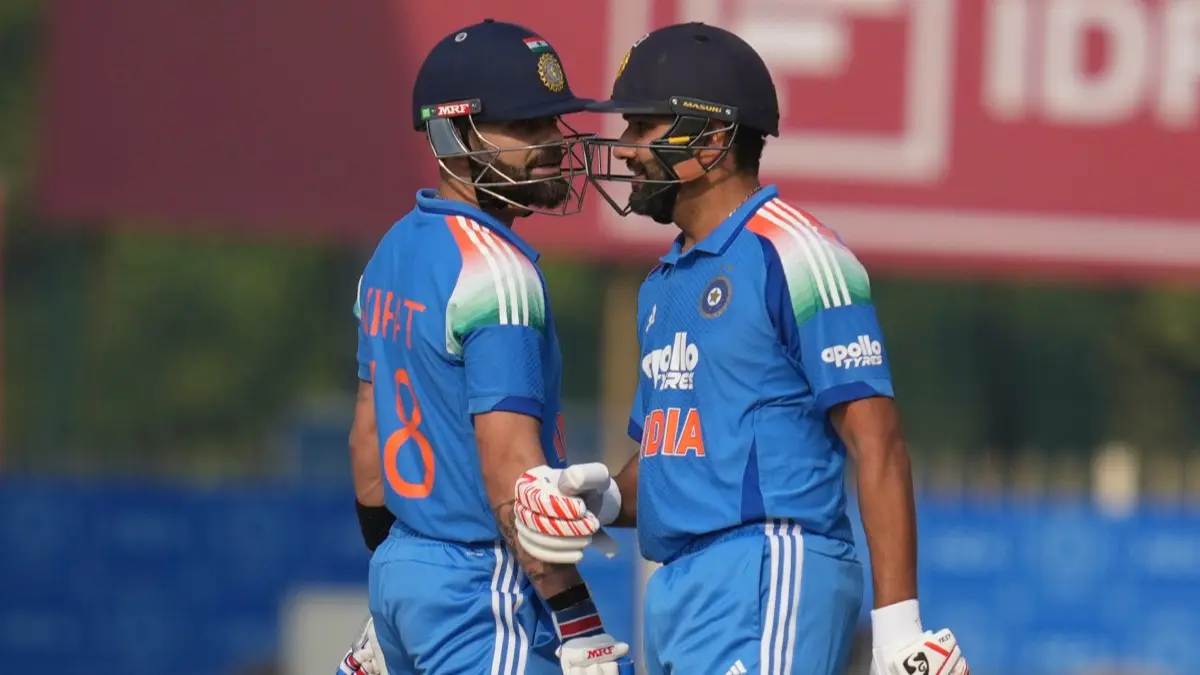
Their recent masterclass— a 136-run stand in the first ODI vs South Africa, where Rohit struck 57 and Kohli crafted a sublime 135—felt like a throwback to their prime.
From Sydney to Ranchi, the senior duo have been unstoppable. Their performances have put India 1–0 ahead in the South Africa ODI series, with hopes of sealing the contest in Raipur on December 3.
On the field, they remain India’s anchors. Off it, the fractures are widening.
“Spell it out clearly”: A Voice of Reason Emerges
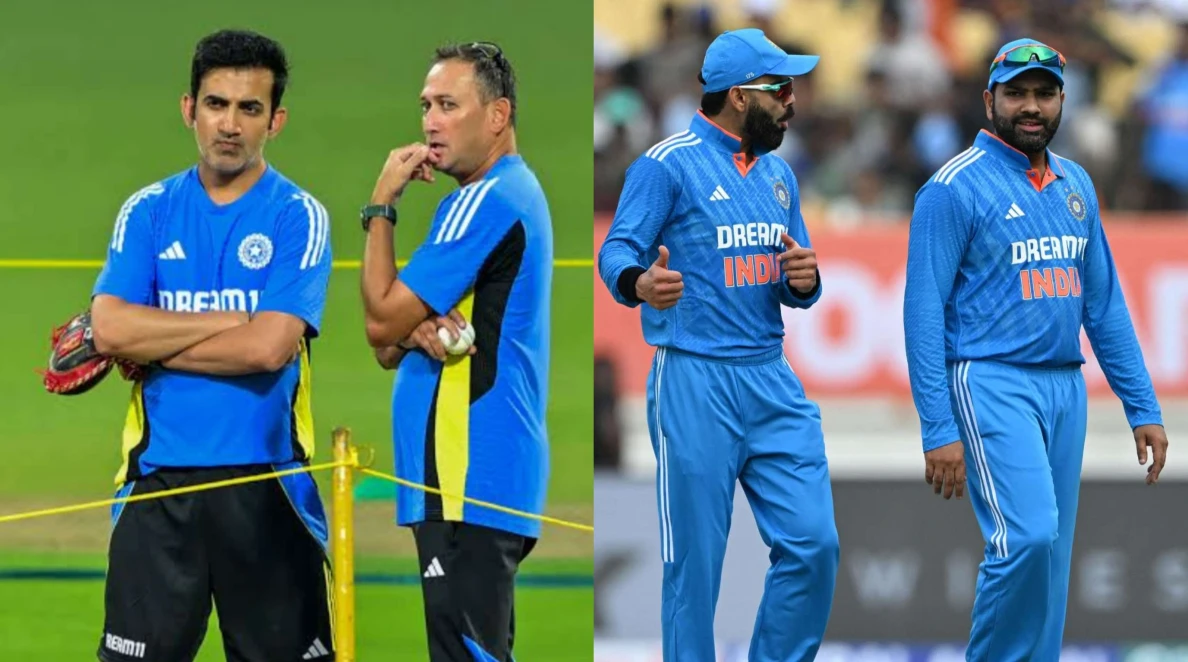
Amid the growing noise, former India wicketkeeper-batter Deep Dasgupta has emerged as a rare voice of sanity. His advice to Gambhir and Agarkar is simple yet urgent: clarity and transparency.
“You can’t go into every series with the same discussions going around,” Dasgupta said.
“The team management and selectors need to spell out clearly what they expect from Kohli and Rohit. Similarly, Rohit and Kohli should share how they want to prepare for the 2027 World Cup. You want the dressing room to be a fun place and at peace.”
Communication, or the lack of it, lies at the heart of the rift. And now, the cracks are affecting younger players too, creating an unhealthy environment that threatens India’s long-term vision.
The Road Ahead: Will Someone Step Up Before It’s Too Late?
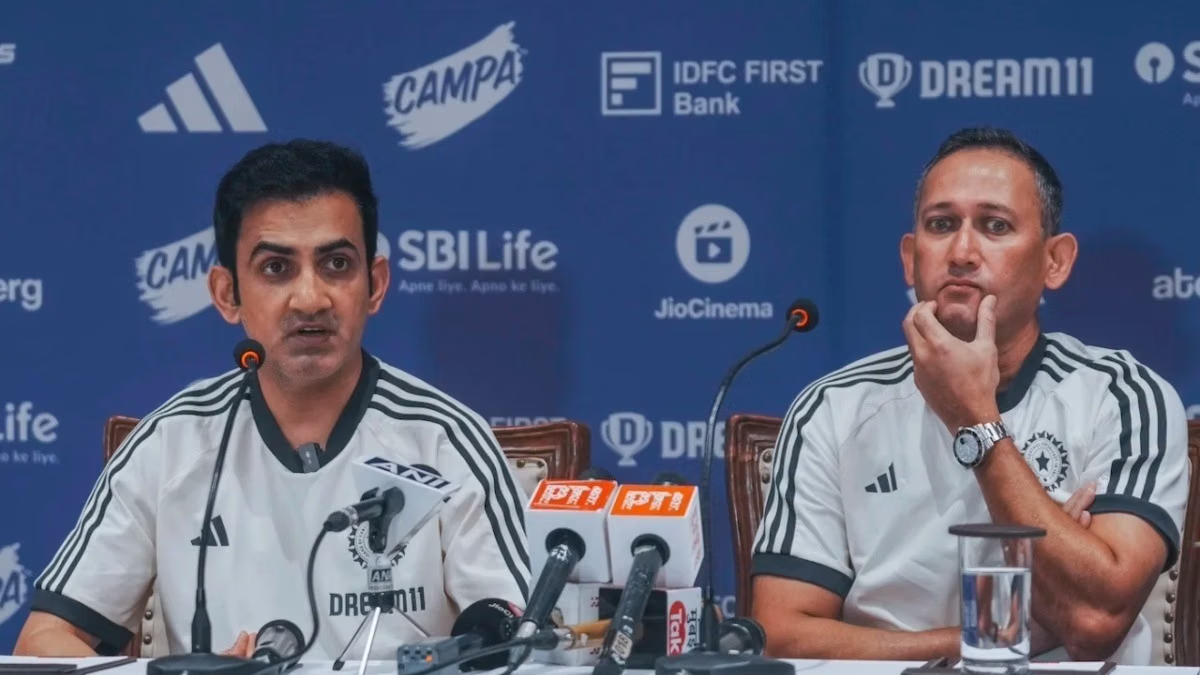
The crisis facing Indian cricket today is not about form, talent, or tactics—it is about trust. Kohli feels wronged; Rohit feels sidelined; Gambhir feels misunderstood; Agarkar feels unappreciated.
But the biggest casualty is Indian cricket.
If the BCCI buckles and reverses its domestic-cricket diktat, it risks appearing weak and divided. If it stands firm, it could further alienate its two biggest modern stars. If no reconciliation happens, whispers of “Will Kohli walk away?” could grow louder.
What is certain is this: The current dressing room atmosphere is untenable.
At a time when India should be building toward the 2027 World Cup, the team instead finds itself navigating bruised egos, backstage politics, and a deepening cold war.
The BCCI must act—firmly, transparently, and immediately.
Indian cricket has weathered storms before. But this one, centred around its most iconic faces, demands intervention at the highest level before it spirals beyond repair.
With inputs from agencies
Image Source: Multiple agencies
© Copyright 2025. All Rights Reserved. Powered by Vygr Media.