 By
By 
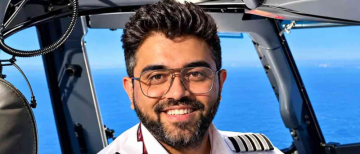
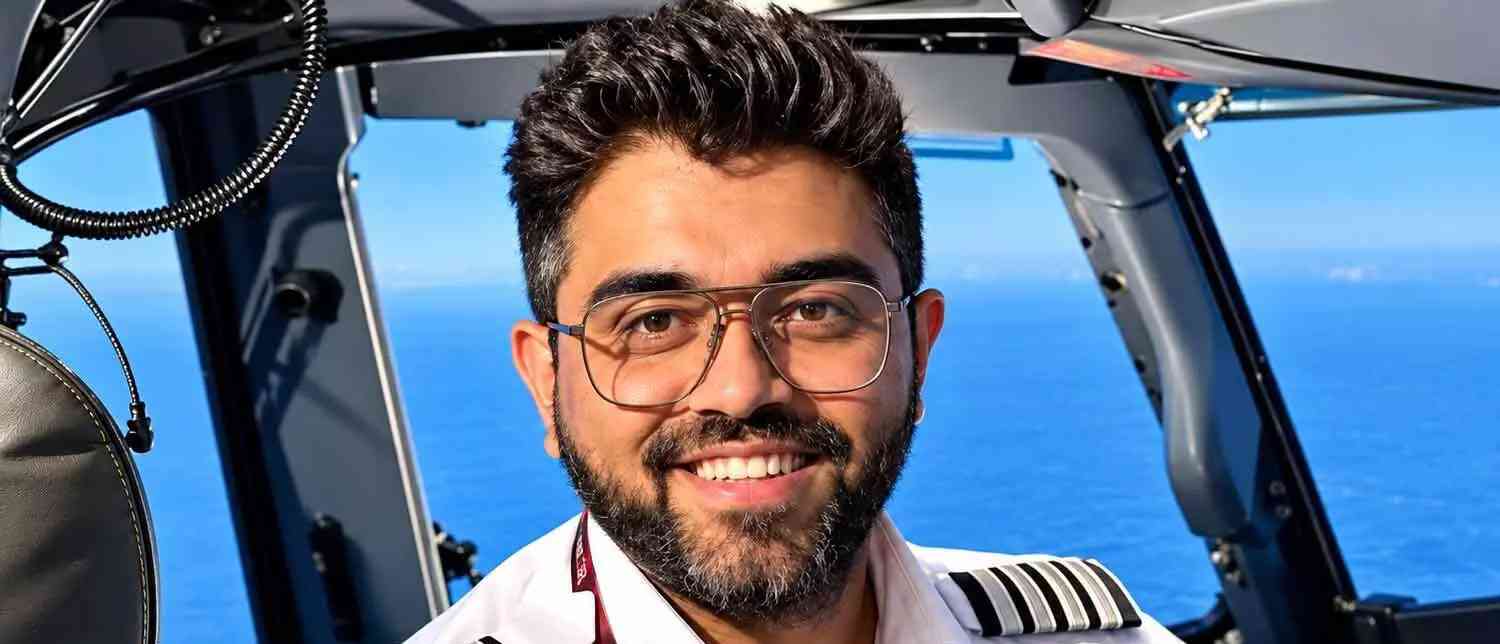
There are moments in aviation when years of training and professional experience are tested in circumstances that no routine checklist can fully anticipate. The events aboard Flydubai Flight FZ1073 on September 30, 2026, were one such moment. What began as a routine journey from Dubai to Tel Aviv turned into a serious cockpit emergency after Captain Smit Machchhar was attacked by his co-pilot while the aircraft was in flight.
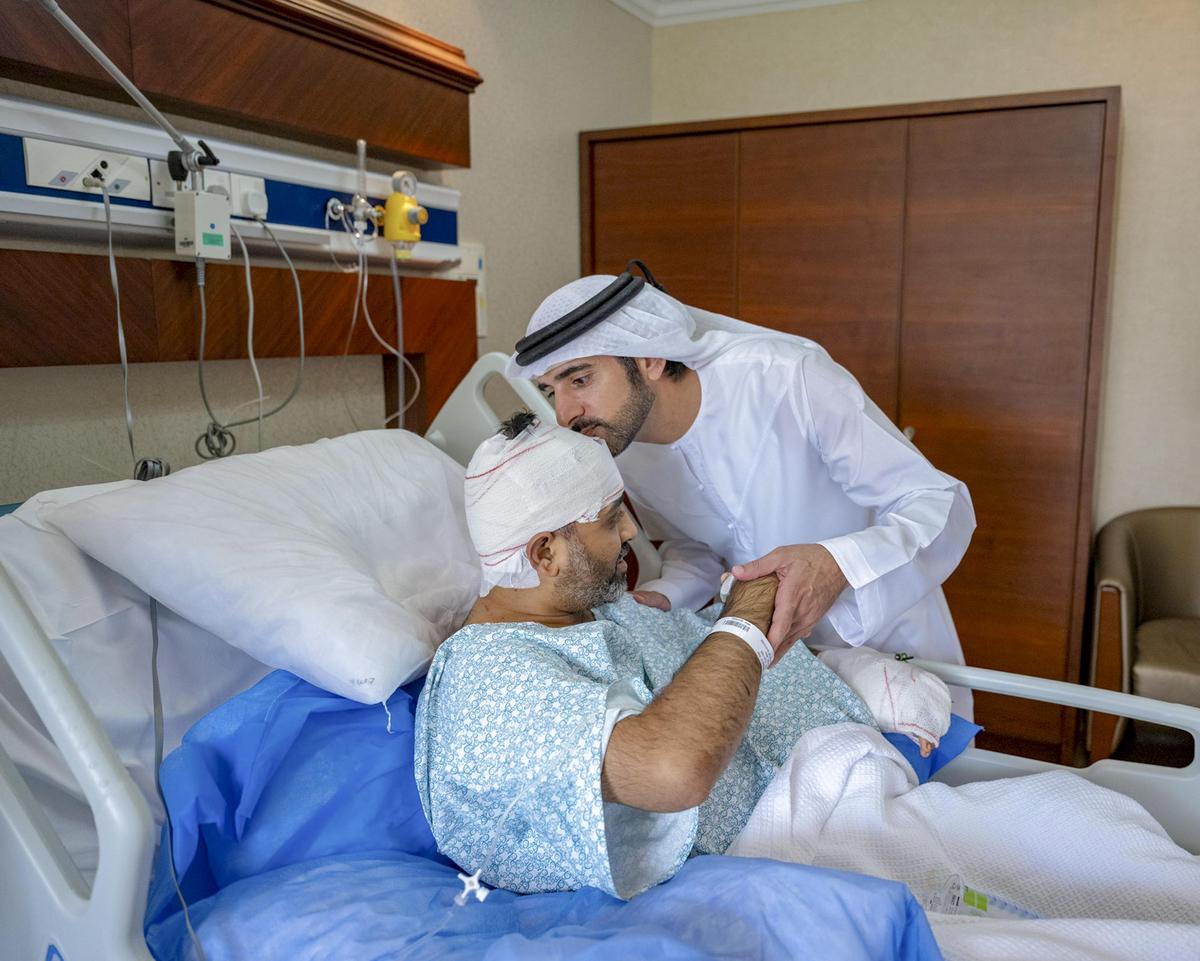
The aircraft subsequently went into a dramatic descent, losing thousands of feet in a matter of minutes. Machchhar, despite suffering serious injuries, managed to open the cockpit door, allowing passengers and crew to enter and intervene. Other pilots travelling on the aircraft also played a crucial role in helping regain control of the situation, after which the Boeing 737 was diverted to Tabuk, Saudi Arabia, and landed safely. Machchhar was later transferred to Abu Dhabi for medical treatment, with India's Ministry of External Affairs saying on October 3 that he was recovering well and receiving excellent medical care.
The incident has understandably turned Captain Smit Machchhar into an international symbol of courage. However, there is a much bigger story beneath the headline of an "Indian pilot who saved 174 lives". The Flydubai cockpit attack has raised difficult questions about aviation security, pilot screening, cockpit safety and the possibility of an insider threat within an environment designed primarily to keep threats outside the flight deck.
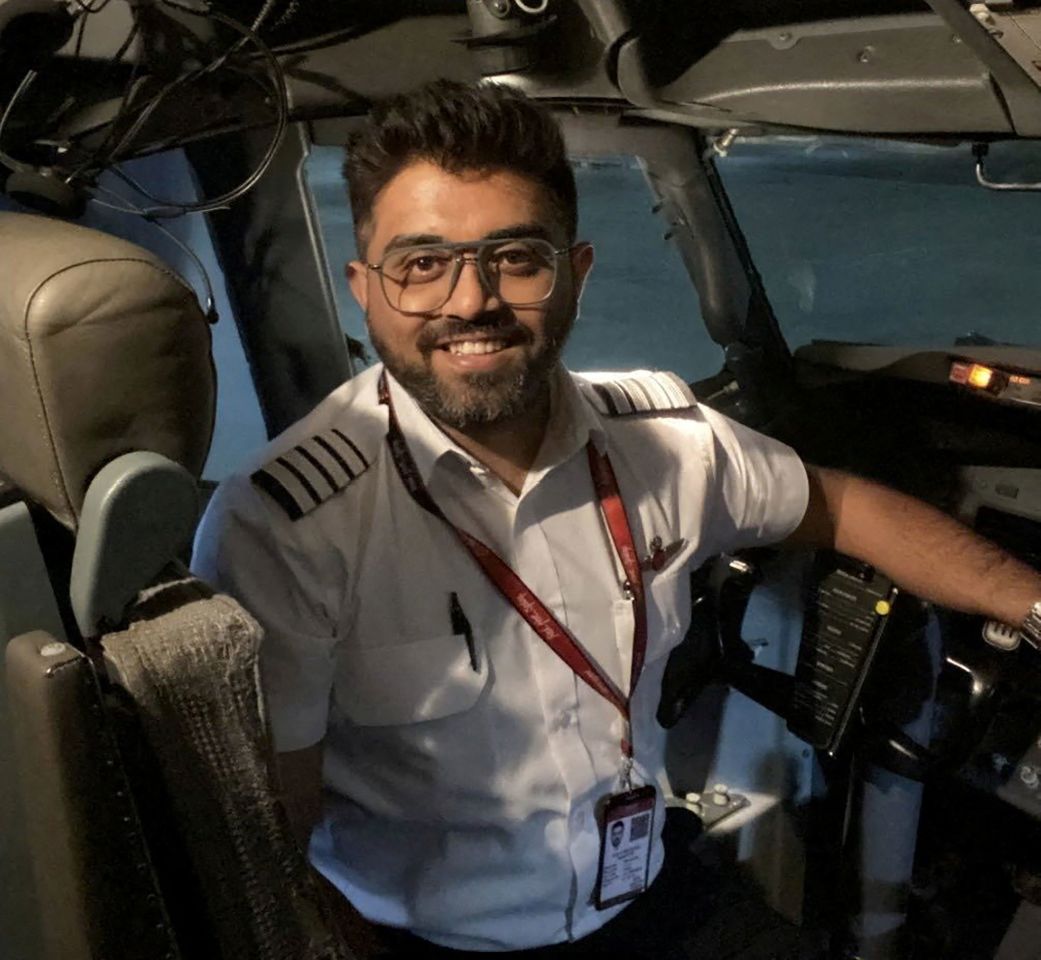
Captain Smit Machchhar and the moment that changed Flight FZ1073
For passengers, commercial flying is usually defined by routine. Once an aircraft reaches cruising altitude, most people have little reason to think about what is happening inside the cockpit. Pilots, meanwhile, are constantly monitoring the aircraft, communicating with air traffic control and preparing for situations that passengers may never even notice.
Captain Smit Machchhar brought years of experience to that responsibility. His route into aviation was not conventional. He initially studied textile engineering and later pursued management studies, but an aviation seminar when he was around 19 years old changed the direction of his career. He subsequently trained in New Zealand before joining SpiceJet, where he spent more than a decade and eventually served as a line training captain.
Machchhar later joined flydubai in 2022 as a direct-entry captain. Reports indicate that he had accumulated approximately 9,750 flying hours over a career spanning around 15 to 17 years, with extensive experience operating Boeing 737 aircraft.
That experience became particularly important during the Flydubai incident. When the confrontation in the cockpit left him injured, Machchhar was not simply dealing with a personal attack; he was also aware that an aircraft carrying more than 170 people was in serious danger.
According to his account of the incident, he was lying injured on the cockpit floor when he realised that the aircraft was descending and that he needed to act. Despite his injuries, he managed to reach the cockpit door and activate its release. That allowed others to enter the flight deck and intervene.
It was a critical moment because the reinforced cockpit door, while essential to modern aviation security, can become a barrier to assistance when the emergency is already taking place inside the flight deck.
A dramatic descent and a rapidly developing emergency
The seriousness of the Flydubai Flight FZ1073 incident becomes clearer when the aircraft's flight path is considered. Reports based on flight data indicate that the aircraft descended from approximately 33,000 feet to around 17,000 feet within a very short period while the confrontation was unfolding. The aircraft eventually stabilised and was diverted to Tabuk, where it landed safely.
The precise sequence of cockpit actions will ultimately have to be established by investigators. That distinction matters because incidents involving aviation, particularly those involving a possible deliberate attempt to take control of an aircraft, can generate speculation long before investigators have completed their work.
What is already clear, however, is that Flight FZ1073 came through an extraordinary emergency. The captain was seriously injured, the aircraft experienced a dangerous descent, passengers and crew became involved in the response, and the flight was ultimately diverted and landed safely.
The fact that the aircraft did not end in catastrophe does not make the incident less serious. In aviation, near-disasters can be among the most important events to investigate because they expose weaknesses that might otherwise remain hidden.
Why the cockpit door matters so much
The reinforced cockpit door is one of the most visible consequences of the transformation of aviation security after the September 11 attacks. Its fundamental purpose is simple: unauthorised individuals must not be able to gain access to the flight deck.
But the Flydubai cockpit attack highlights the other side of that security model. A locked cockpit door is extremely useful when the threat is outside the flight deck. The situation becomes far more complicated when the alleged threat is already inside.
That distinction is central to understanding why the Smit Machchhar incident deserves attention beyond the immediate drama of the attack.
Aviation security has traditionally focused heavily on preventing hostile individuals from boarding aircraft with weapons, entering restricted areas or forcing their way into the cockpit. The Flydubai incident raises a different question: how should airlines respond when a person who already has legitimate access to the cockpit becomes the source of the danger?
There is no simple answer. Pilot licensing, recurrent training, medical certification, security screening and airline oversight already form multiple layers of protection. Yet no screening system can guarantee that a person's behaviour will never change or that every potential threat will be identified in advance. The incident therefore presents a difficult challenge for aviation regulators and airlines without automatically proving that existing systems failed.
Smit Machchhar's experience was important, but he was not alone
It would be tempting to tell the entire story as one man's heroic intervention. That would, however, overlook the collective effort that helped bring Flight FZ1073 safely to the ground.
Once the cockpit door was opened, passengers and crew were able to enter the flight deck and assist in dealing with the attacker. Reports also indicate that additional pilots were travelling on the aircraft and subsequently helped operate the aircraft after the cockpit confrontation. Their presence proved extremely valuable during a situation in which the normal flight crew had been incapacitated or injured.
That detail is particularly important because aviation safety is rarely dependent on one person alone. Commercial flights operate within a larger safety system involving pilots, cabin crew, air traffic controllers, ground teams, emergency services and, in unusual circumstances, passengers themselves.
The Flydubai incident demonstrated how several of those layers can come together during a crisis. Machchhar's actions created an opportunity for intervention, passengers and crew responded, additional pilots were available to assist, and the aircraft was eventually diverted to a suitable airport.
The outcome therefore belongs not only to the captain but to everyone who contributed to preventing the emergency from becoming a disaster.
What if Smit Machchhar had been unable to open the door?
The most unsettling questions surrounding the incident are necessarily hypothetical. What would have happened if Machchhar had lost consciousness? What if his injuries had prevented him from reaching the cockpit door? What if there had been no additional pilots among the passengers? And what if the aircraft had remained in its rapid descent for several more minutes?
There is no responsible way to claim what the outcome would have been. These are counterfactual scenarios, not established facts. Yet they are precisely the kinds of questions that aviation investigators and safety specialists consider when analysing a serious near-miss.
The significance of Machchhar's actions lies partly in the fact that the opportunity for intervention existed at all. By opening the cockpit door, he created a path through which other people could enter the flight deck and assist.
That does not mean that one individual alone guaranteed the survival of everyone on board. It does mean that his decision became a critical link in a chain of events that ultimately ended with the aircraft landing safely.
The bigger issue: the insider threat in aviation
Perhaps the most important lesson from the Flydubai pilot attack is that aviation security has to consider both external and internal threats.
Commercial airlines already have extensive procedures for ensuring that pilots meet professional, medical and regulatory requirements. These include licensing standards, aircraft-specific qualifications, medical certification, recurrent training and other forms of oversight. Nevertheless, the possibility that an individual could pose a threat after gaining legitimate access to the flight deck is inherently difficult to eliminate completely.
This is not unique to aviation. Any security system has to consider the possibility that an authorised person might misuse legitimate access. The difficulty is particularly acute in commercial aviation because there are only a small number of people in the cockpit and because the consequences of losing control of an aircraft can be enormous.
The Flydubai incident should therefore prompt serious examination of existing procedures without jumping prematurely to conclusions about what should have been detected or prevented. Investigators are still examining the circumstances, motive and other aspects of the attack, and the final findings will be more meaningful than speculation circulating in the immediate aftermath.
The question of motive needs to be handled carefully
The incident has also acquired a geopolitical dimension because Flight FZ1073 was travelling from Dubai to Tel Aviv and carried many Israeli passengers. Since the attack, various claims have emerged regarding the alleged co-pilot, his background and the possible motive behind the incident.
The UAE attorney general said on October 3 that investigators had determined that the co-pilot attacked the captain with a crash axe and attempted to take control of the aircraft as part of what authorities described as an attempted terrorist act. At the same time, officials said the investigation was continuing into the full circumstances, motives and possible connections surrounding the incident.
That distinction is important. The nature of the attack and the actions that took place aboard the aircraft can be discussed based on available evidence, while questions about motive and broader connections should remain attributed to investigators until more evidence becomes available.
The potential consequences of a successful attack would undoubtedly have been significant, given the destination and the existing tensions in the region. But it would be speculative to claim precisely how governments or communities would have responded to a catastrophe that ultimately did not occur.
What can be established is that the aircraft reached the ground safely and the passengers survived.
The human story behind the "hero pilot" headlines
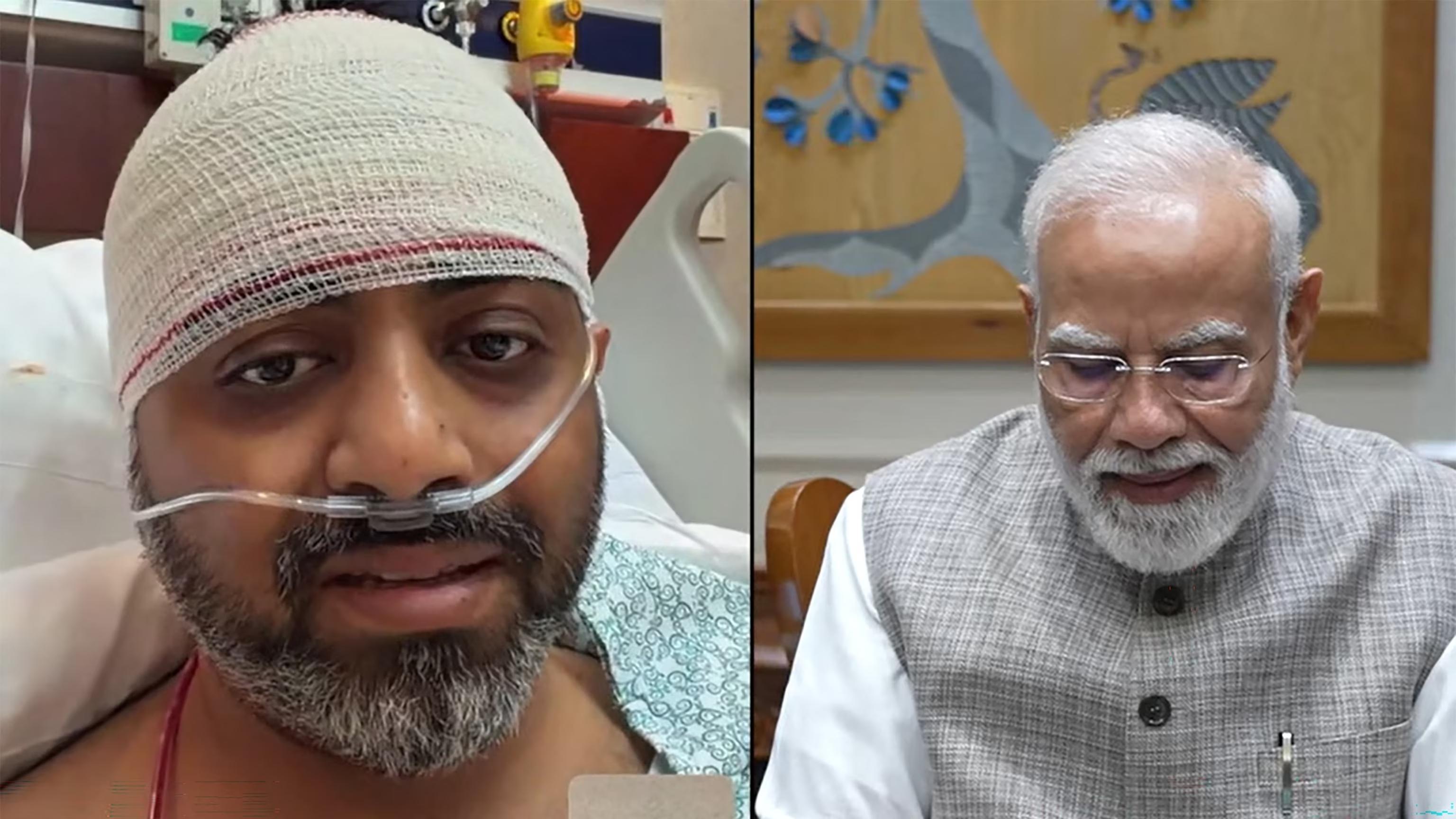
Much of the public attention has understandably focused on Captain Smit Machchhar as a hero. Indian and Israeli officials have publicly praised his actions, while his story has received international attention. Indian Prime Minister Narendra Modi also spoke with Machchhar while he was receiving treatment and praised his conduct during the emergency.
Yet behind the headlines is a professional pilot who suddenly found himself fighting for his own life while simultaneously trying to protect everyone else on the aircraft.
That is what makes his account particularly powerful. Machchhar has said that he was initially focused on surviving the attack, but then realised that the aircraft was descending and that he had to act. His decision to get up despite his injuries was therefore not an abstract act of heroism. It was a practical response to an immediate threat.
His career also provides useful context. Machchhar spent years flying commercial aircraft and training other pilots before joining flydubai. The skills developed through that career — situational awareness, aircraft familiarity, emergency response and decision-making under pressure — were suddenly required in circumstances that few pilots could reasonably expect to encounter.
The recovery of Captain Smit Machchhar
While aviation security and the investigation will dominate the public conversation for some time, the immediate priority remains Machchhar's recovery.
India's Ministry of External Affairs said on October 3 that the Flydubai pilot was recovering well and remained under excellent medical care. Indian authorities also said they were in contact with his family and local authorities while supporting his recovery.
That update provides an important human counterpoint to the wider discussion surrounding the Flydubai incident. The pilot who became the central figure in an international aviation emergency is now recovering from the injuries he suffered during it.
The full consequences of those injuries, both physical and personal, will become clearer with time.
What should aviation learn from the Flydubai incident?
The most valuable response to Flight FZ1073 should not stop at praising Captain Smit Machchhar. Recognition is appropriate, but the more important task is to understand what the incident can teach the aviation industry.
Regulators and airlines will need to examine cockpit-access procedures, pilot screening, emergency training, communication protocols and the management of situations involving violence inside the flight deck. They will also have to consider how cockpit security can be maintained while ensuring that appropriate assistance remains possible during an emergency involving a member of the flight crew.
None of these questions has an obvious answer, and it would be premature to suggest that one particular policy change would have prevented the incident. The investigation needs to establish the facts first. However, serious aviation incidents have historically contributed to improvements precisely because investigators examine not only what happened, but also what could have happened and what vulnerabilities the event exposed.
That is the real value of studying a near-disaster.
Captain Smit Machchhar's legacy may be bigger than the rescue itself
The story of Captain Smit Machchhar will almost certainly continue to be associated with courage. He was seriously injured during a cockpit attack and still managed to take an action that allowed others to intervene. That contribution should not be minimised.
At the same time, the most useful legacy of the Flydubai Flight FZ1073 incident should extend beyond the image of an Indian pilot saving 174 lives. It should encourage a serious conversation about aviation safety, cockpit security, insider threats and the limits of even the most sophisticated safety systems.
The flight did not become a catastrophe. That outcome resulted from a combination of Machchhar's actions, the response of passengers and crew, the availability of additional pilots and the wider aviation system that ultimately brought the aircraft safely to the ground.
For Captain Smit Machchhar, however, the central moment was painfully simple: he was injured, the aircraft was in danger, and he knew that other people were depending on him. He found enough strength to open the cockpit door, creating the opportunity for others to help.
That decision may be remembered as the defining moment of the Flydubai incident. But for the aviation industry, the more important task now is to look beyond the heroism and examine the circumstances that made such a decision necessary in the first place.
If the industry can learn from those circumstances, then the significance of Flight FZ1073 will extend far beyond the survival of one aircraft. It will become another case study in how aviation safety evolves, not only through preventing disasters, but also through learning from the rare moments when disaster comes dangerously close.
With input from agencies
Image Source: Multiple agencies
© Copyright 2026. All Rights Reserved. Powered by Vygr Media.