 By

Khargone, Madhya Pradesh: The discovery of 343 voter identity cards along the banks of the Narmada River in Madhya Pradesh's Khargone district has raised serious questions about how the documents reached the location and why they were left there. The incident, which came to light on Sunday, October 25, has prompted the opposition Congress to demand the registration of a First Information Report (FIR) and an impartial investigation into the matter.
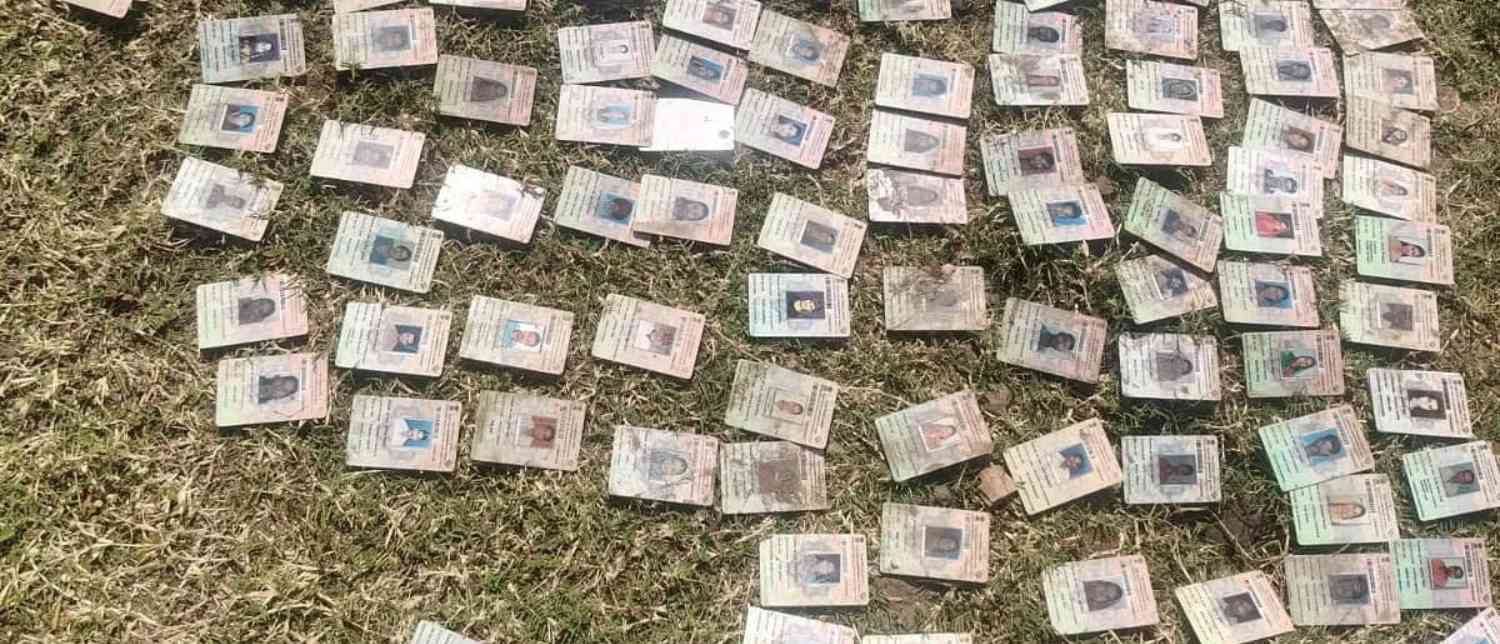
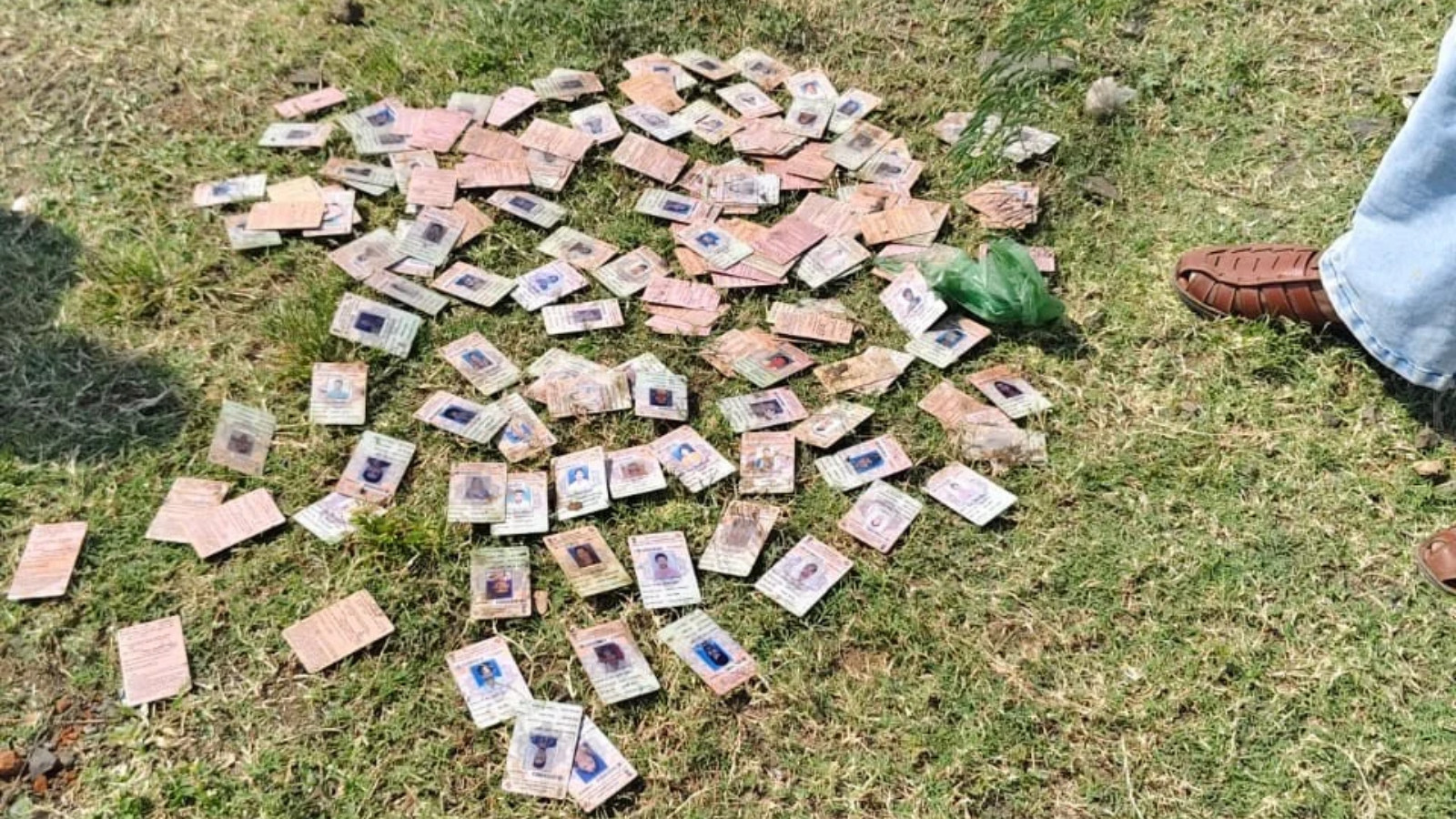
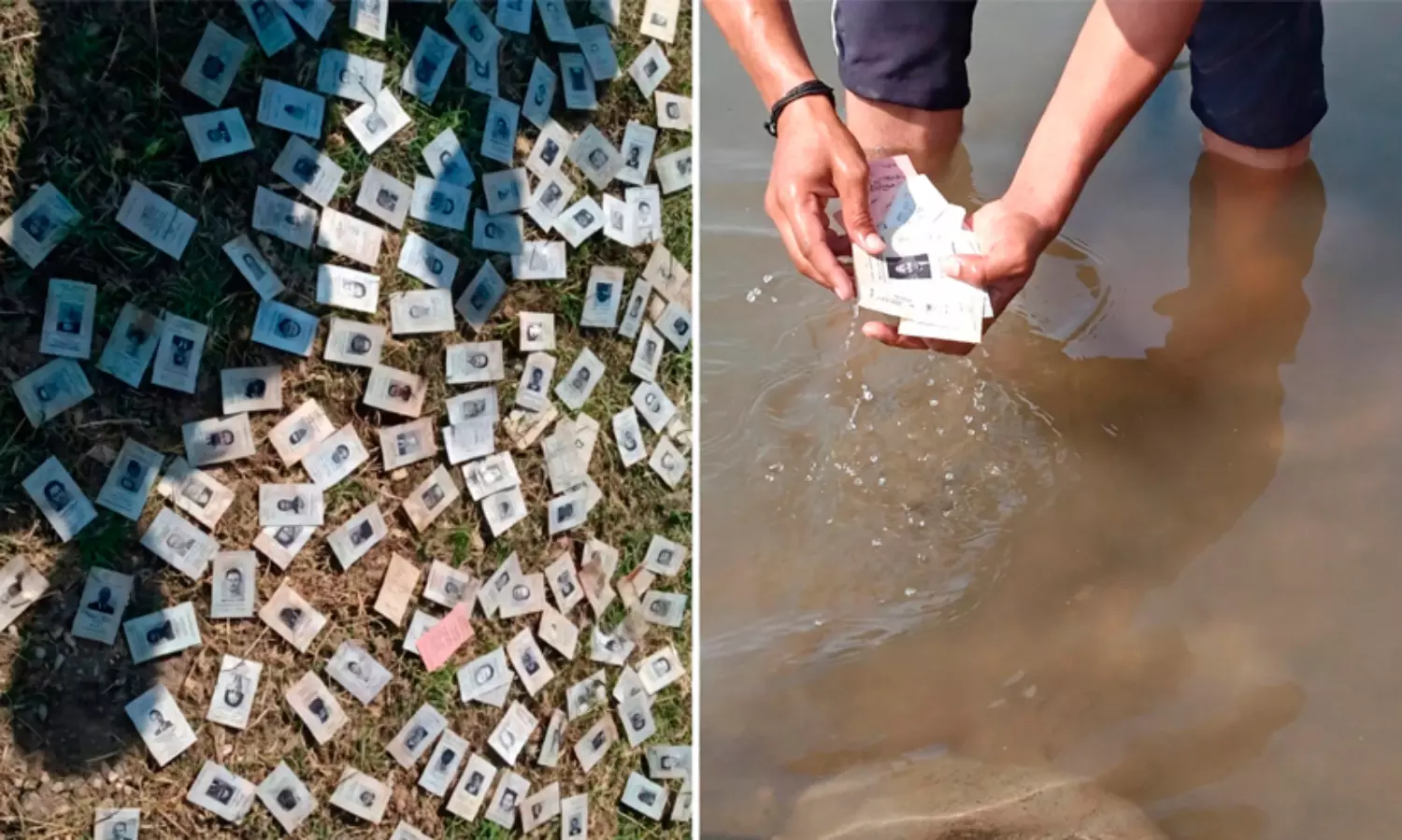
The voter ID cards were found at Mandleshwar Ghat, where residents participating in a cleanliness drive reportedly spotted cards floating in the water and scattered along the riverbank. The discovery quickly attracted attention after a video showing the recovered documents circulated on social media.
Preliminary information indicates that the cards may belong to voters from the Rau Assembly constituency in neighbouring Indore district. However, their authenticity, the circumstances surrounding their disposal and the identity of those responsible remain unconfirmed. Authorities have taken possession of the recovered cards and initiated an investigation to establish the facts.
The incident has intensified scrutiny of electoral administration in Madhya Pradesh, with Congress leaders questioning how such a large collection of voter identity documents could end up along a riverbank far from the addresses reportedly printed on them.
How Were 343 Voter ID Cards Discovered at Mandleshwar Ghat?
The incident reportedly unfolded on Sunday morning when members of a local organisation conducting a cleanliness drive along the Narmada riverbank came across the voter identity cards. Some documents were seen floating in the water, while others were lying along the bank.
Residents collected the cards and alerted the local administration. Officials subsequently reached the site, documented the recovery and arranged for the documents to be taken into custody.
A video showing the voter ID cards spread across the area subsequently went viral on social media, bringing the incident into the public spotlight. The footage also prompted questions about whether additional documents might be present in the river.
Mandleshwar is located in Khargone district, while the addresses reportedly appearing on many of the recovered cards are associated with Indore. The distance between the two locations has become a central point in the questions raised by opposition leaders.
Although some early reports referred to thousands of voter ID cards, subsequent reports identified the number recovered as 343. The precise circumstances of the discovery, including whether any additional cards remain submerged or undiscovered, require verification by the authorities.
The key question is not simply how many cards were found, but how they came to be abandoned at the site and whether their disposal involved any procedural violation.
Cards Reportedly Linked to Indore's Rau Assembly Constituency
Preliminary information suggests that the recovered Electoral Photo Identity Cards (EPICs) are linked to the Rau Assembly constituency in Indore district.
Some reports identified addresses associated with Tilak Nagar and Aastha Palace in Indore among the details appearing on the documents. The cards therefore appear to have a geographical connection to an area separate from the location where they were discovered.
Rau is a politically significant constituency in Madhya Pradesh. Congress leader Jitu Patwari represented the seat in 2013 and 2018 before losing it in the 2023 Assembly election. The constituency is currently represented by BJP MLA Madhu Verma.
However, the reported connection between the cards and Rau does not, by itself, establish any link between the discovery and political activity in the constituency. Such a conclusion would require verified evidence about the documents, their history and the circumstances in which they reached Mandleshwar.
Investigators will need to establish whether the cards are genuine, whether the names and identification numbers correspond to official electoral records, and whether the documents were issued, replaced, cancelled or retained as part of an administrative process.
Until these questions are answered, the precise origin and significance of the recovered voter ID cards remain uncertain.
Congress Demands FIR, Calls for an Impartial Investigation
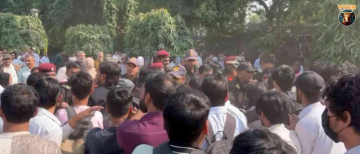
The discovery prompted Congress representatives in Khargone to approach the Mandleshwar police station and submit a written complaint seeking an FIR and a comprehensive investigation.
District Congress president Ravi Naik, accompanied by other party workers, questioned how voter identity documents reportedly associated with Indore could have been found along the Narmada riverbank in Khargone.
Naik alleged that the incident raised suspicions of electoral malpractice and questioned the functioning of the Election Commission. The party has demanded that those responsible for the documents being abandoned be identified and held accountable if wrongdoing is established.
Congress representatives have also warned of a protest outside the police station if an FIR is not registered. The party has argued that the matter warrants prompt action rather than being left unresolved through a preliminary inquiry.
One of the specific concerns raised by Naik relates to dates reportedly printed on the cards. He claimed that some documents bore the year 2016, although the digital voter ID card format was introduced in 2021. He questioned how documents displaying those dates could have been issued in that form.
This remains an allegation requiring technical and documentary verification. The appearance of a date on a card does not, on its own, establish when the document was generated or whether it is authentic. Authorities would need to examine the original cards and compare their details with official records before drawing conclusions.
Congress has also requested that divers search the river to determine whether more voter identity documents are present underwater.
The party's allegations of vote theft and electoral malpractice have not been established. An investigation will be necessary to determine whether the incident reflects administrative negligence, improper disposal of documents or another explanation.
What Have Police and Administrative Officials Said?
Local authorities have confirmed the recovery of the cards and the initiation of investigative steps.
Mandleshwar Sub-Divisional Officer of Police Shweta Shukla said the documents were discovered during the cleanliness drive along the Narmada. A revenue department team was sent to the location, and the recovered cards were taken into custody after the collection was documented.
Police have received the Congress complaint, and the officer in charge of the local police station has been directed to investigate the matter.
Maheshwar Sub-Divisional Magistrate Purva Mandloi also confirmed the recovery and said a tehsildar had been assigned to examine the incident. She indicated that the exact number and further details would become clearer as the inquiry progressed, with action to follow if responsibility was established.
The official response indicates that the authorities are examining the circumstances surrounding the recovery. However, the information available so far does not establish who left the cards at the site, when they arrived there or whether any criminal offence occurred.
The distinction is important: recovering voter ID cards from a riverbank is a documented event, but determining the reason for their presence there requires evidence that has not yet been made public.
The investigation's findings will be crucial in deciding what further legal or administrative action may be warranted.
Why the Discovery Raises Questions About Electoral Administration
Voter identity documents are closely associated with citizens' participation in India's electoral process. Although a voter ID card is not the only document that can be used for voter identification at a polling station, it plays an important role in establishing identity and connecting an individual with the electoral system.
The recovery of hundreds of such documents at a location unrelated to their reported addresses naturally raises questions about their custody, disposal and verification.
Several issues require answers. Were the cards authentic and officially issued? Did they belong to registered voters? Were they obsolete or replaced documents? How did they reach Mandleshwar? And did their disposal violate any applicable rules or procedures?
The answers could help distinguish an isolated case of mishandled documents from a more serious administrative failure.
The episode has also emerged amid broader political disagreements over electoral rolls and the Election Commission of India's Special Intensive Revision (SIR) of electoral rolls. The exercise has become a subject of political debate, with concerns about voter-list accuracy and the treatment of eligible voters featuring prominently in public discussions.
The discovery of the cards has added to those concerns, but it should not be treated as proof of a connection with the electoral-roll revision exercise. No such connection has been established by the information currently available.
A transparent investigation, supported by verifiable records and clear communication from the authorities, would help address public concerns without allowing unverified claims to be mistaken for established facts.
A Similar Discovery in Madhya Pradesh Last Year
The Mandleshwar incident has also drawn attention because hundreds of voter ID cards were reportedly discovered in Raja Talab pond in Chhatarpur district during a cleaning exercise in October 2025.
That earlier recovery became part of political arguments about alleged irregularities in the electoral process. The latest discovery has revived questions about how voter identity documents are handled and what safeguards exist to prevent their improper disposal.
However, the two incidents should not automatically be assumed to share the same cause. Their circumstances, the authenticity of the documents and any possible administrative failures would need to be examined separately.
Establishing whether the cases are connected would require evidence rather than similarities in the locations where the cards were found.
What Happens Next in the Narmada Voter ID Card Case?
The immediate priority is to establish the authenticity, origin and status of the 343 voter ID cards recovered from Mandleshwar Ghat.
Verification against official electoral records could help investigators identify the registered voters associated with the documents and determine whether the cards were genuine. Examining the dates and formats on the cards may also help clarify the concerns raised by Congress representatives.
Authorities may also need to establish whether any additional documents remain in the river, particularly given the party's request for a search by divers.
The next significant development will be whether the police register an FIR, what the preliminary inquiry establishes and whether the investigation identifies any person or institution responsible for the documents being abandoned.
For now, the recovery has been confirmed, a complaint has been submitted and an investigation has been directed. The central allegations, however, remain unproven.
The case highlights the importance of accountability in the handling of electoral documents. A thorough, impartial and evidence-based inquiry would help determine how the voter ID cards reached the Narmada riverbank, whether any rules were breached and what corrective action, if any, is necessary.
Until those findings emerge, the incident remains a matter requiring investigation rather than a settled case of electoral wrongdoing.
© Copyright 2026. All Rights Reserved. Powered by Vygr Media.